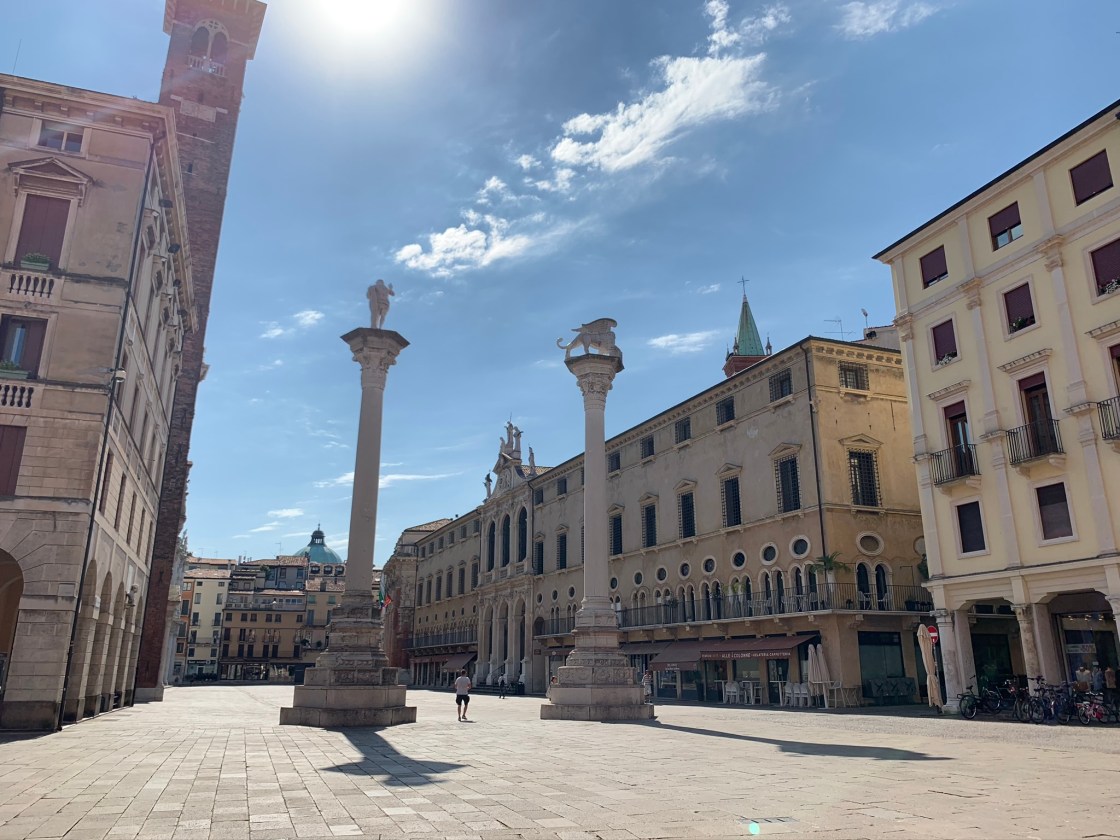
“See Venice and die…?” Well alright, but make sure you travel via the beautiful towns of Verona, Vicenza and Padova before kicking the bucket in the Floating City! In this part, I will introduce you to the first two of these picture-perfect places – famous Verona and its lesser known neighbour, the no less wonderful Vicenza. Andiamo!
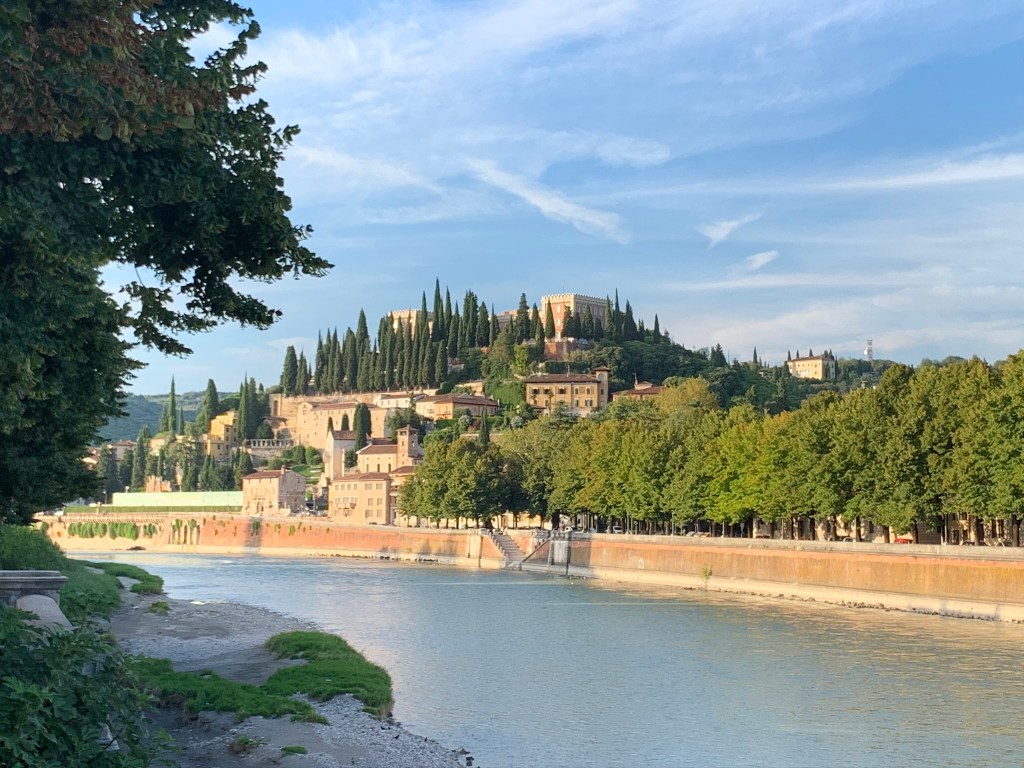
Verona
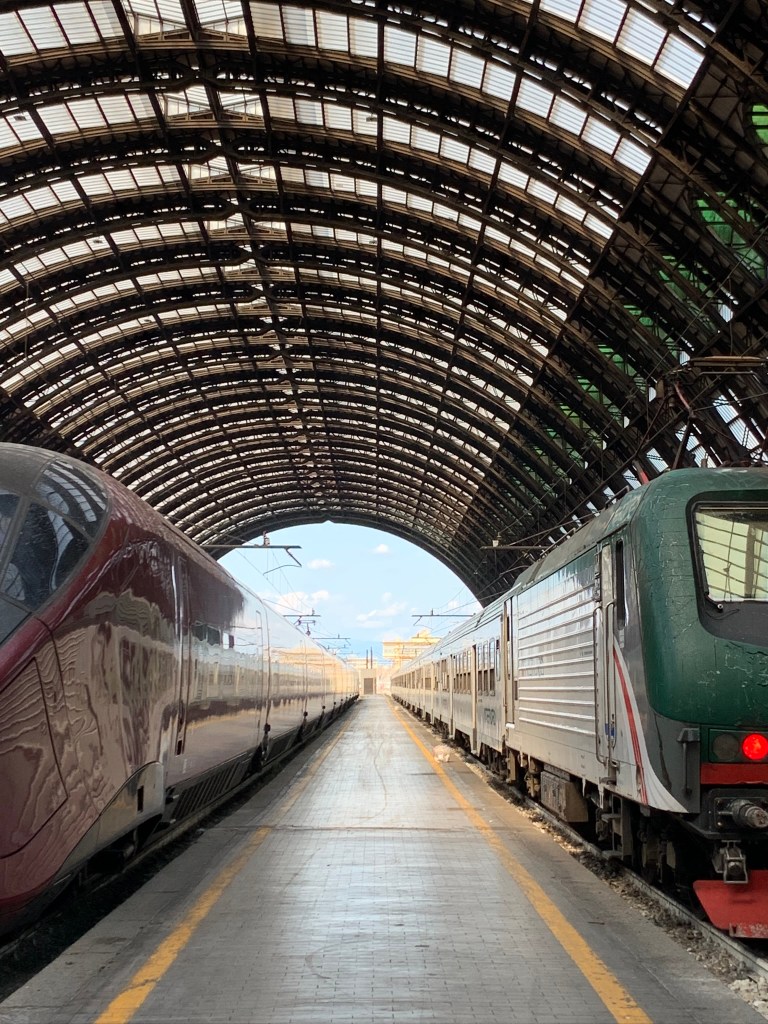
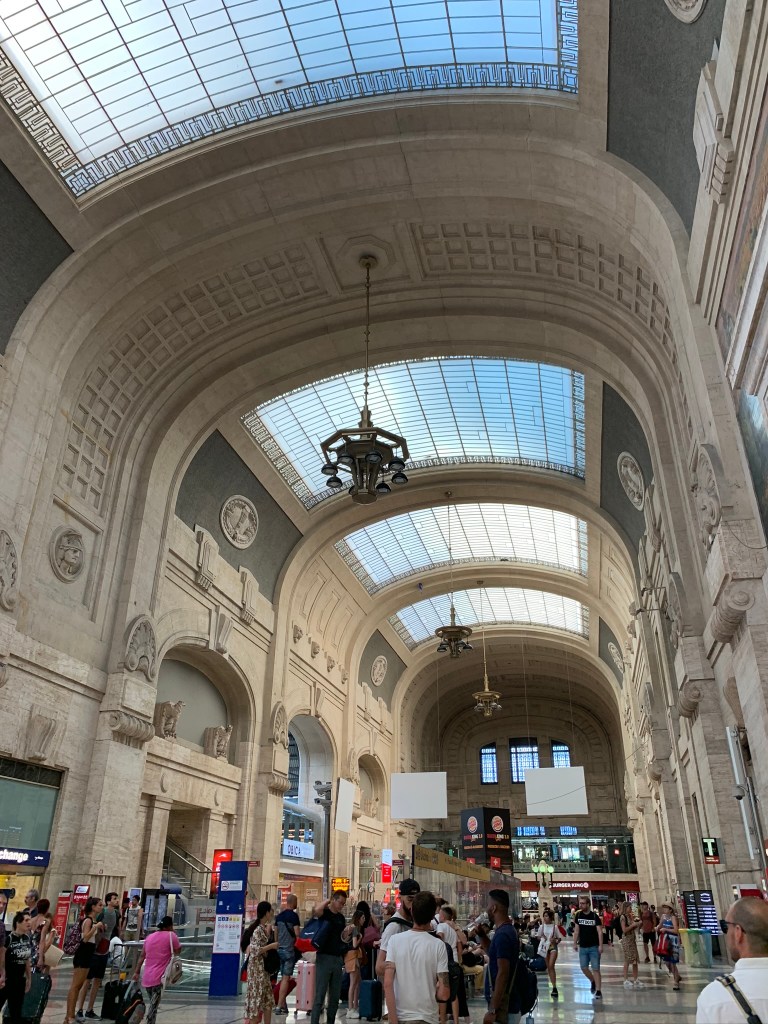
This August took me back to one of my favourite places: magnificent Milano. But this time, I only stopped for some ice cream in the imposing railway station Centrale before catching a regional train to Verona, where I would meet up with family. The idea behind this holiday was to see Venice at last (and hopefully not die), so I had looked at google maps to see what else I could visit on the way. Padova was an obvious choice, since its closeness to Venice meant I could visit it without having to stay in some overpriced tourist shack, plus I was keen to see Giotto’s Scrovegni Chapel. (Padova is also the home of Aperol, but of course that had no impact on my planning.) Finally, Vicenza tempted me with its Palladian architecture and surrounding countryside, but I didn’t know much about it besides.
First though, it was Verona that beckoned to be explored. The train journey was certainly a nice way to start proceedings. To me, there is no lovelier way to travel anyway, but seeing the view on Lake Garda unexpectedly open up next to you is something else! I was glued to the window – enjoying the view a little bit too much, because when we rolled into Verona I had to leave the carriage in such haste I left behind my brand-new Veneto travel guide… Oh well! Que sera, sera.
At Verona station, my challenge was to find the bus that would take me to my Airbnb. With the help of the driver of a different bus I finally located the right bay and made it to the waiting vehicle just in time. For some reason, trouble with finding the correct bus stop would run like a thread through my time in Italy…google maps can be astonishingly useless sometimes. I also got off about two stops too early, but I can’t blame google for that…
The bus journey was like a mini tour of Verona and my excitement grew steadily, especially when I made my way up through narrow streets to my accommodation and realised in just what a picturesque spot it was! Certainly worth navigating the cobbles with a heavy suitcase.
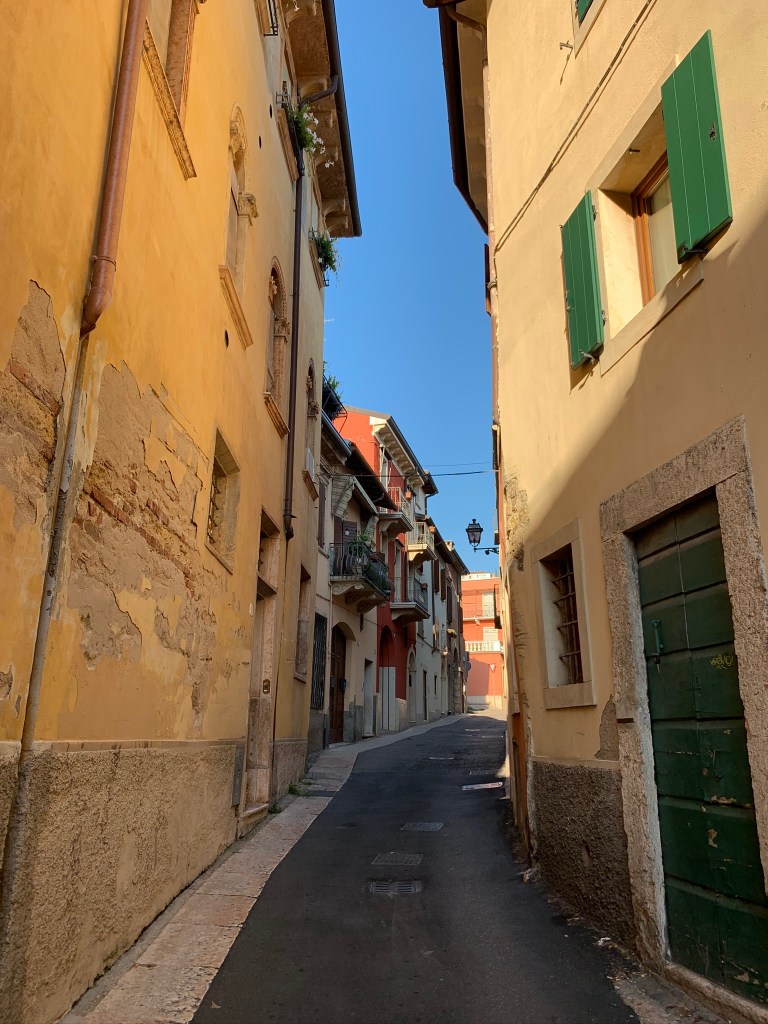
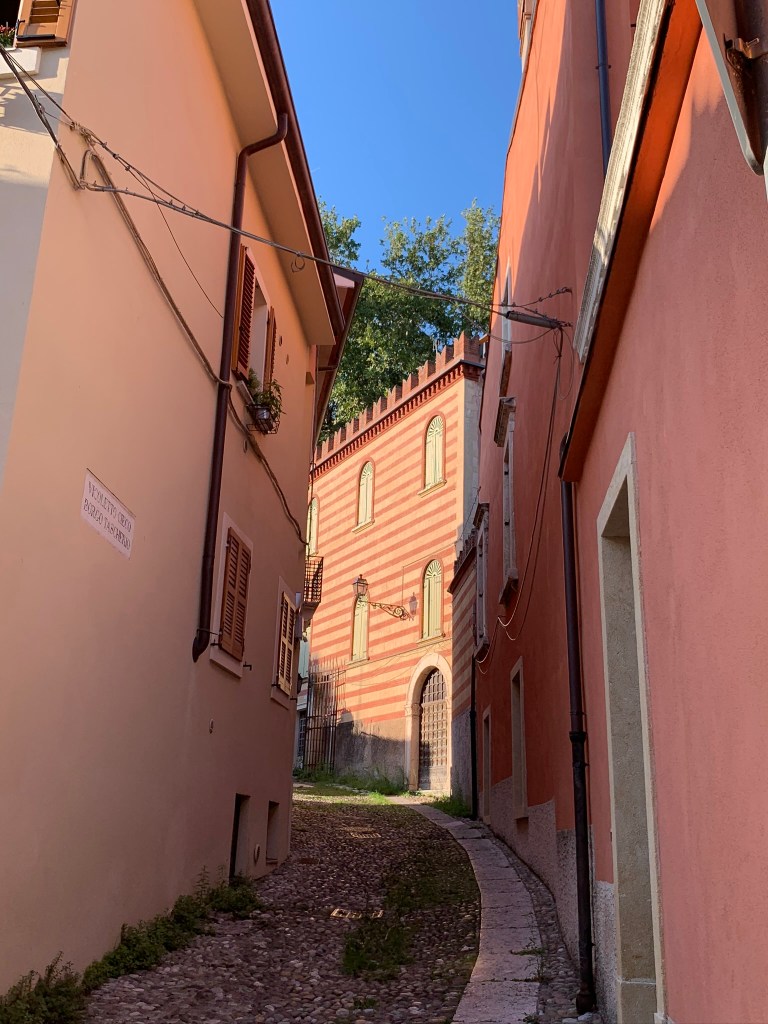
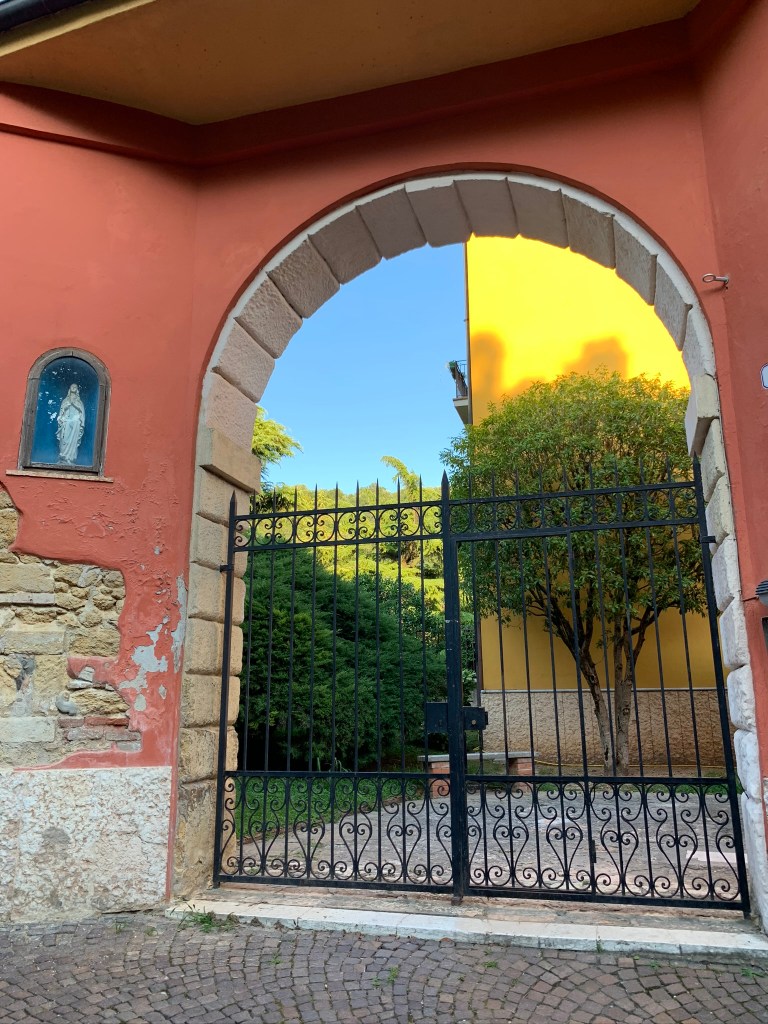
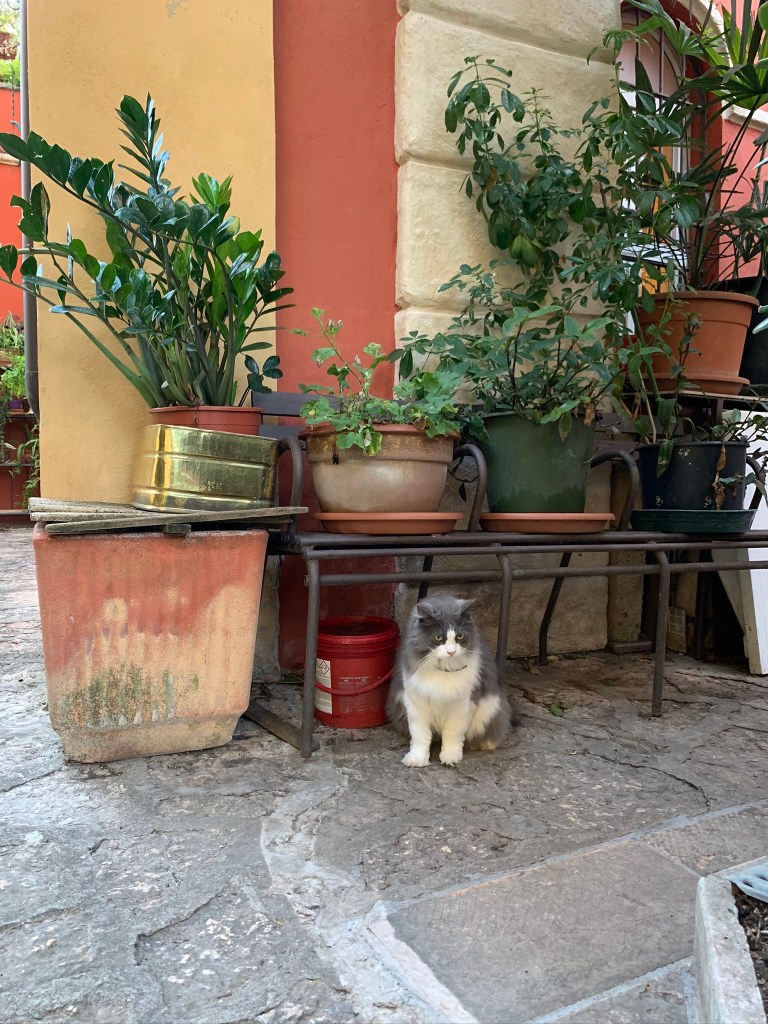
After the warm welcome of the hosts and their various cats, I set up camp in my cosy room and got ready to meet my family, who were staying in a flat a 10 minute walk away. We took a stroll around the city, which presented itself in golden evening splendour.


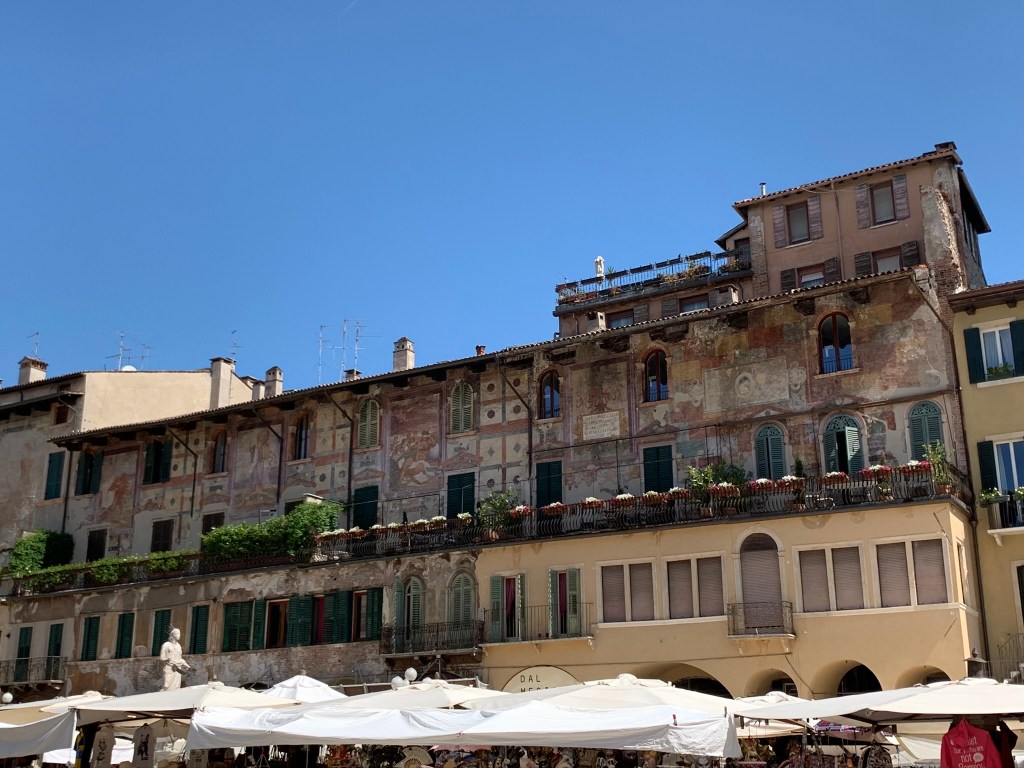
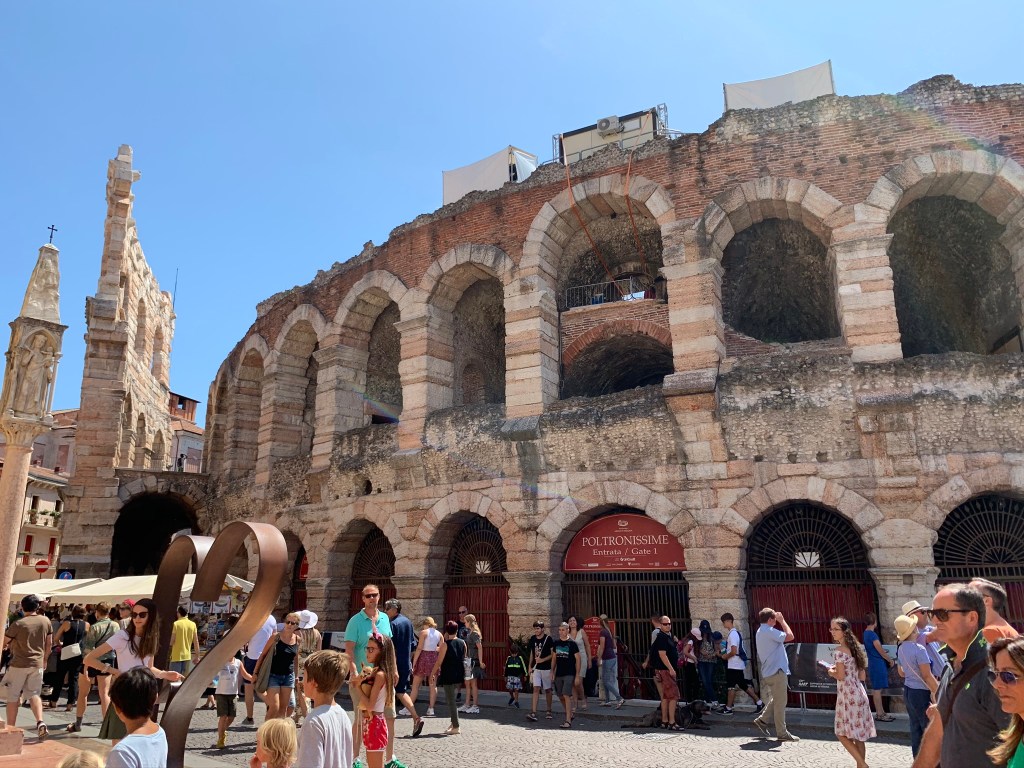
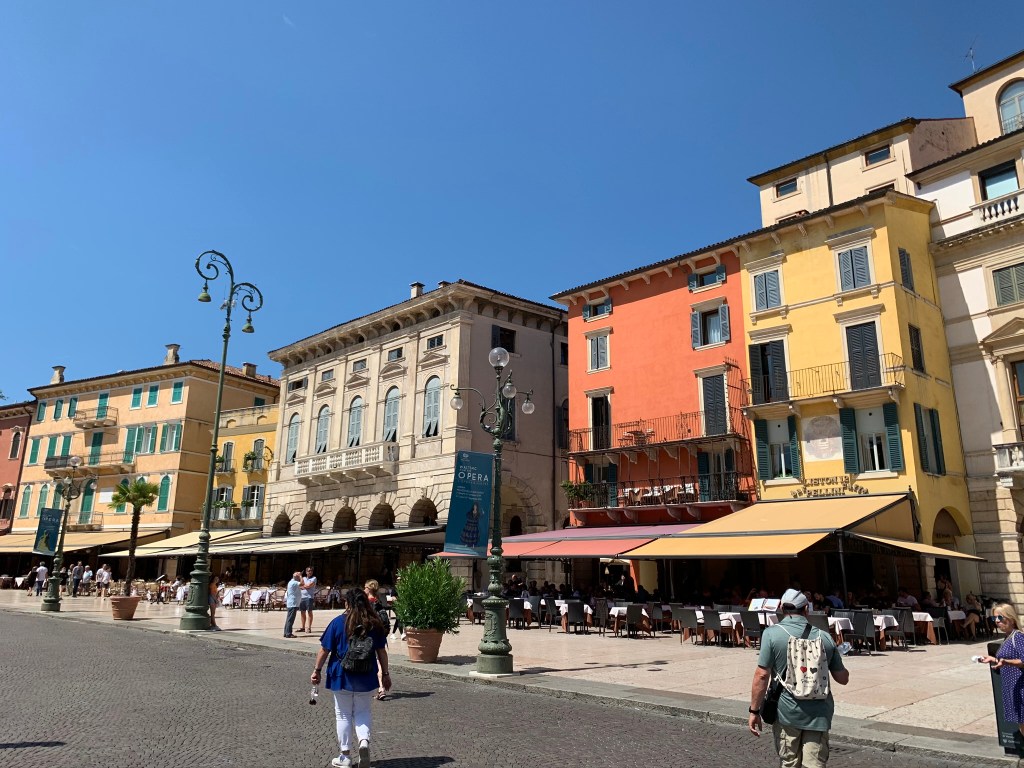
On our first day, we began by wandering through the city, taking in some of the main sights – the Opera, the Piazza dei Signori (with its statue of Dante), the Piazza delle Erbe and the impressive Ponte di Castelvecchio. The Piazza delle Erbe has a very unique feature: under one of the arches, a huge whalebone has been dangling since the early 17th century, said to fall on the first honest person to walk beneath it. The fact that it’s still not fallen down is therefore a dubious stroke of luck…
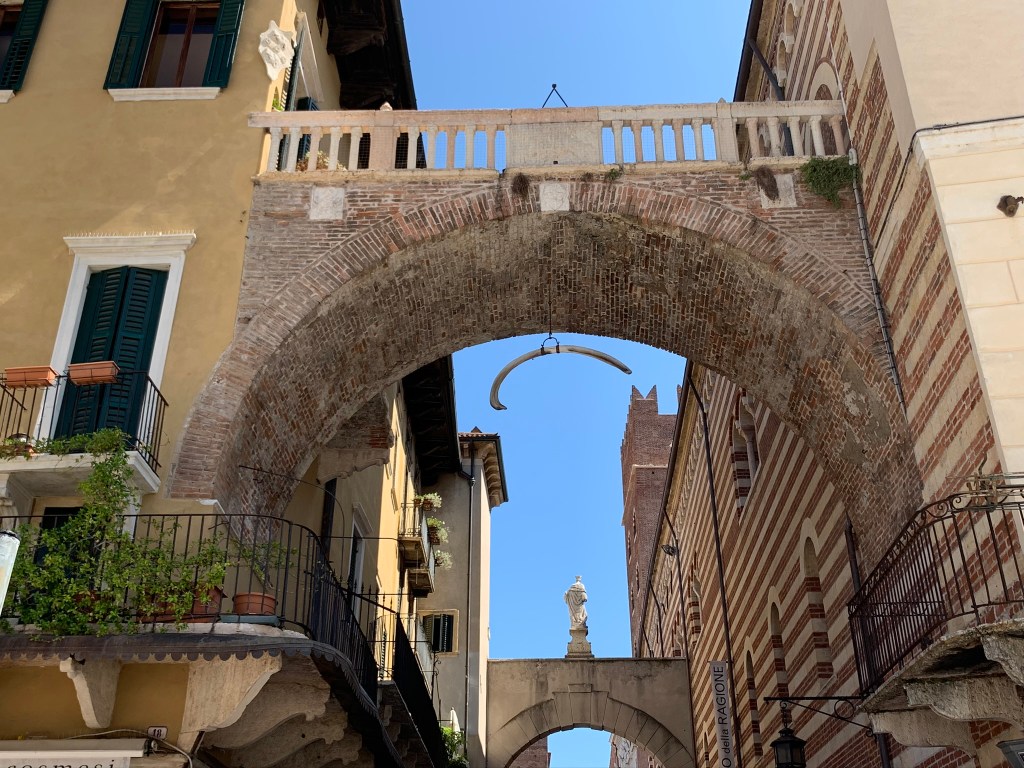
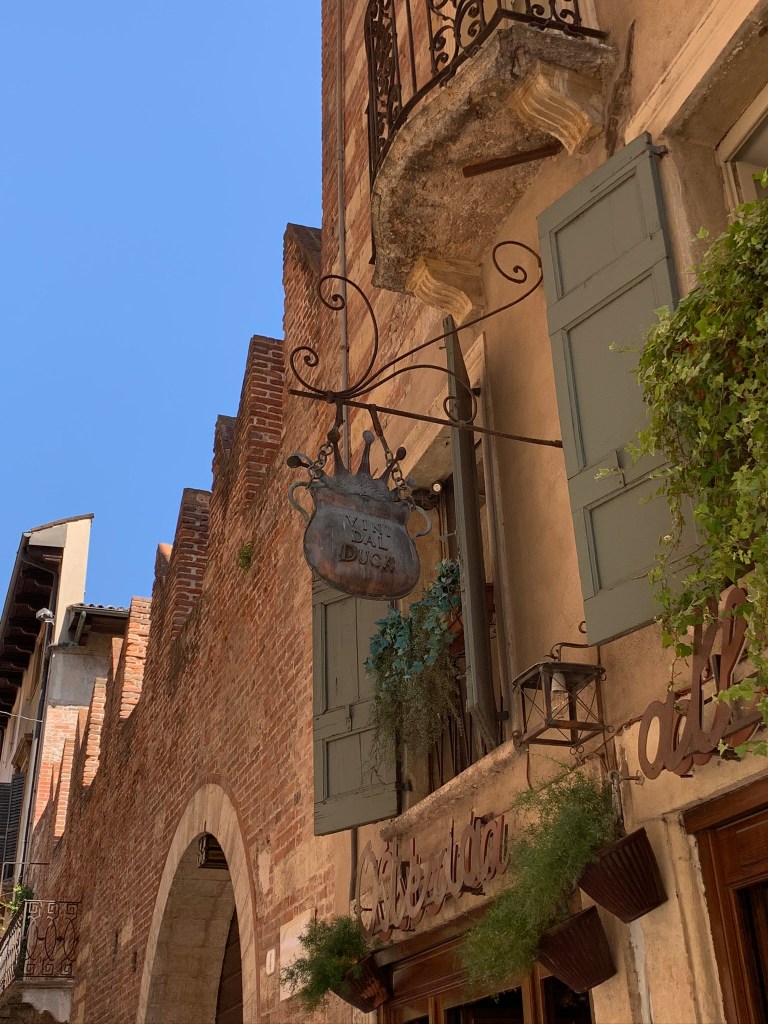
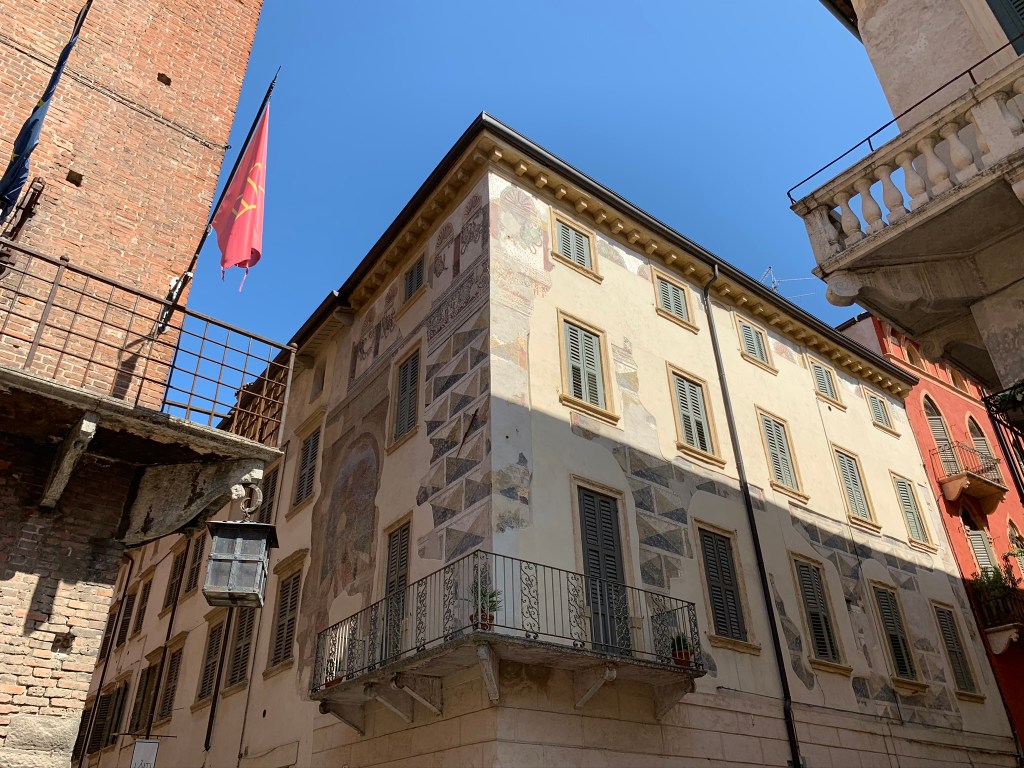
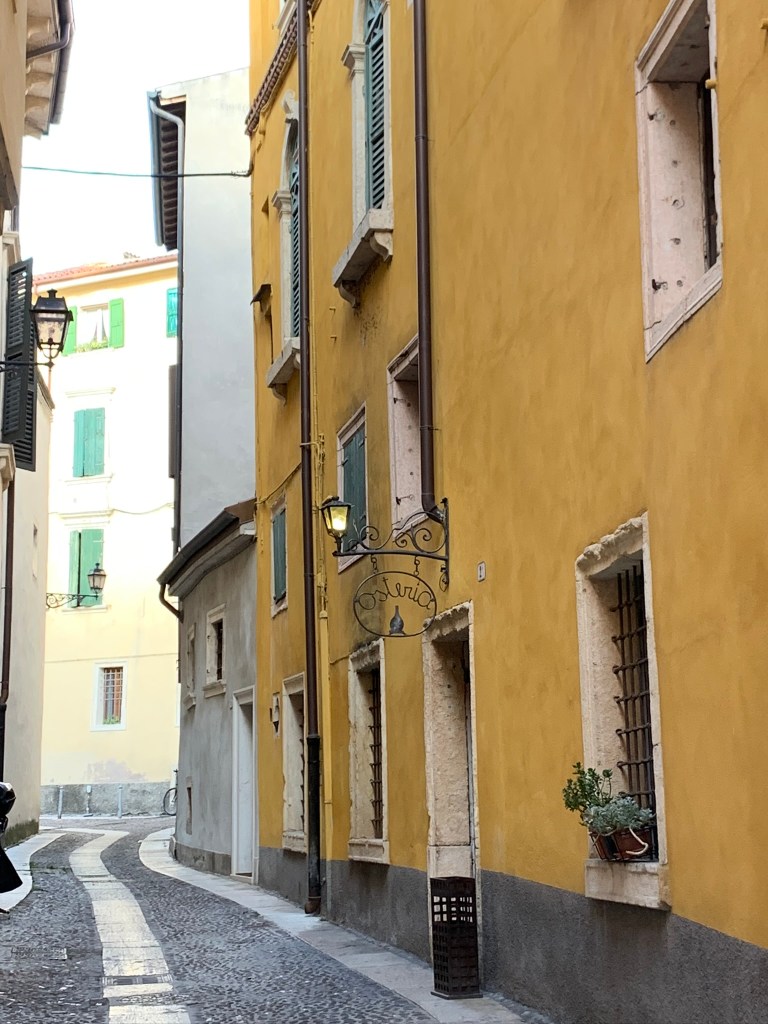
There are interesting details to discover in Verona wherever you look: be it a painted house wall, a quirky statue or a decorative shop sign. And I could never get tired of all the beautiful street façades.
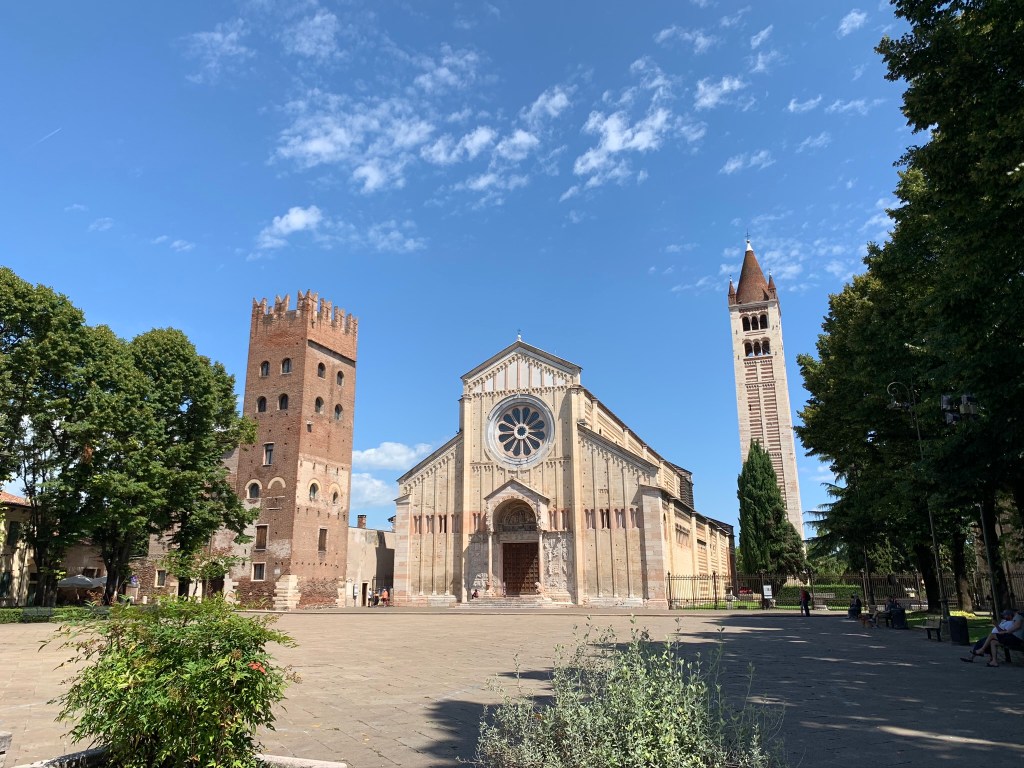
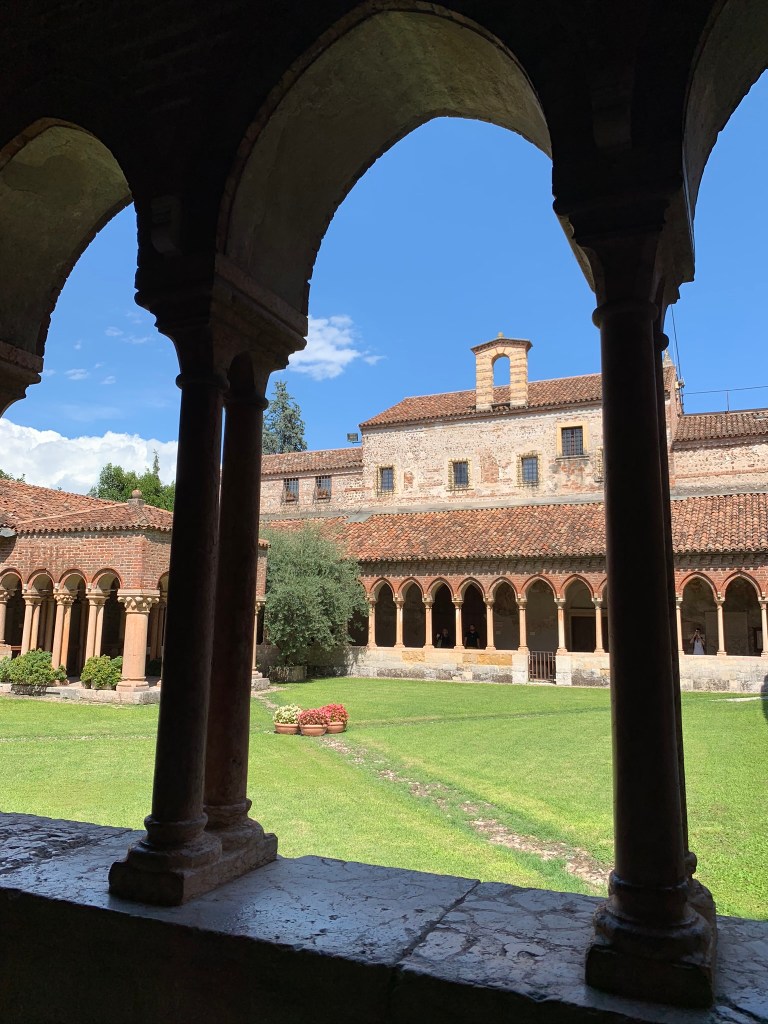
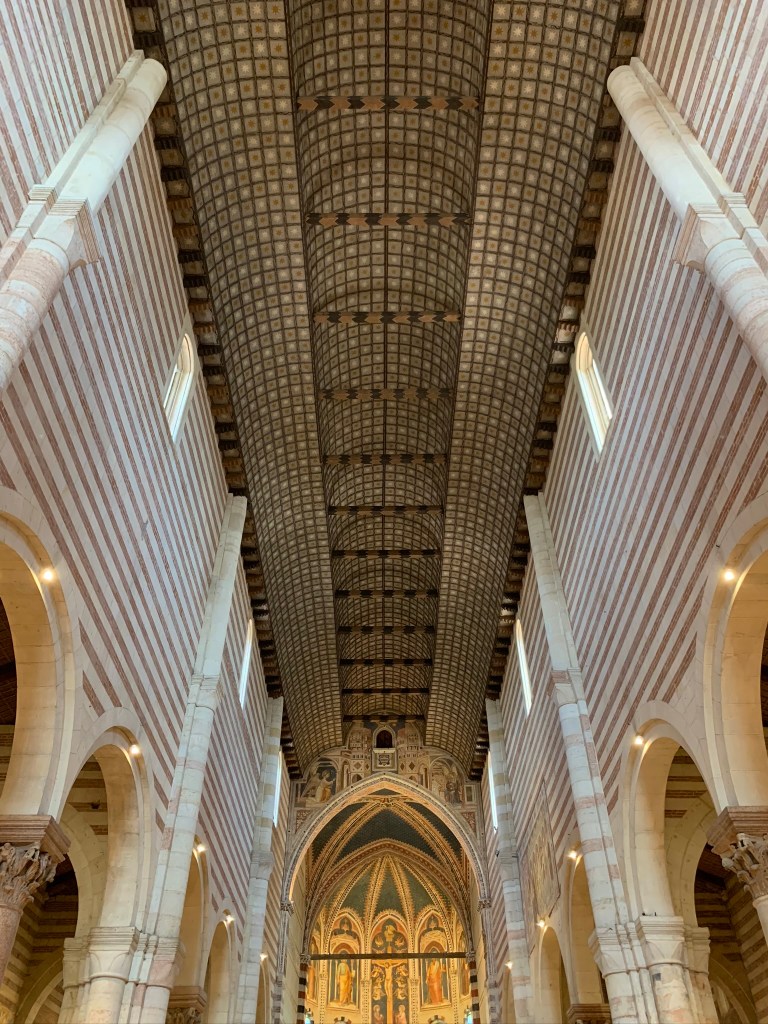
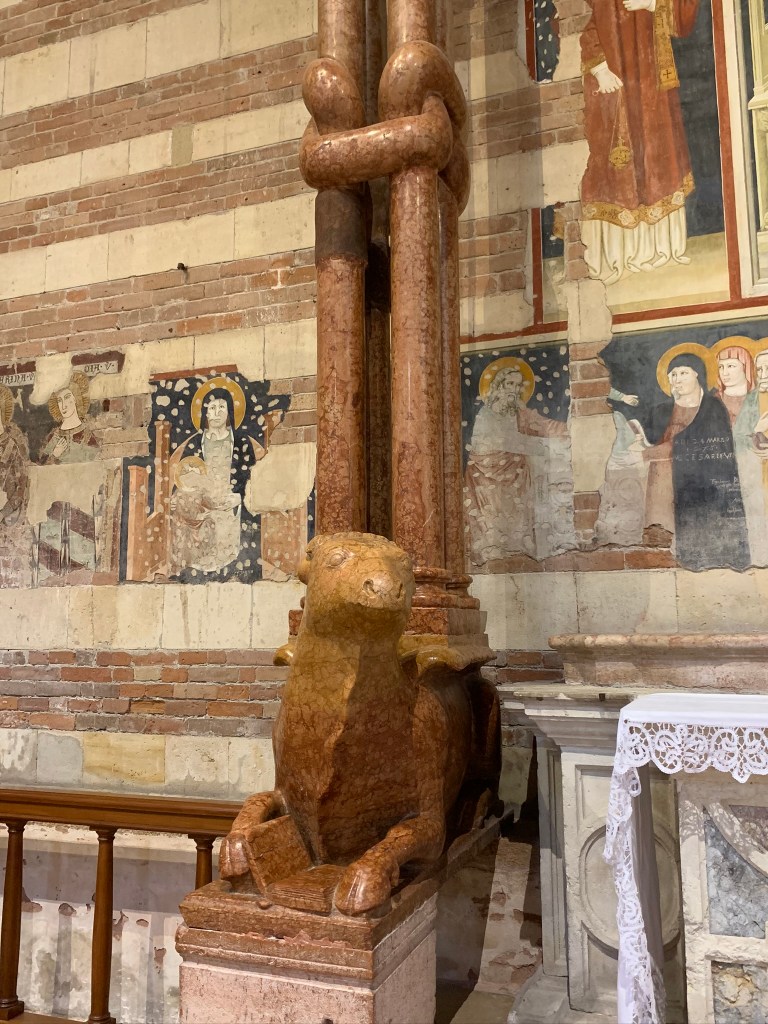
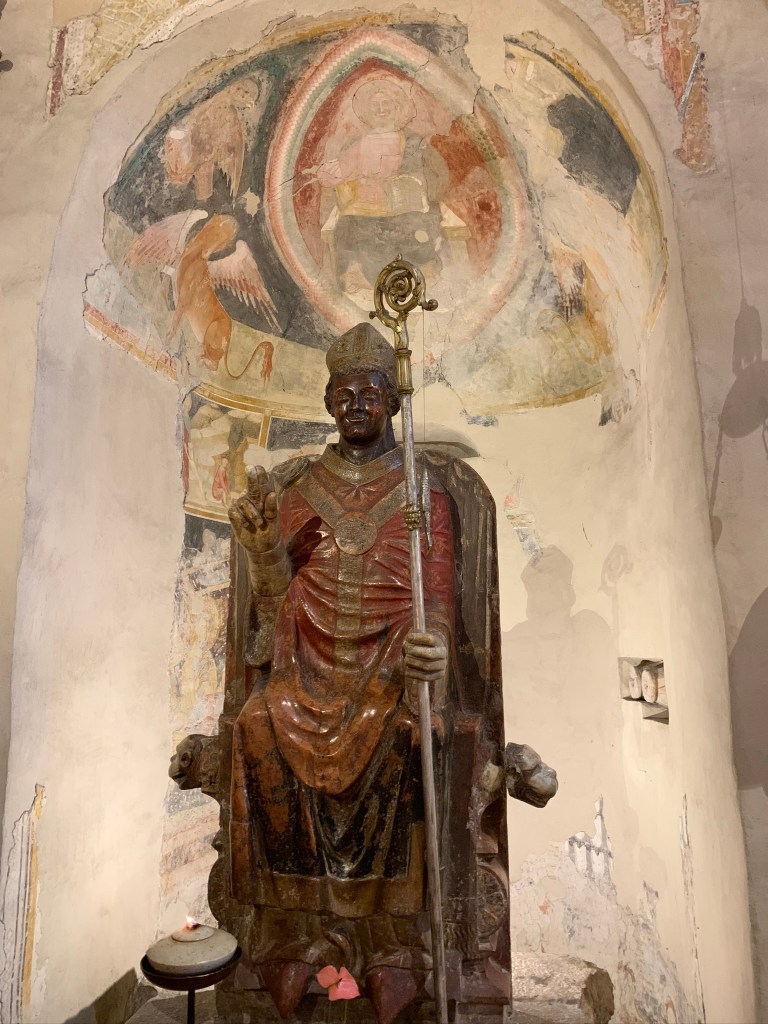
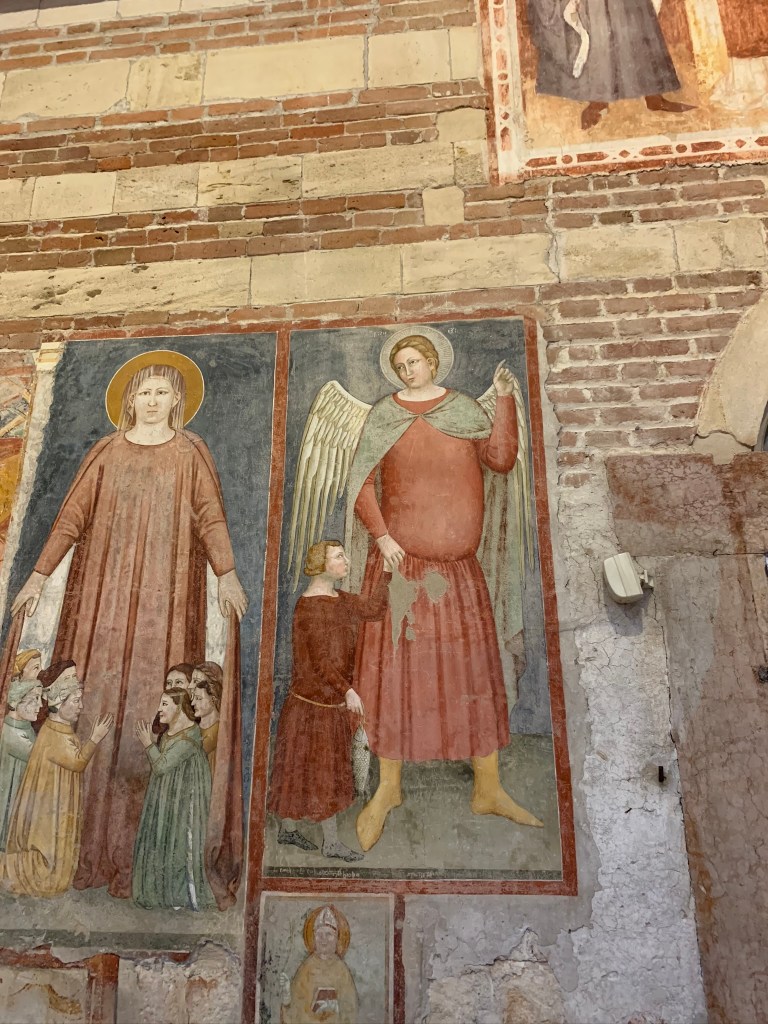
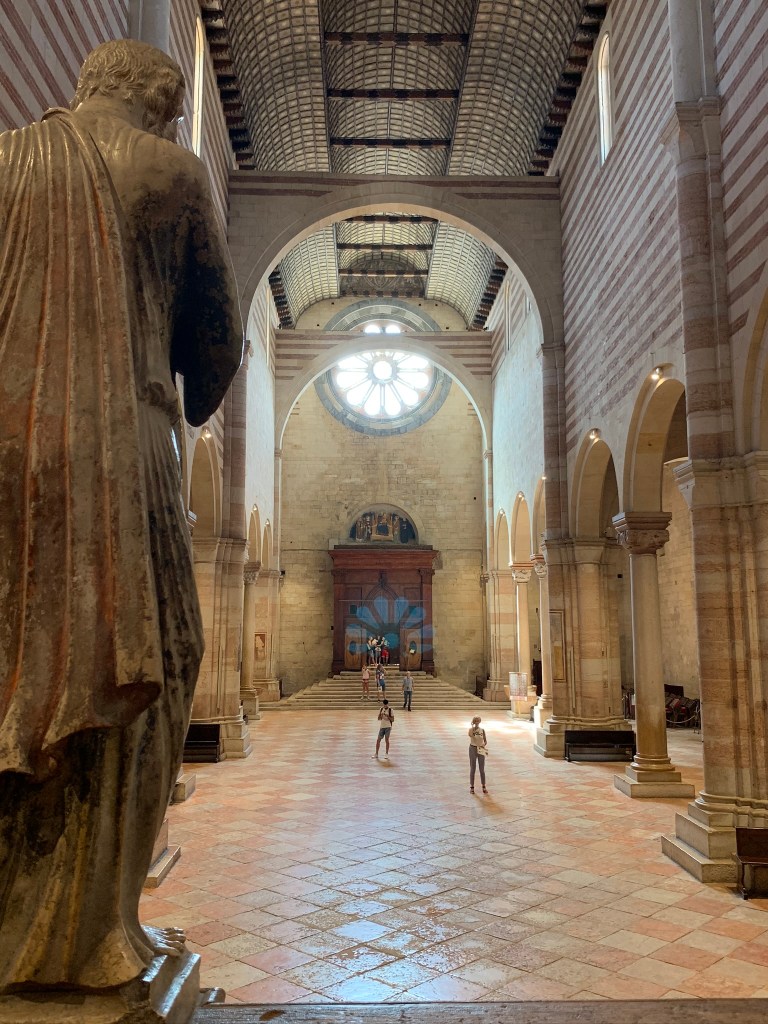
We also viewed the first of Verona’s many impressive churches, most of them particularly memorable because of their intricate ceilings. The Basilica San Zeno Maggiore lies in a wonderfully quiet part of the city, on a huge square surrounded by trees and houses. It’s not a touristic area and could not be more different in atmosphere to the centre – maybe this was simply due to the time of day and the heat. In any case, the Romanesque church has nothing small-town about it. Besides the magnificent roof structure, the beautiful frescoes and lush cloisters, it’s also got many endearing features, such as a smiling saint, a camel and an overweight angel!
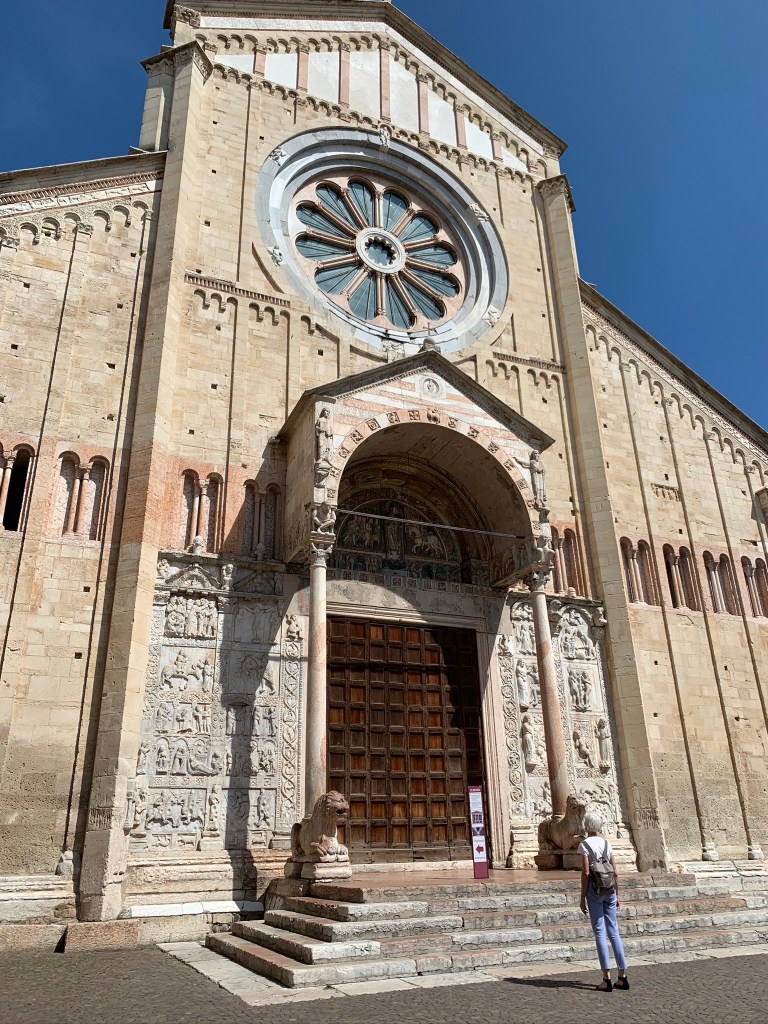

Another fascinating detail is the bronze panels on the inside of the church portal doors, dating back in part to the 11th century and depicting various saints (including the story of Zeno), the theological virtues and biblical scenes. The most opulent of all the medieval bronze doors still in place, it must have undergone several changes over the centuries and its plates rearranged, with the continuity of the scenes lost along the way. However, they are incredibly endearing in their detail and simplicity:
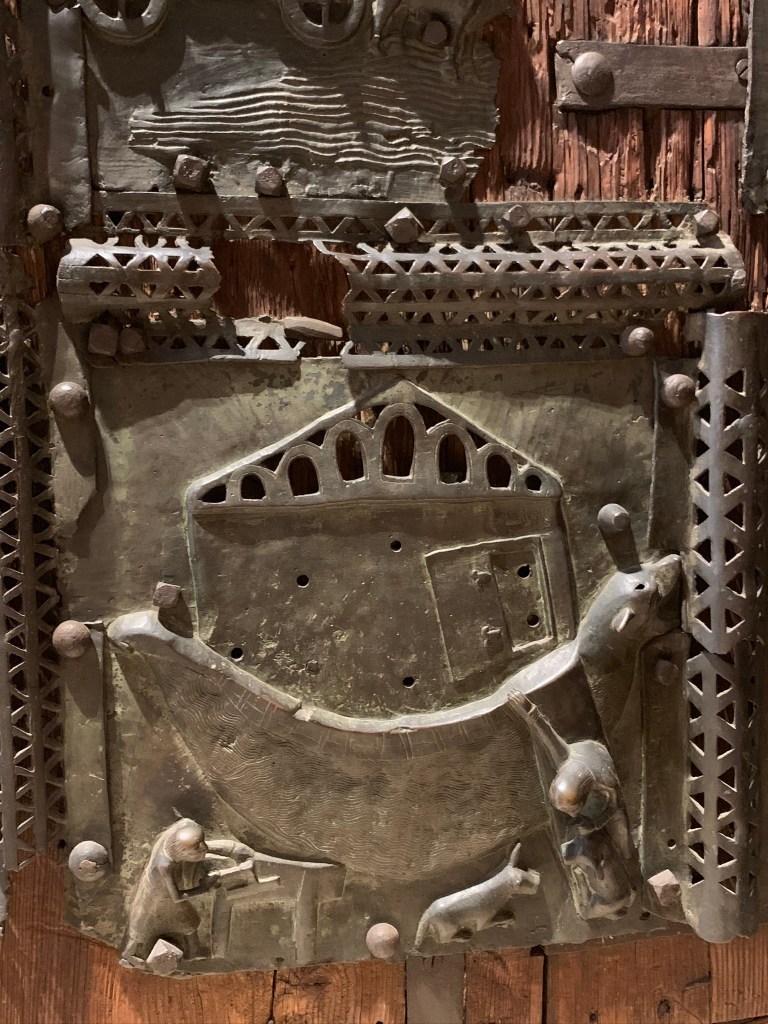
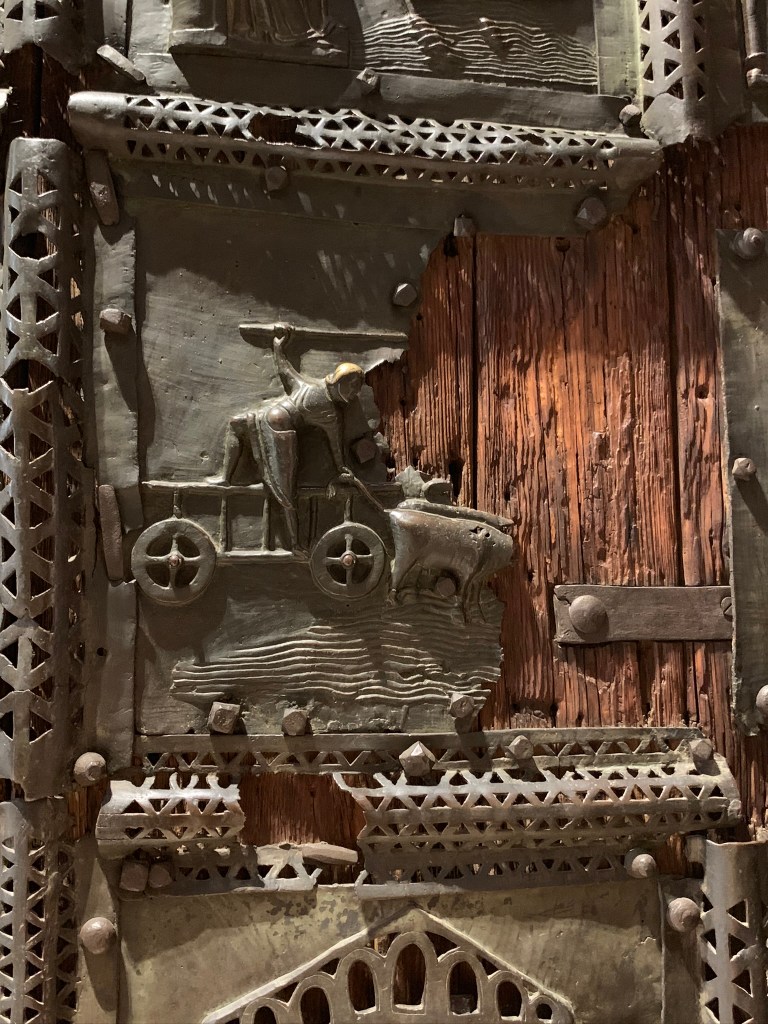
Having walked off our first Veronese ice cream, we had dinner in a lovely, lively restaurant that we had booked online – travelling in Italy in August has the sole disadvantage that many eateries are closed due to Ferragosto, which is celebrated on the 15th of the month, with a lot of places and people going on holiday the week before and/or after. This is in no way a problem, though, it just limits the choice you have when going out for a meal. Which, let’s face it, isn’t always a bad thing!
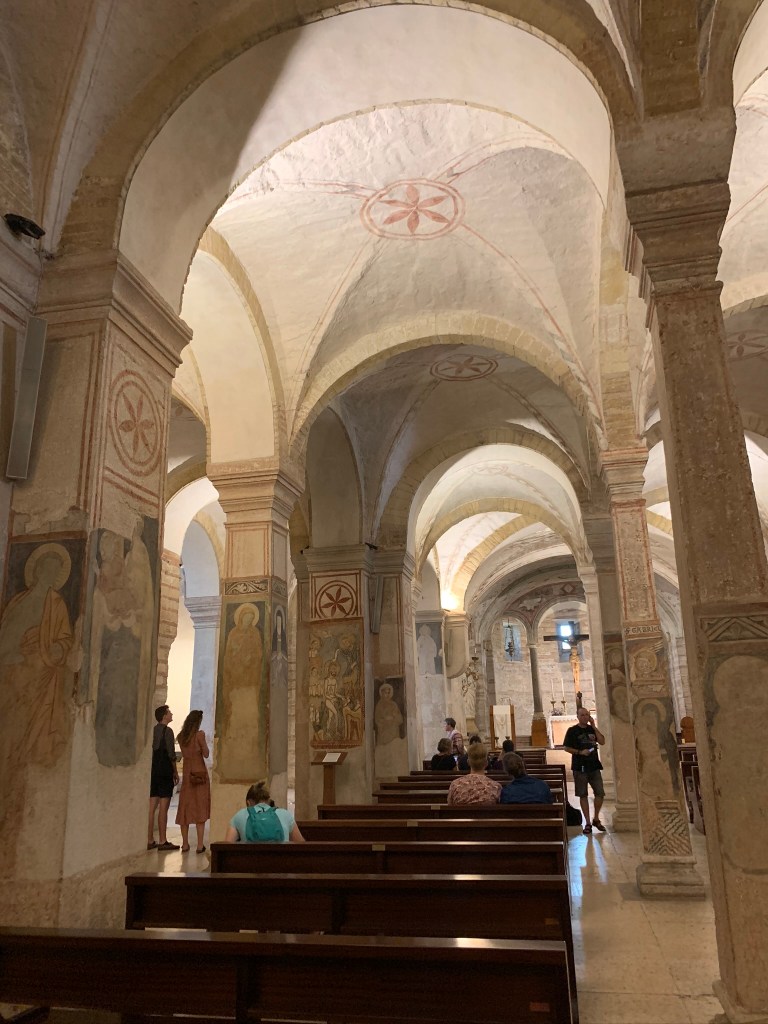
The next day held more churches in store. First up was San Fermo Maggiore, a church of two halves and two styles: it has a crypt-like lower part in the Romanesque style and an upper part that is more Gothic in appearance. The clear highlight here are the frescoes and the imposing wooden ceiling – it does feel a bit like standing not in, but underneath a ship! Sadly not visible on my photos are the hundreds of small portraits of saints incorporated in it in two long rows.
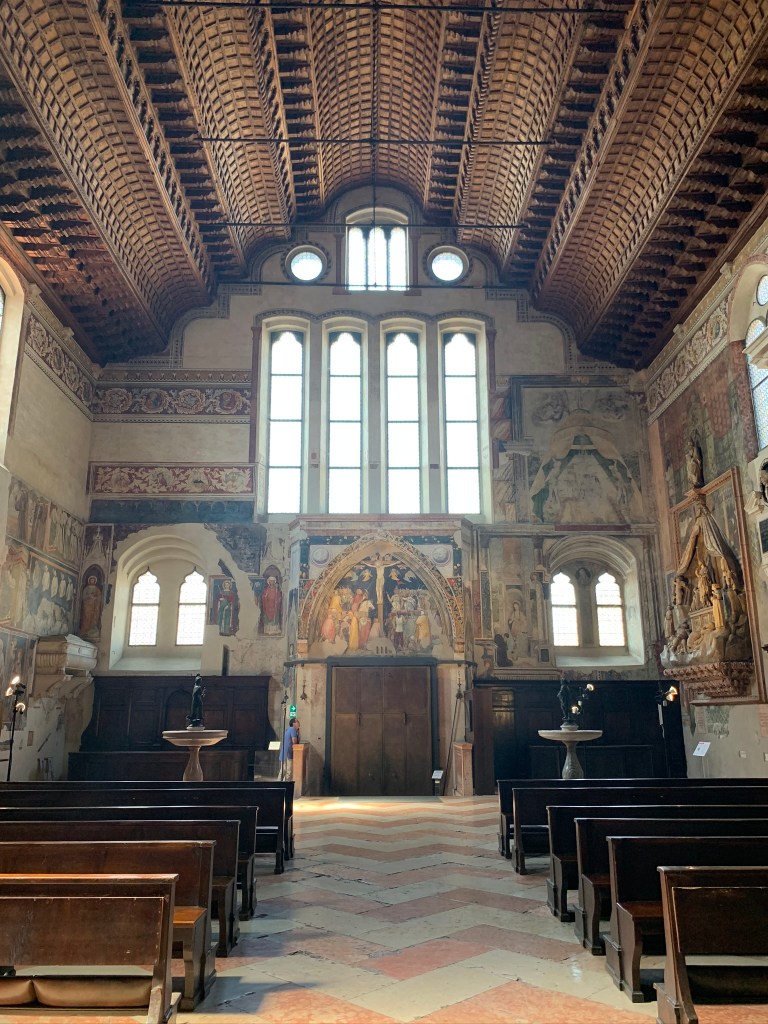
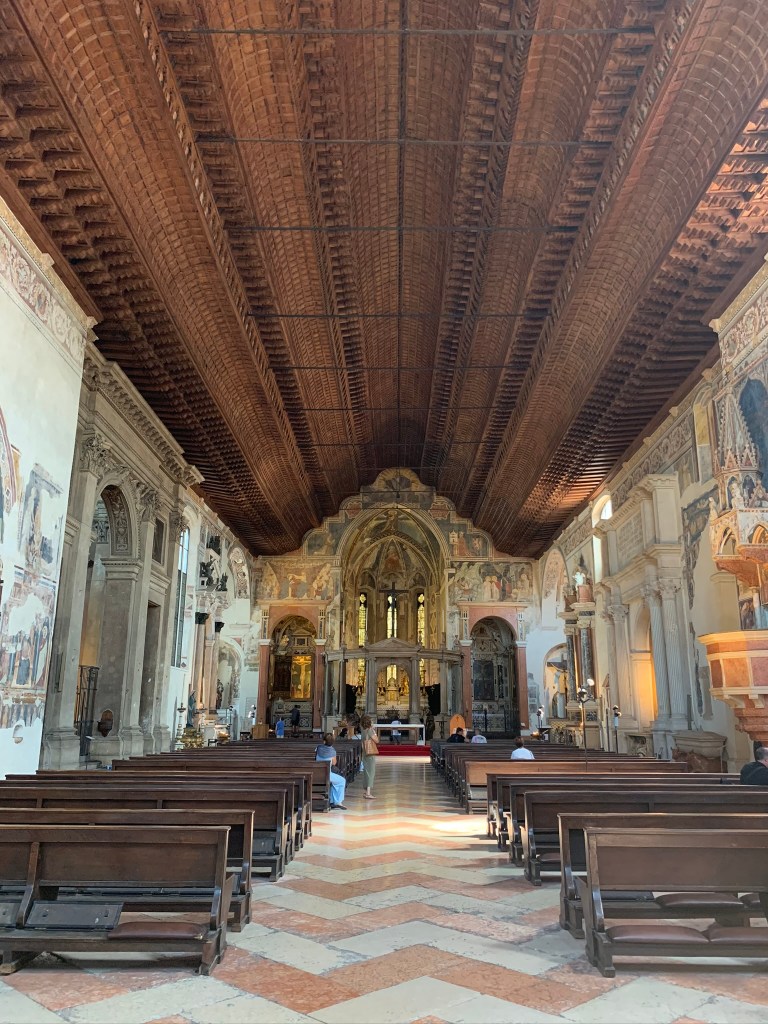
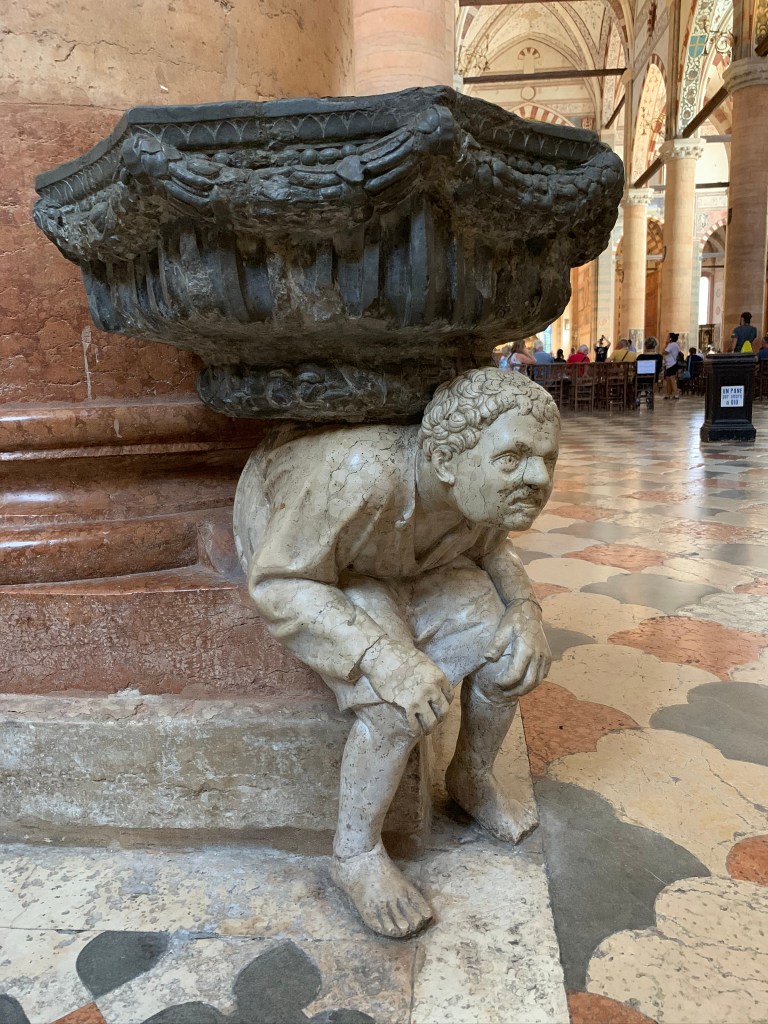
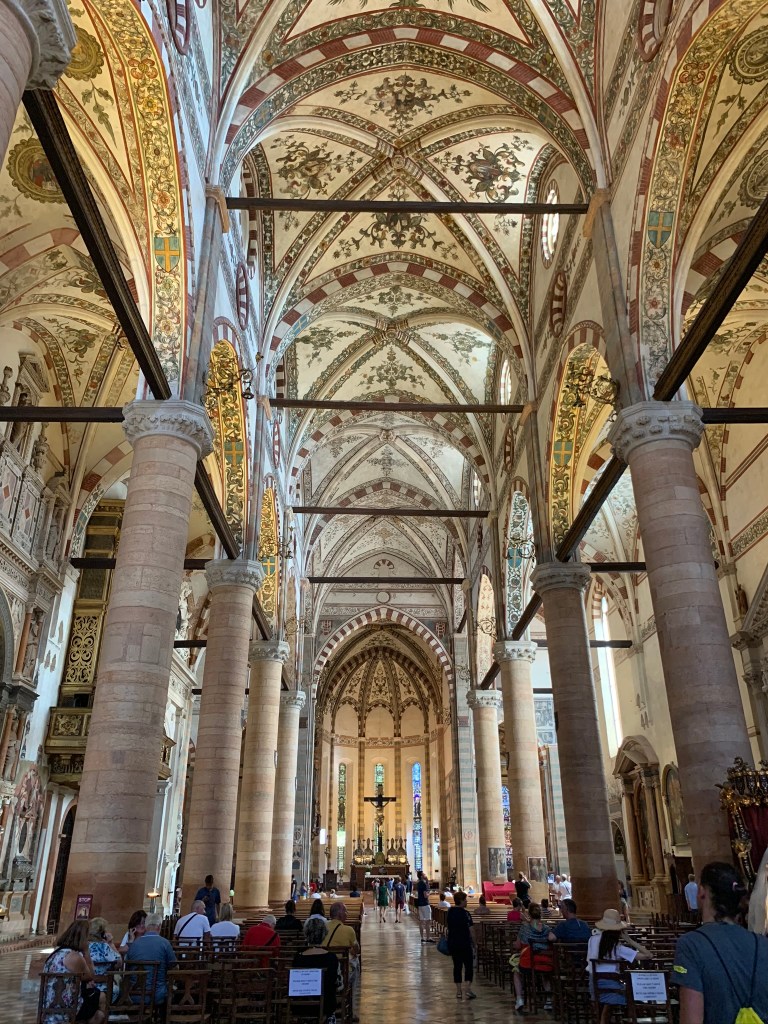
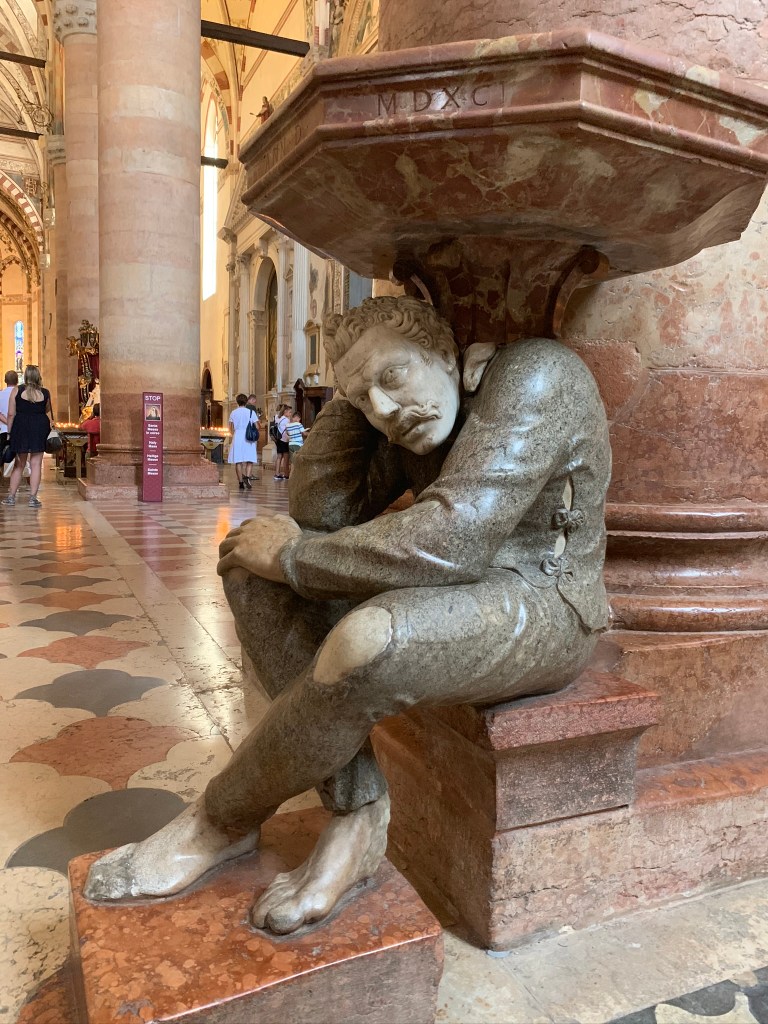
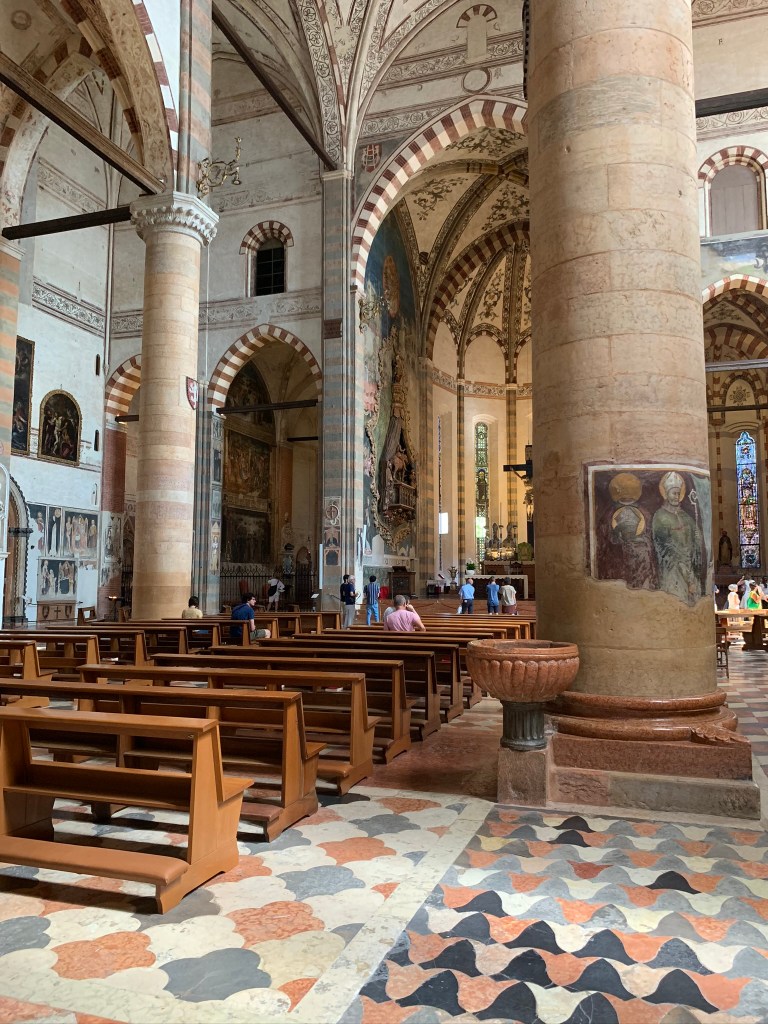
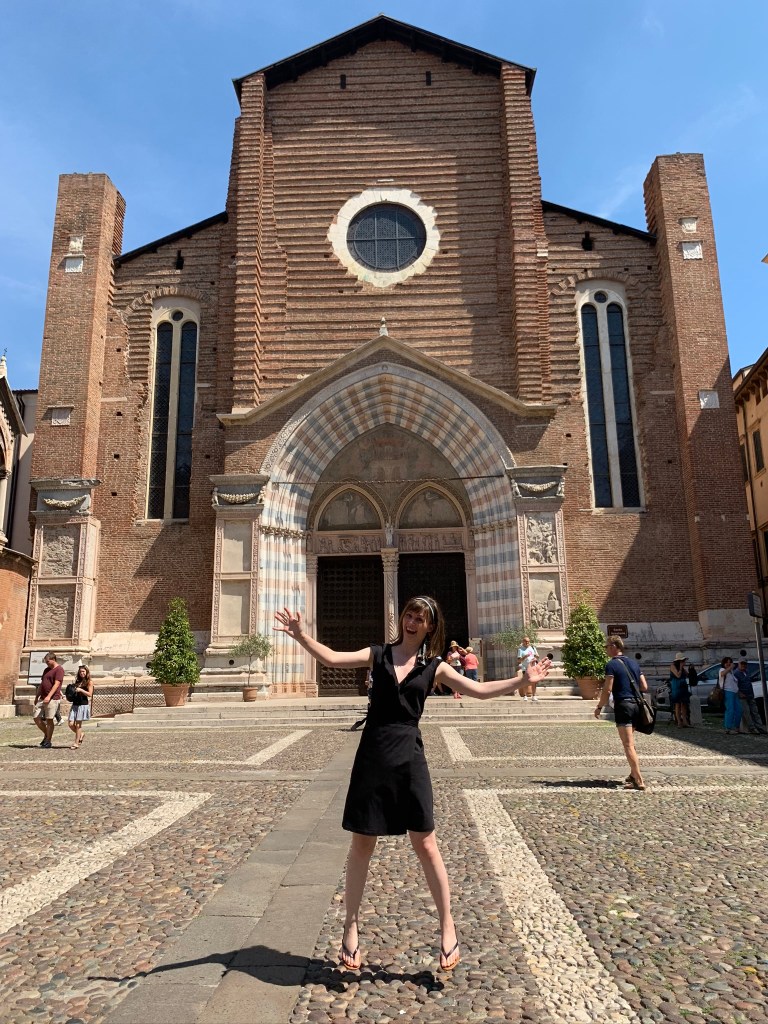
Then, another church, another beautiful ceiling! This time, painted. The Chiesa di Santa Anastasia is from the 13th century and is known for its murals and the two hunchbacks greeting you near the entrance (stone hunchbacks, of course – this isn’t Notre Dame). The floor, with its different patterns, is also very pretty.

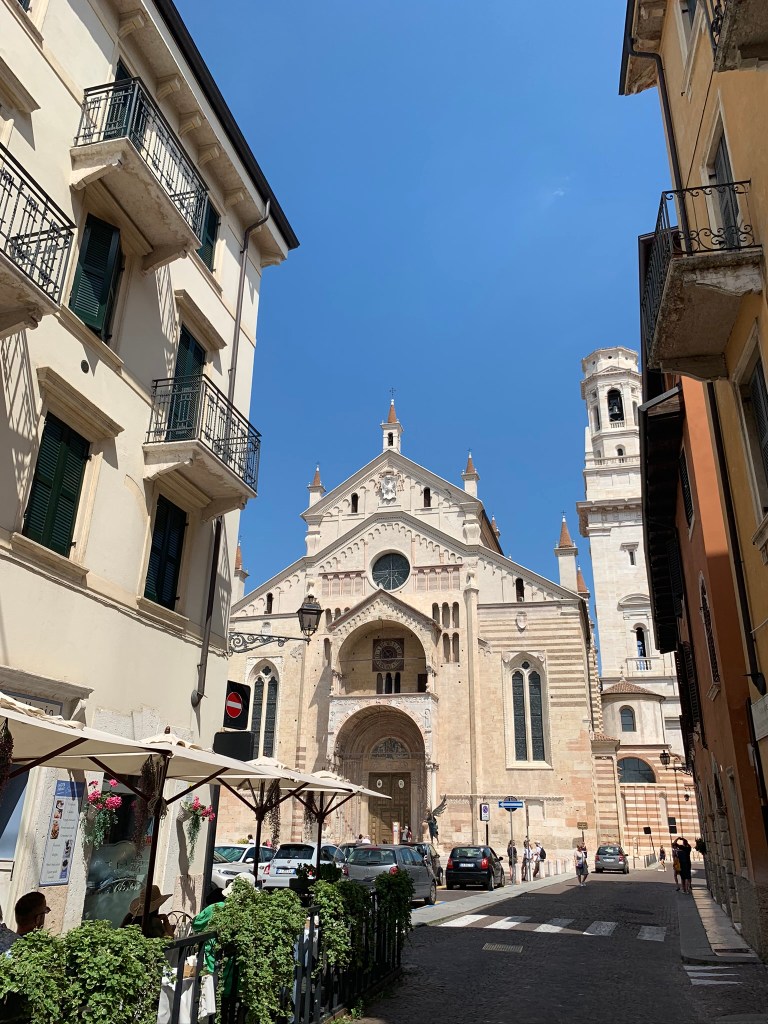
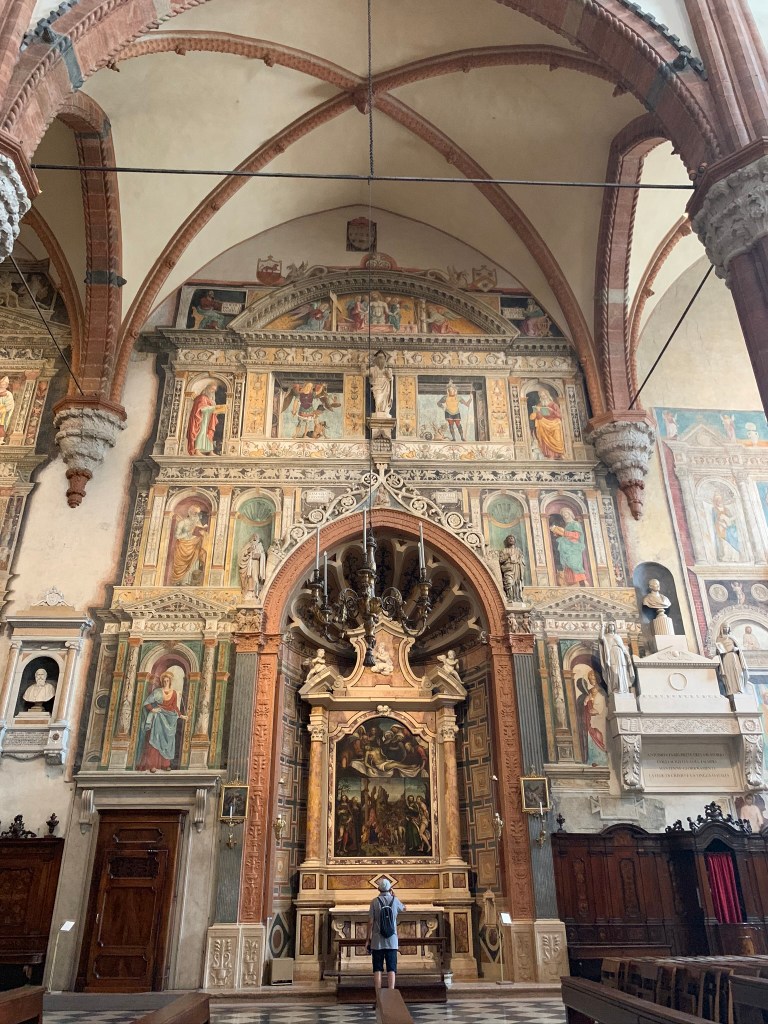
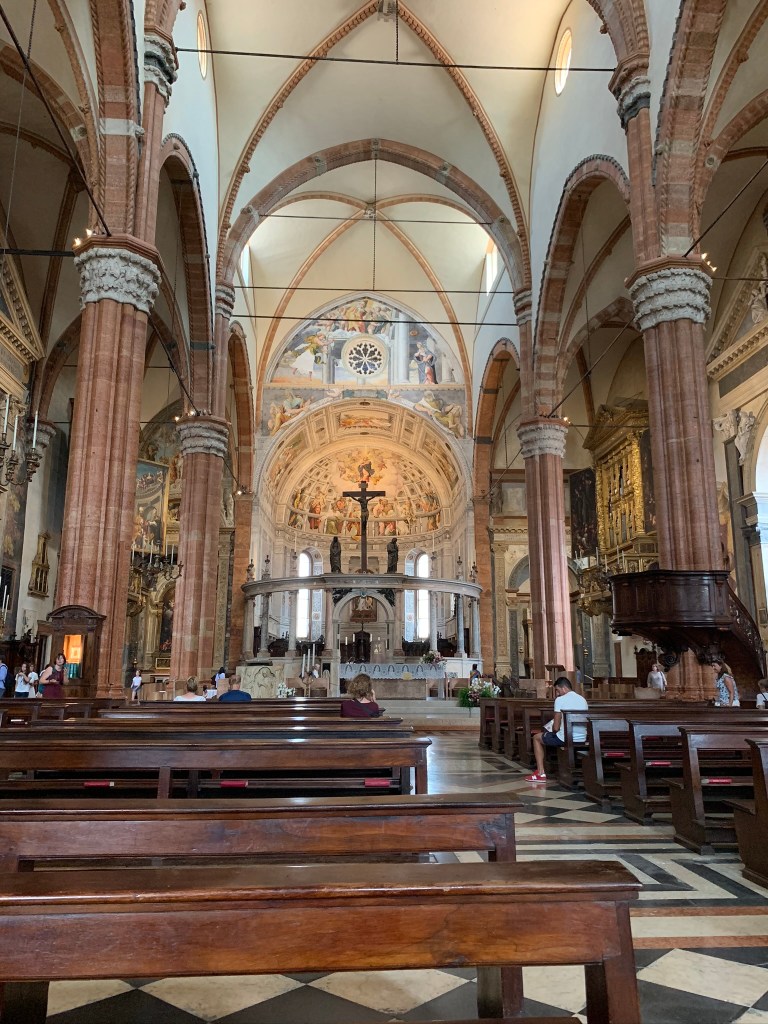
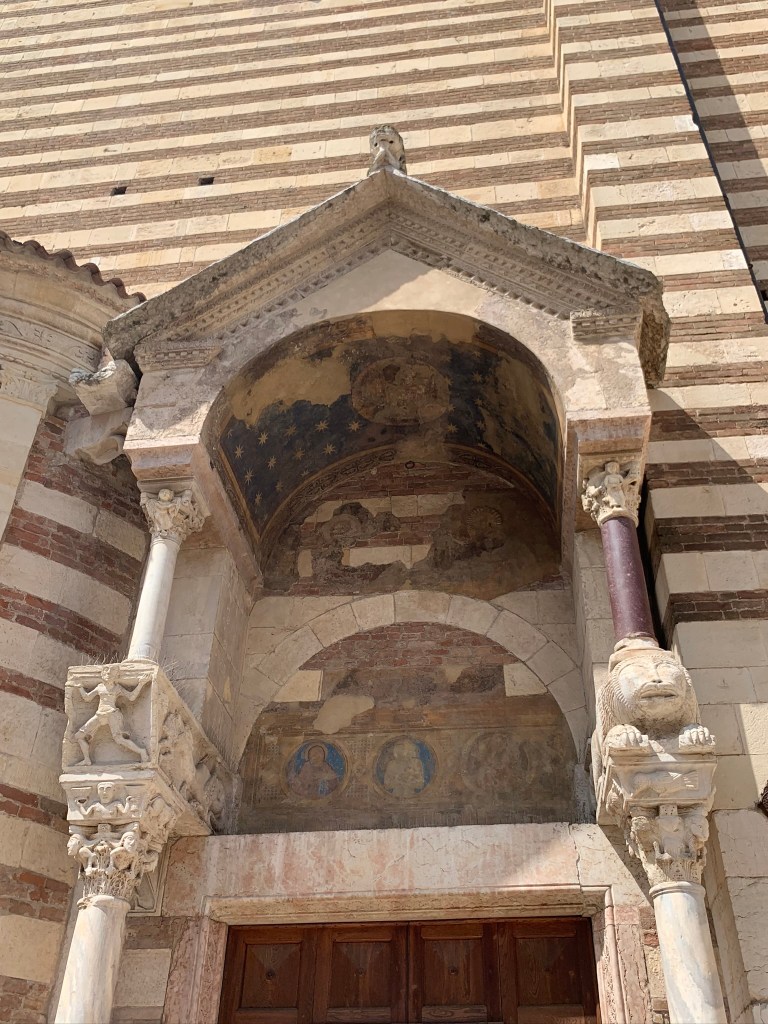
If you now think, “surely, that is it for churches?”, no, no! You’re in luck, I have one more to present to you – the cathedral, la Cattedrale di Santa Maria Matricolare (auch: il Duomo). “And, does it feature another spectacular roof?”, I hear you ask in breathless anticipation. Well, yes, of sorts, but by this point we were all slightly churched out and maybe didn’t appreciate the splendour of this building as much as that of the others. However, in terms of the outside, this one was perhaps my favourite. Also, there’s some work by Titian to admire, lest I forget…
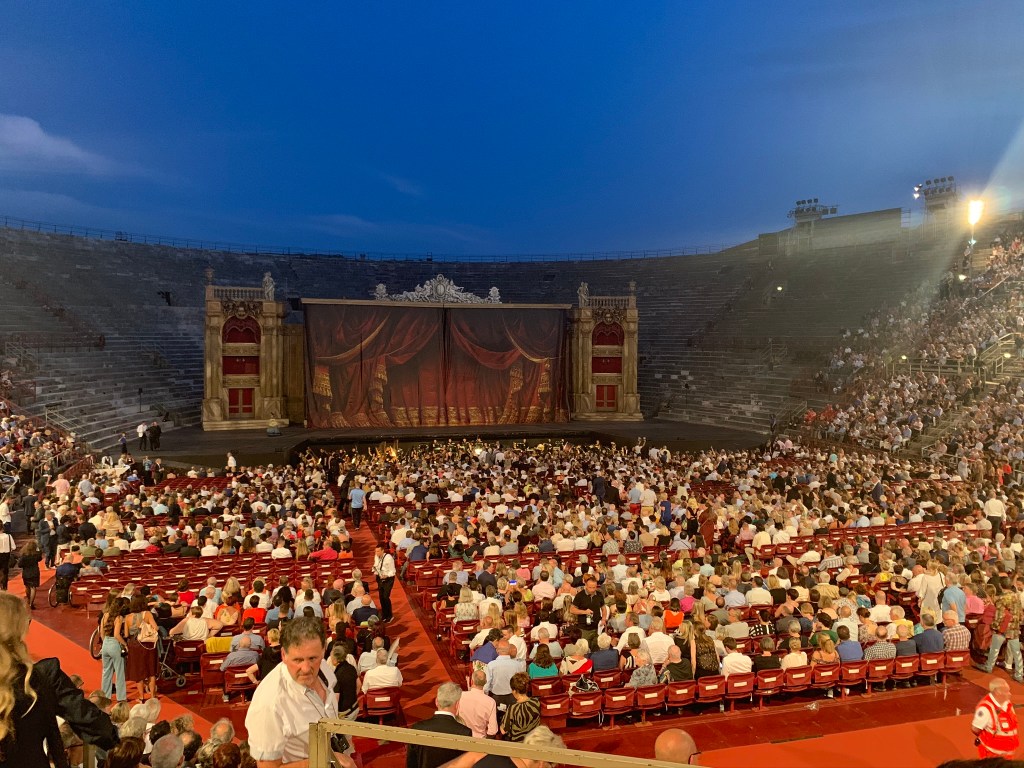
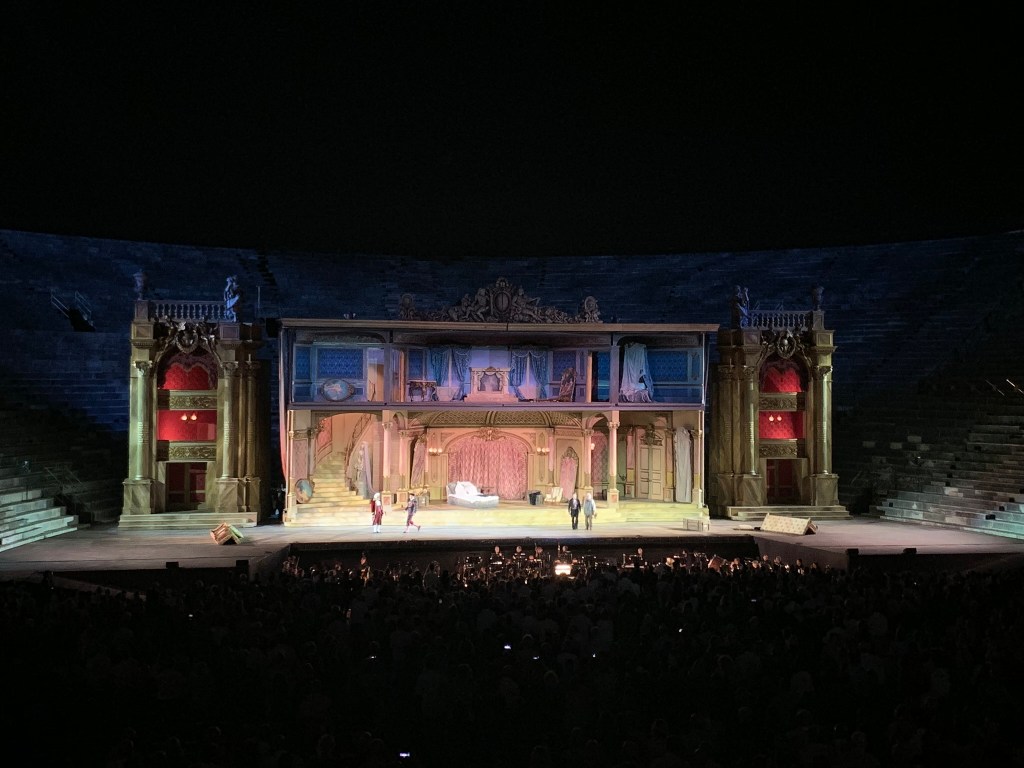
In terms of cultural highlights, the day was far from over. We had tickets for La Traviata at the Arena, so had an early dinner and joined the long queue of spectators waiting to pass the security checks. As this amphitheatre can seat up to 20,000 people, your ticket tells you which entrance you should use. Everything is tightly organised and thus, after standing in line for less than twenty minutes, we were already in our seats. It’s of course not allowed to take photos or videos during a performance, but I took one sneaky photo at the very beginning of the second act – the stage set was just so beautiful! Observing the change of set during the interval was additional entertainment: the set pieces are so intricate that slotting them together provides work for a group of around ten builders.
As for the opera itself, the singers and orchestra were outstanding and the acoustics really are as terrific as everyone says. In other words, going to the opera here is worth every penny! But do bring a comfy cushion…
At the end, the performers were bathing in the riotous applause of the crowd, with the main character Violetta, having quite recovered from her tragic death, wafting across the stage in her shroud-y nightgown and belting out one of the arias as an encore (accompanied by the orchestra, of course – she wasn’t quite that eccentric).
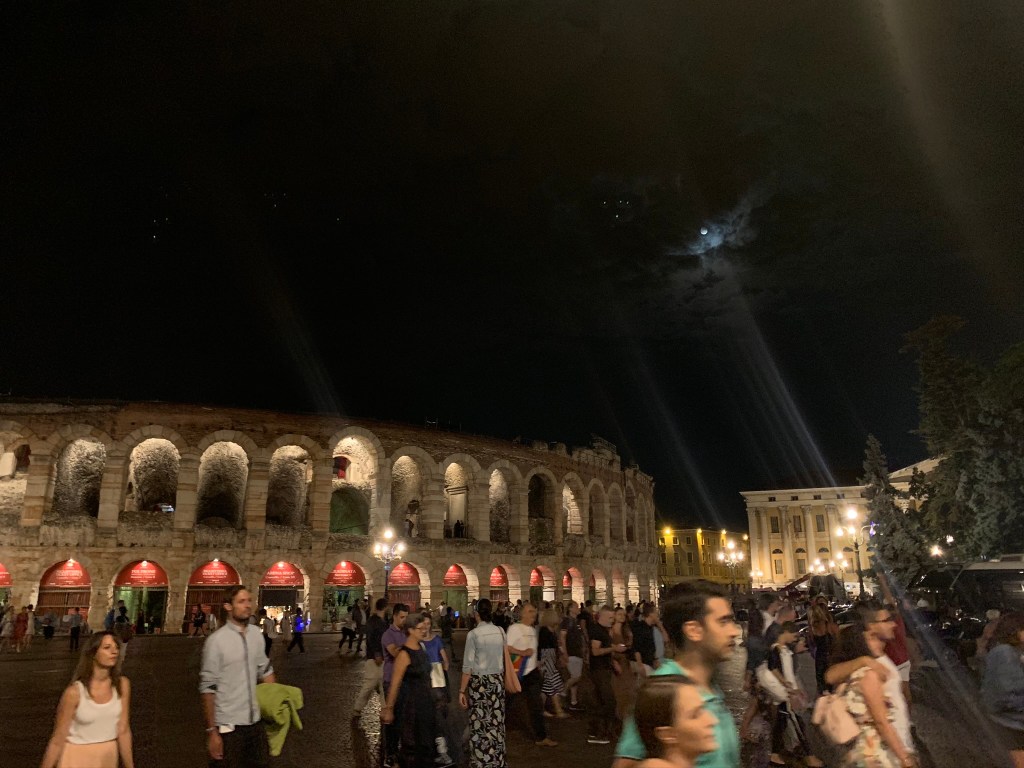
Eventually, when the cast had taken their bows for the seventh or eighth time, the audience streamed out of the arena and onto Piazza Bra. Quickly, every outside seat of the many bars and restaurants was taken and everyone was enjoying a refreshing drink. A perfect ending to a perfect night!
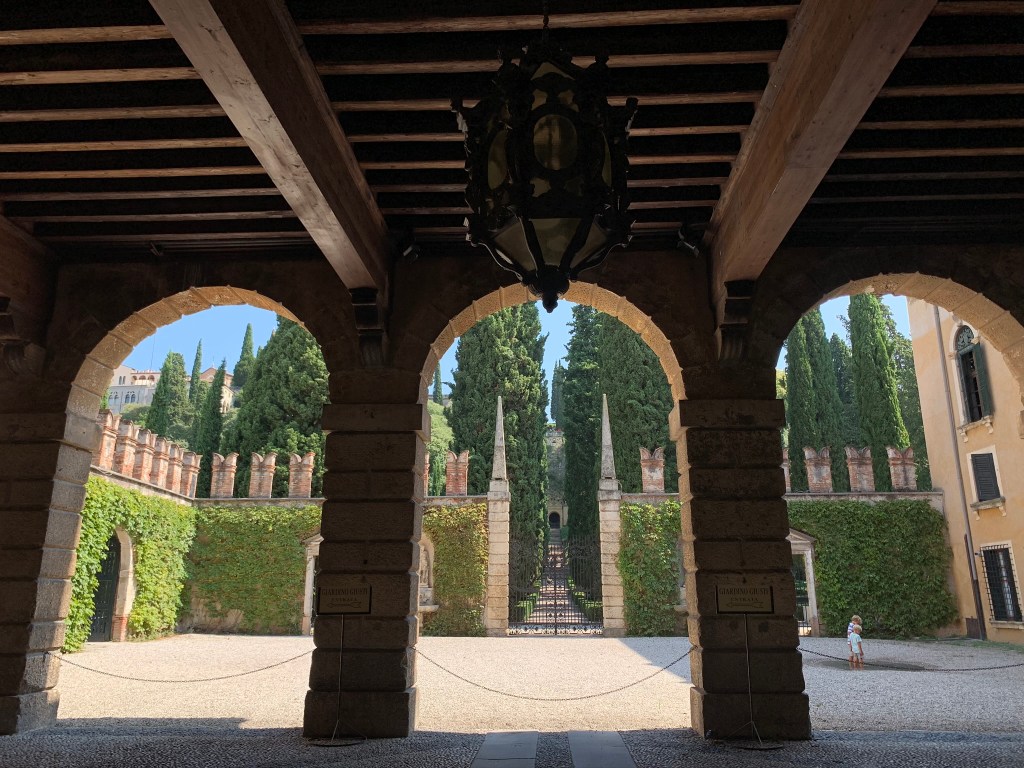
The following day, a Sunday, was already my last day in Verona. My family left for the airport at 11am and I made my way to the cooling shade of Giardino Giusti. It was quite a bit hotter than on the previous days, a trend that was to continue throughout the rest of my stay in Italy. Hence, the coolness of the residence formerly occupied by the Giusti family was very welcome indeed – and what a pretty Palazzo it is! Built in the late 16th century, it has been owned by the Giustis ever since, and despite its grandeur one can envisage a family living here – as well as the splendid balls that must have been held in the main hall.
And yes, that is furniture in the shape of giant horseshoes…
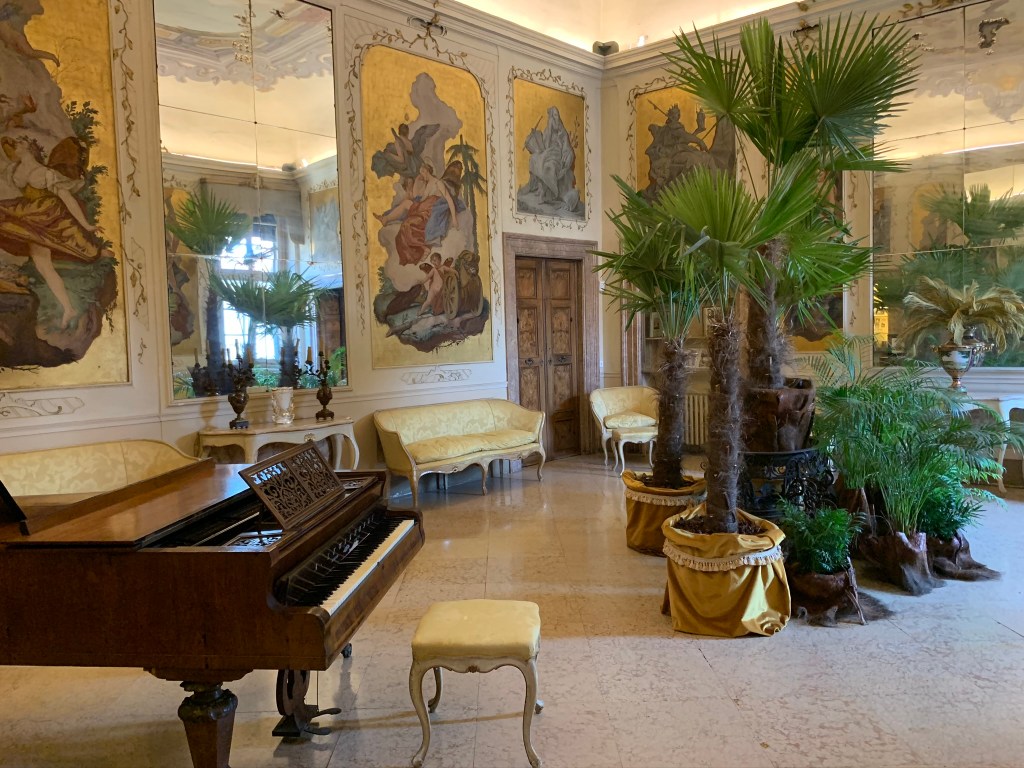
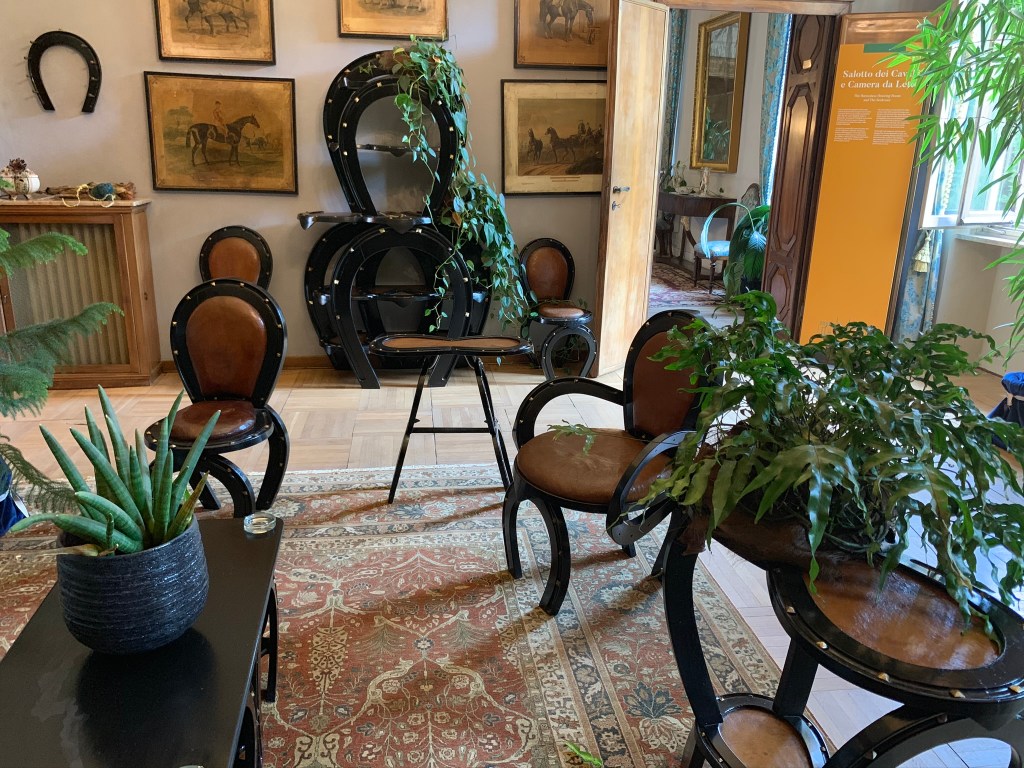
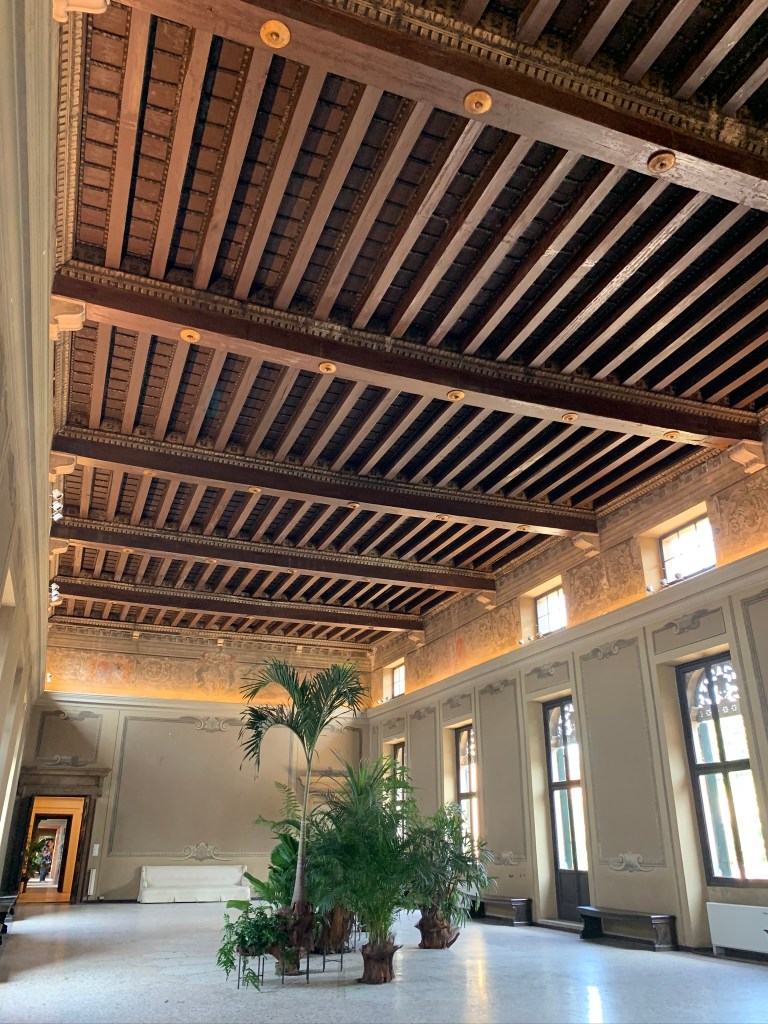
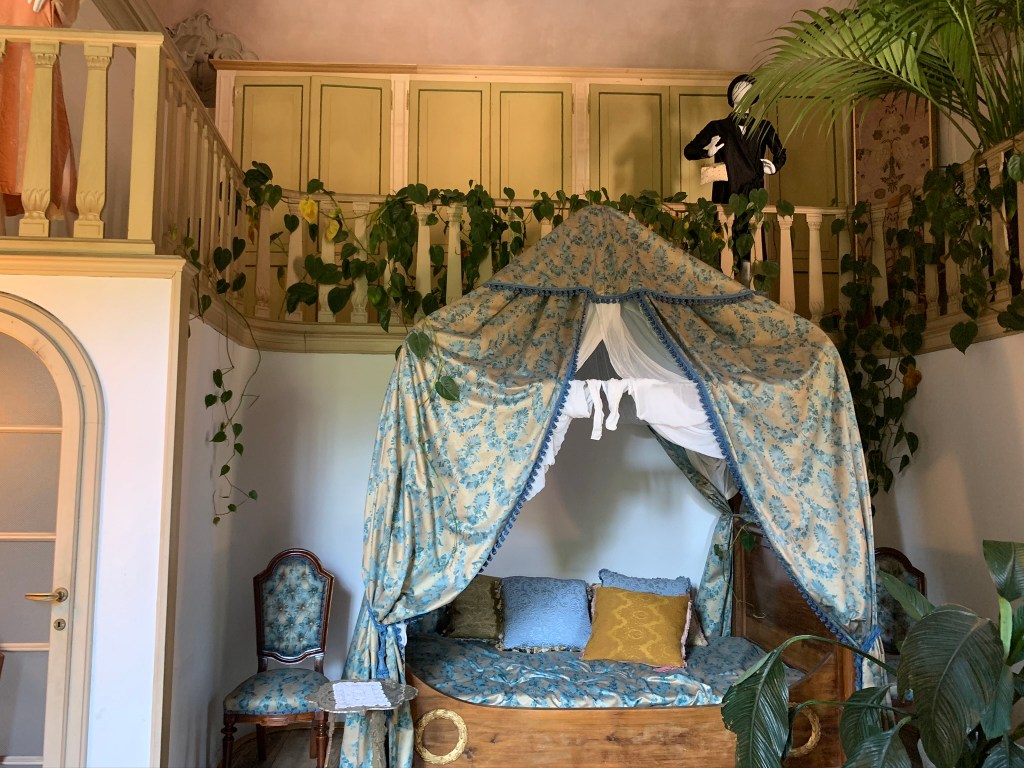
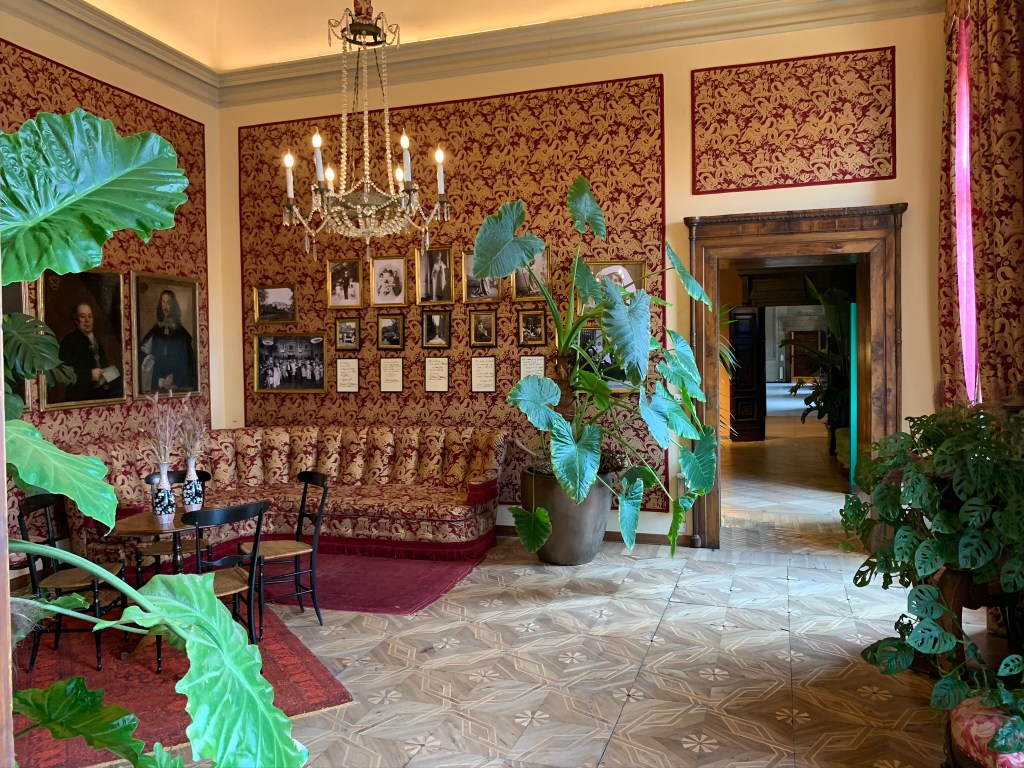
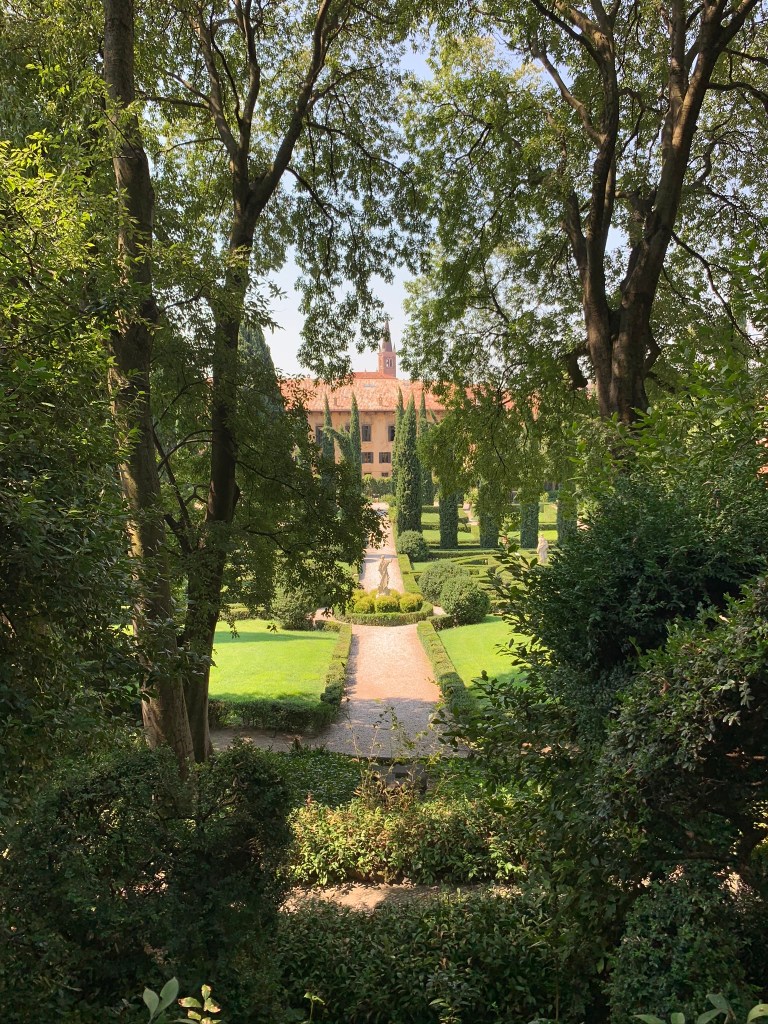
The site is unusual in that the house does not sit on top of a hill looking down on the garden. Rather, it is the other way round: the palace sits on the lower part of the land, with pathways leading up to the belvedere and, further up, to a magnificent panoramic view of the city. The garden, which is renowned as one of the best examples of Renaissance horticulture and was raved about by Goethe in his travel writings, was badly damaged in the 2nd World War, but could luckily be restored to former glory. It is amazing to think that it has been enjoyed by visitors for almost five centuries now!
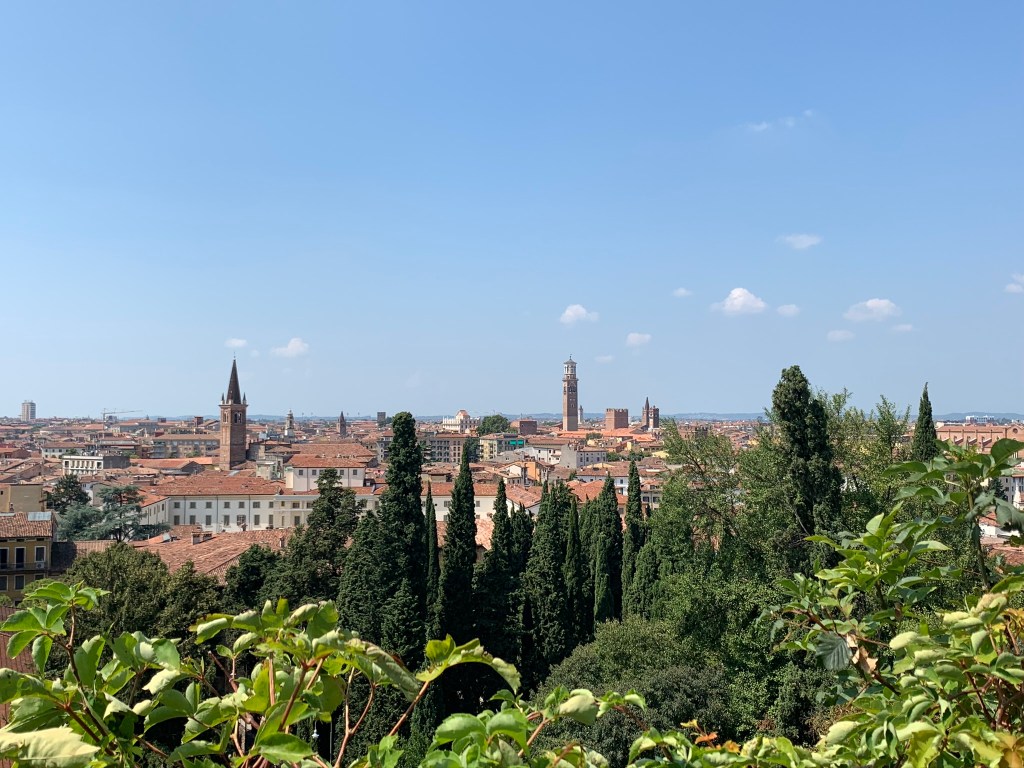
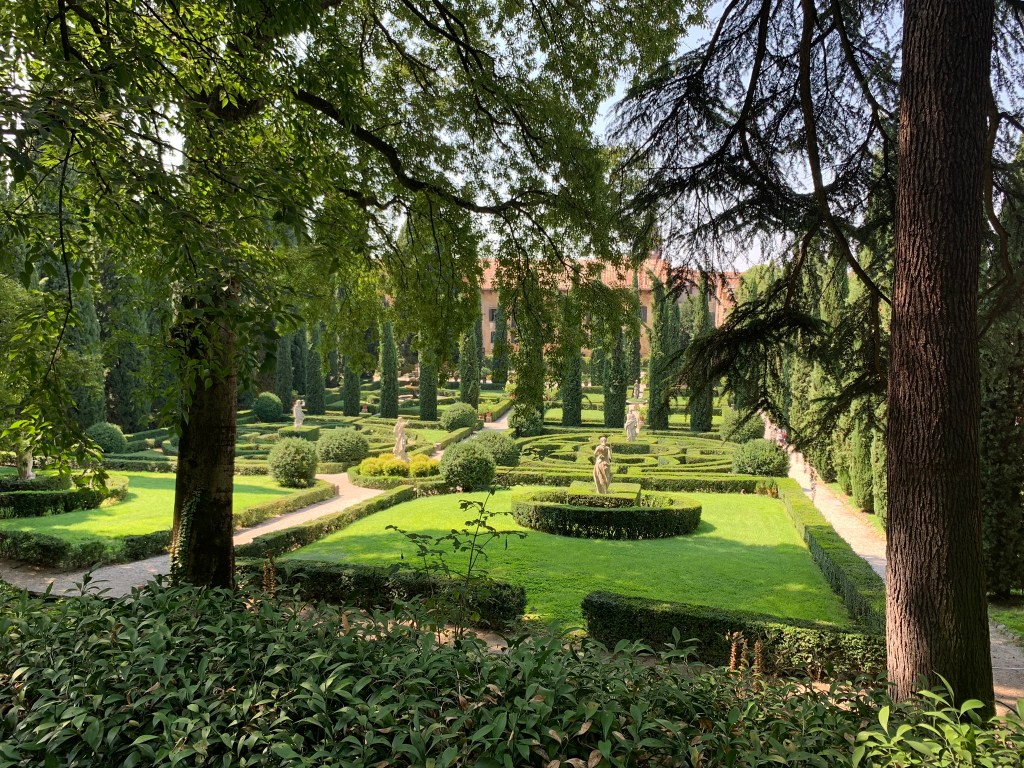
Very reluctantly, I left this green idyll behind, but there was still much to see. Next stop: ice cream! Then, the Torre dei Lamberti – a bell-tower built in 1172 and Verona’s tallest structure. The views were marvellous:
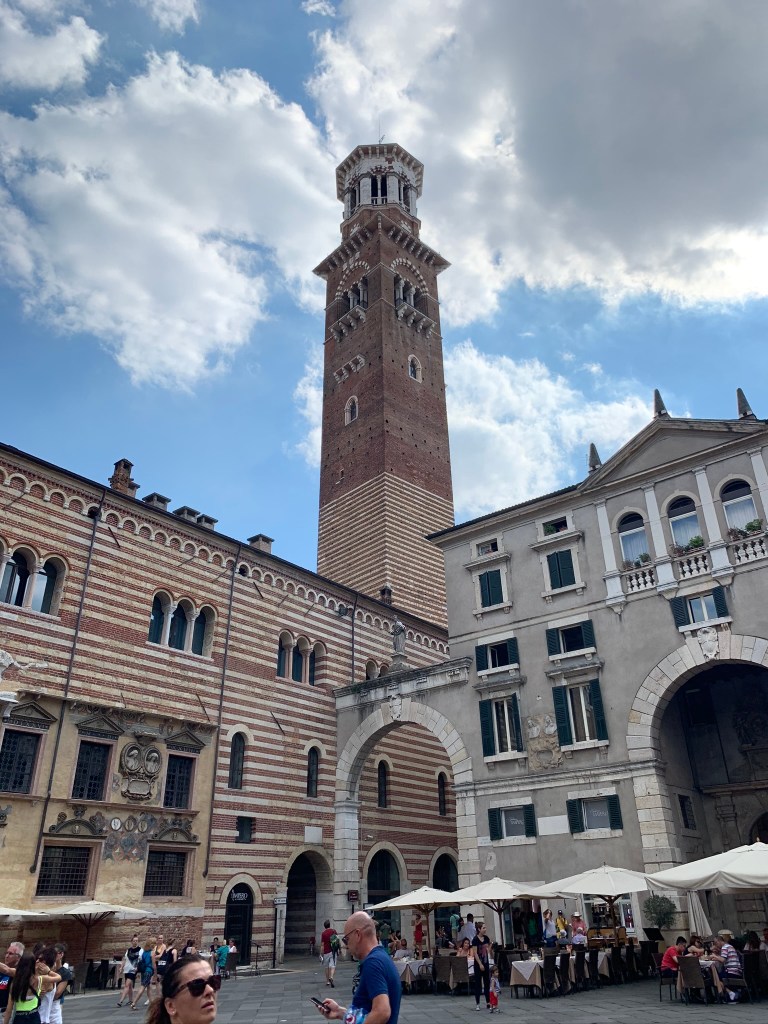
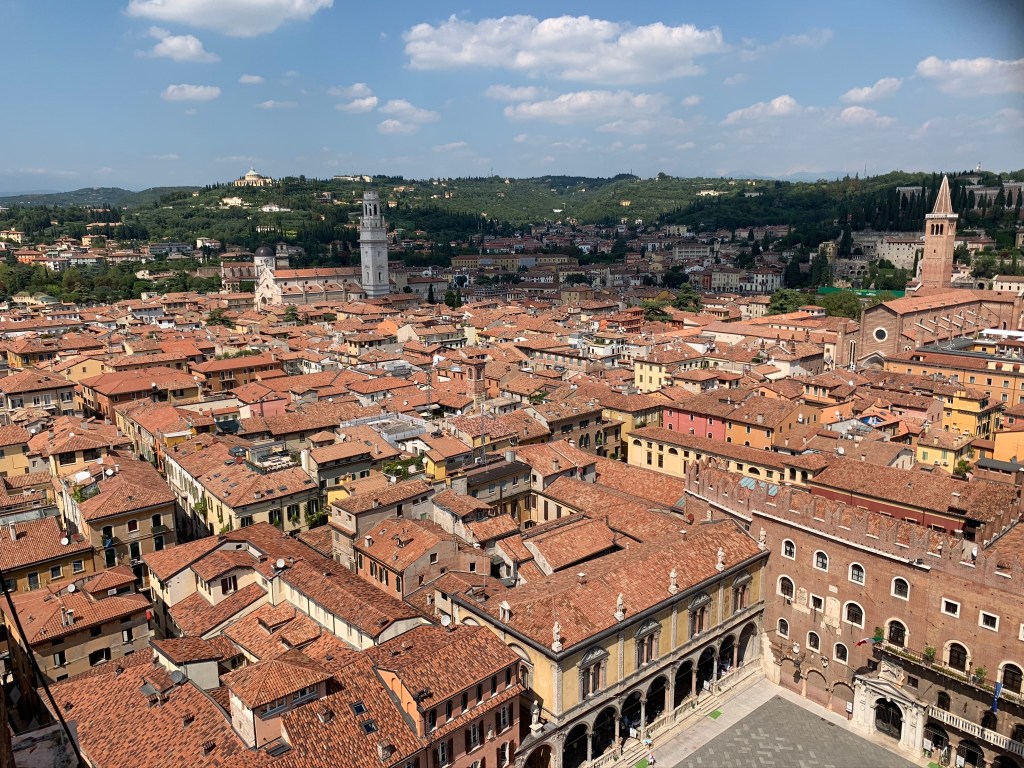
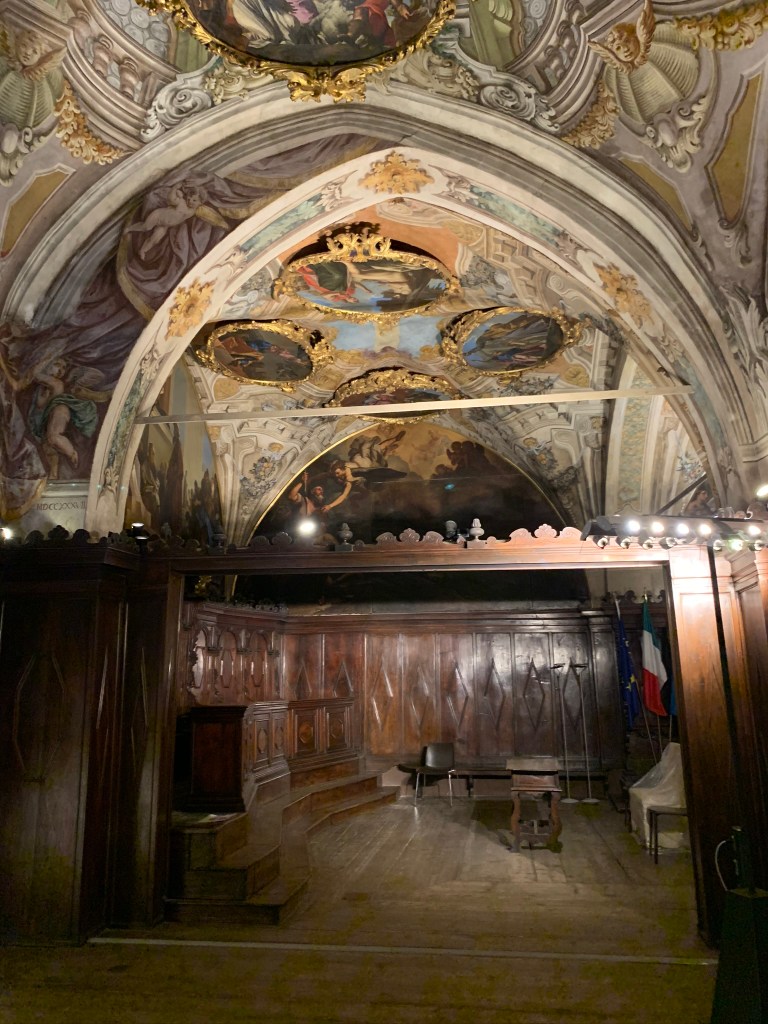
After hearing the bells chime, I descended again and fled the heat by going into the Galleria d’Arte Moderna, which is housed in the Palazzo della Ragione (= palace of justice) next to the tower. It’s a cracking little gallery, and I happily whiled away an hour there. With it being situated in the old law courts, there is also a remarkable room called Cappella dei Notai. Originally a chapel, the Board of Notaries started using it in 1408 and therefore changed the dedication of the chapel from San Zeno (the smiling saint, remember?) to San Daniel, who is the patron saint of notaries (a fact for the next pub quiz, I’m sure). Between the end of the 17th and the beginning of the 18th century, it was decorated the way you see today and it still feels very peaceful and solemn.
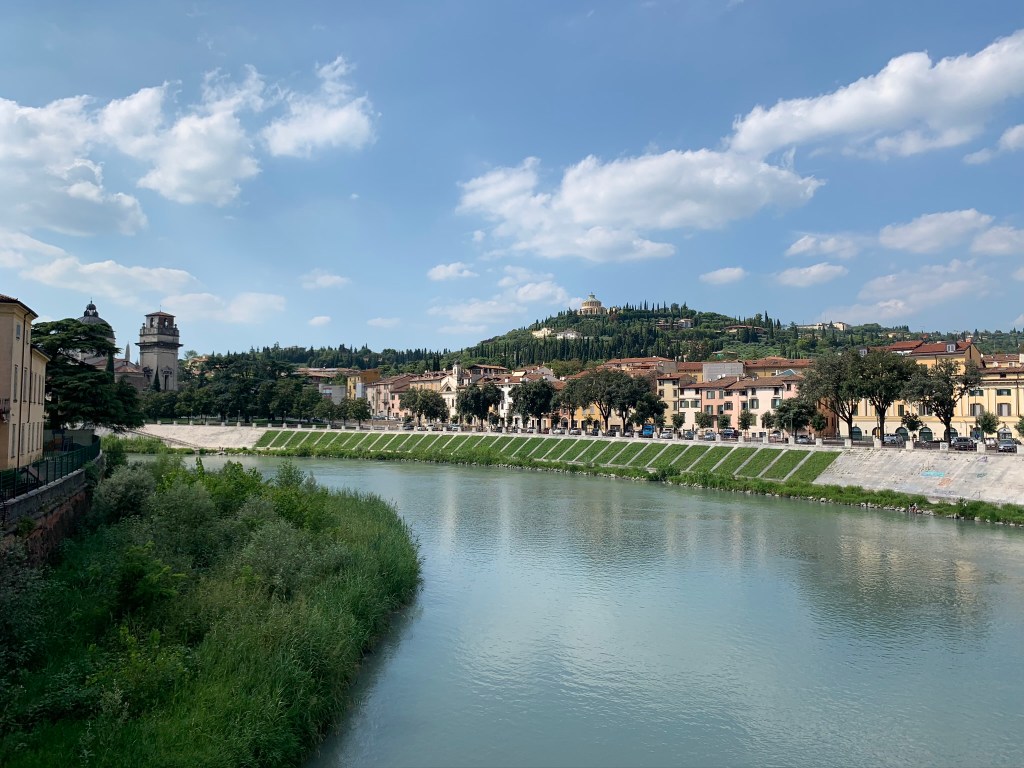
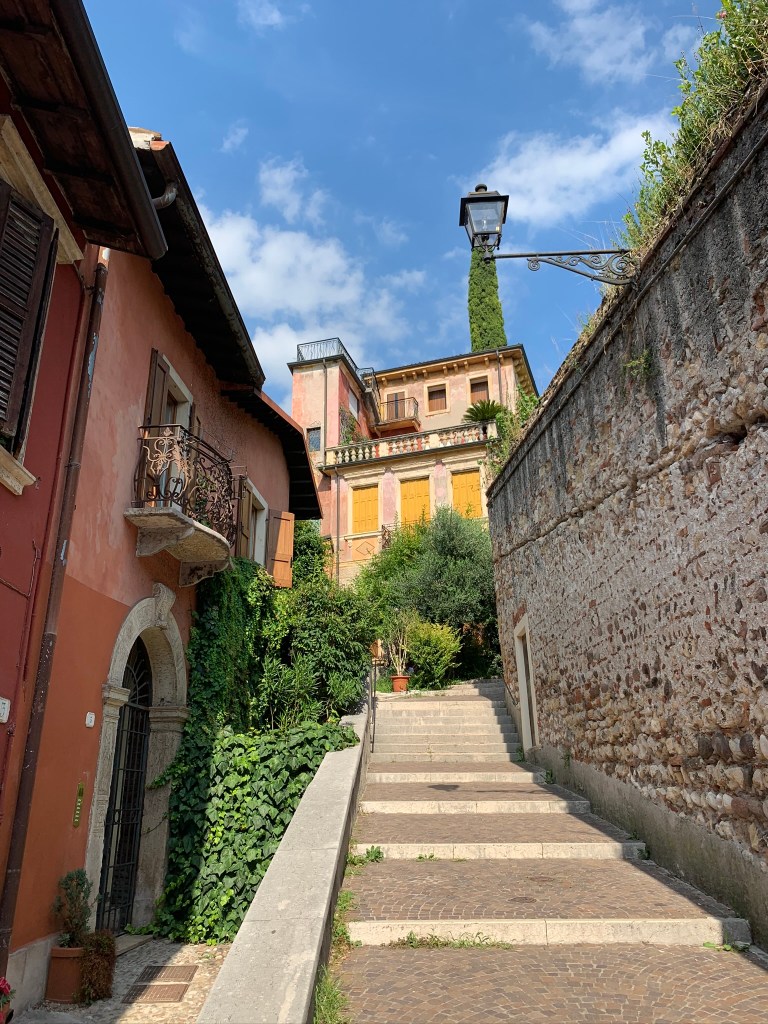
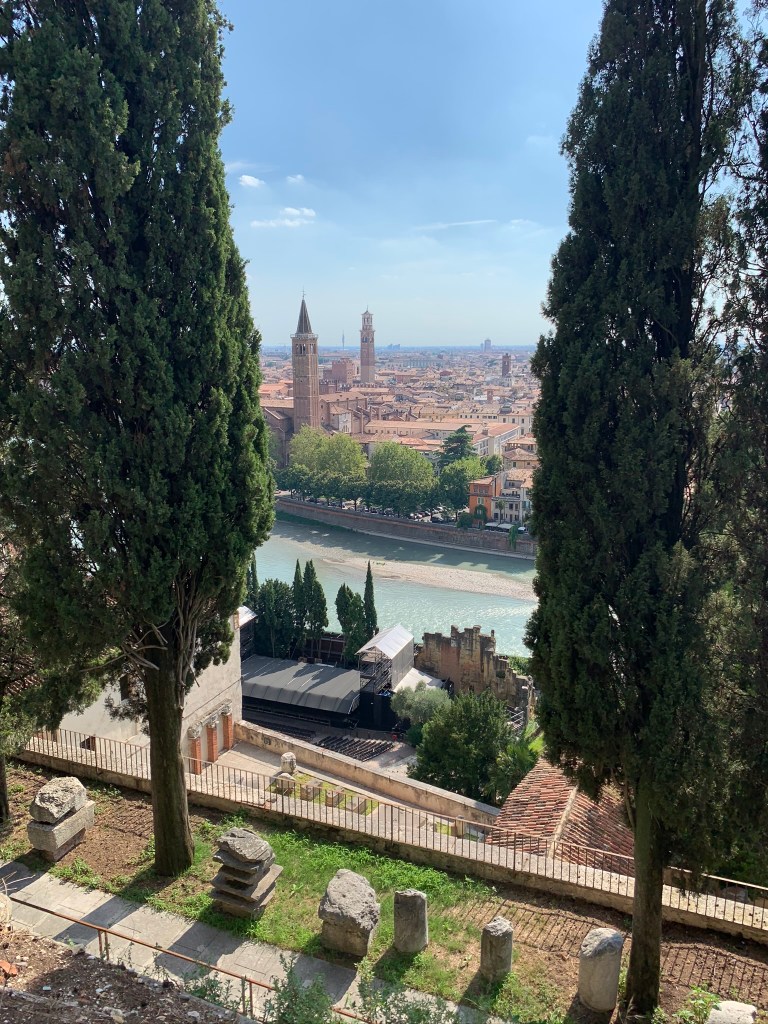
After this, there was just enough time for more ice cream and a leisurely walk back to the Airbnb to collect my luggage. That particular ice cream deserves a special shout out: Zeno Gelato e Cioccolato offers the very best of frozen goodness in town. The gelateria takes its name from the San Zeno church I introduced earlier, since it used to be located on that square. It moved not loo long ago to its new location on the border of the Adige, close to the Funiculare that goes up to Castel San Pietro. Instead of taking the funicular I walked up many, many steps to the terrace of the Castel and enjoyed a last view on Verona before following cobbled streets back to my accommodation. Then it was thankfully down-hill to the bus stop and back to Verona station, where I got on the next available train to Vicenza.
Vicenza
Another pleasant train ride later, I found myself in this gem of a town. Getting the right bus in the correct direction proved a stumbling block again, but I got off at the right stop thanks to an elderly white-clad nun who showed me the way on her smart phone… I stayed in an Airbnb again and was booked in for three nights. One half of the hosting couple was there and could not have been more helpful – he was about to drive to the supermarket so offered to take me with him, and afterwards we got pizza and the best local ice cream, from a shop that I would not have come across otherwise. Over dinner he gave me lots of tips for exploring Vicenza, so I was all set for the next day.
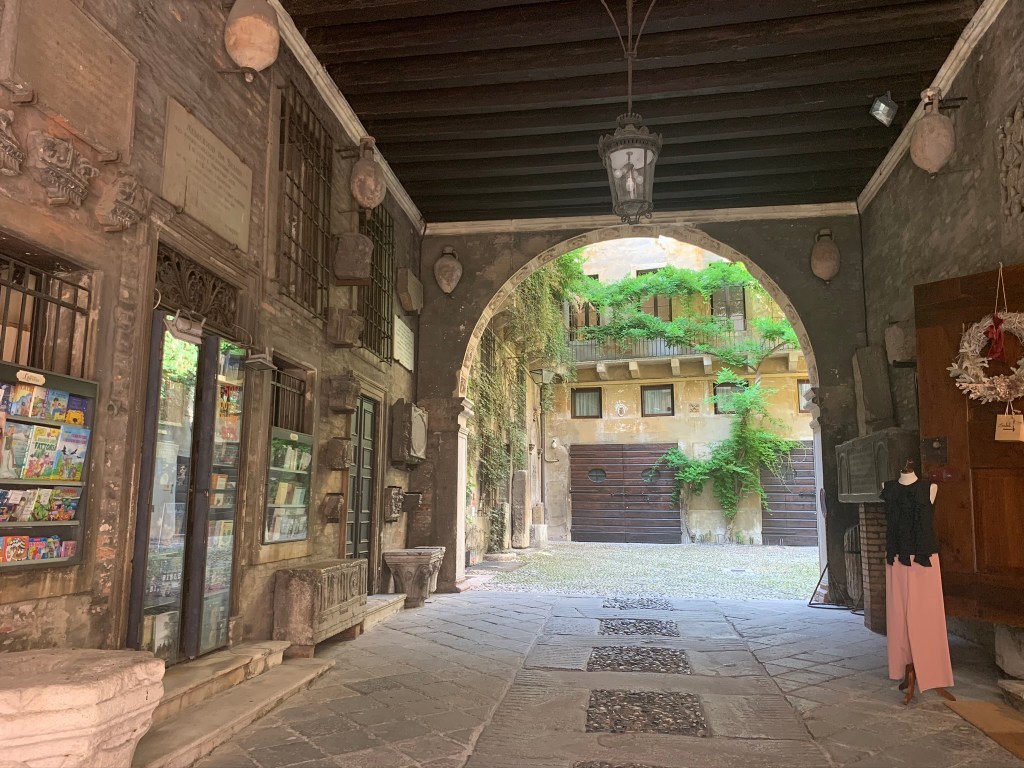
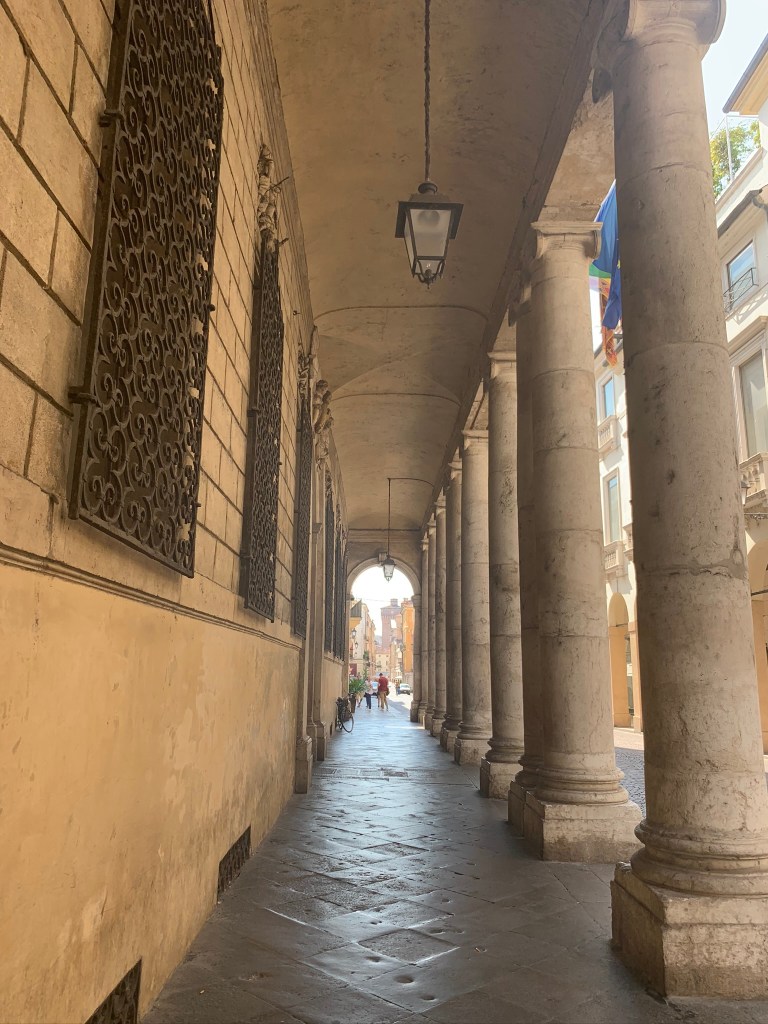
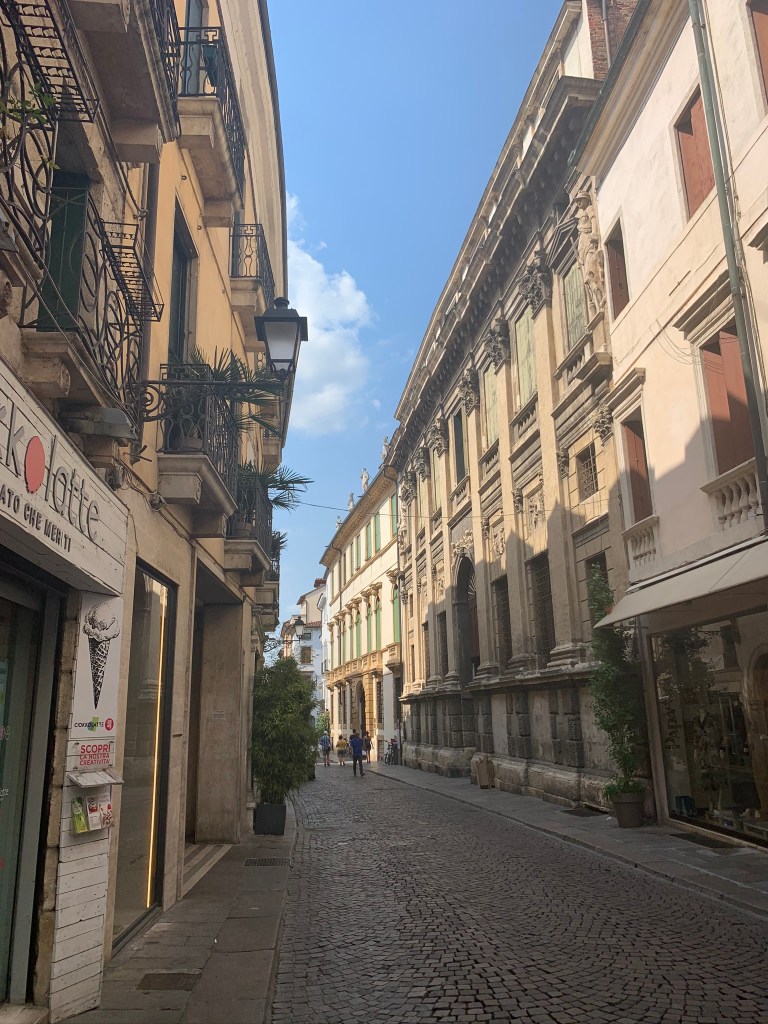
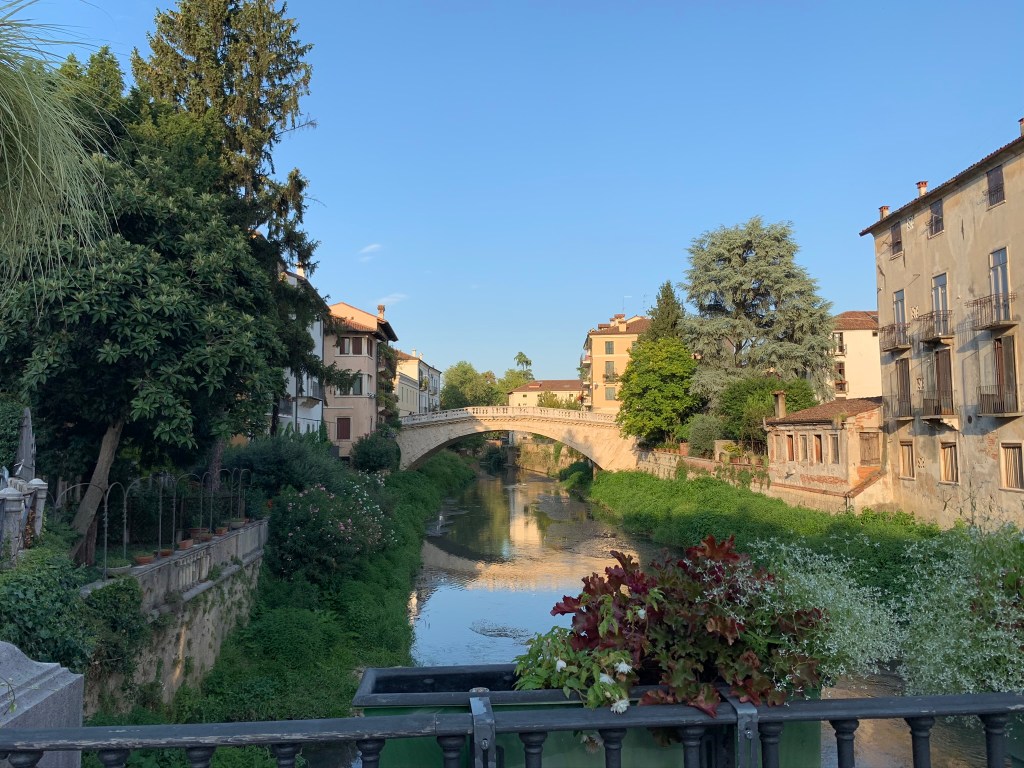
Vicenza, I quickly found, is utterly charming, very elegant, and Ferragosto and the heat gave it a sleepy atmosphere that I absolutely adored. After purchasing a Vicenza card, I meandered through the streets, ventured into a few churches and shops and visited the Torrione di Porta Castello, a tower offering fine views of the town and immediate surroundings.
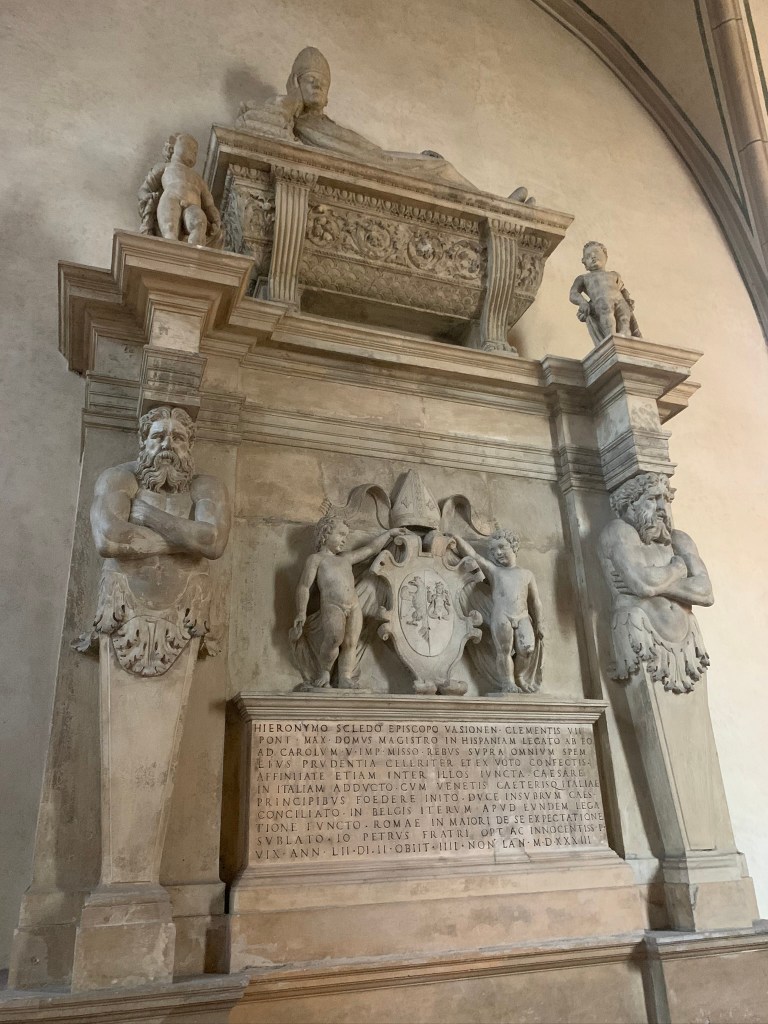
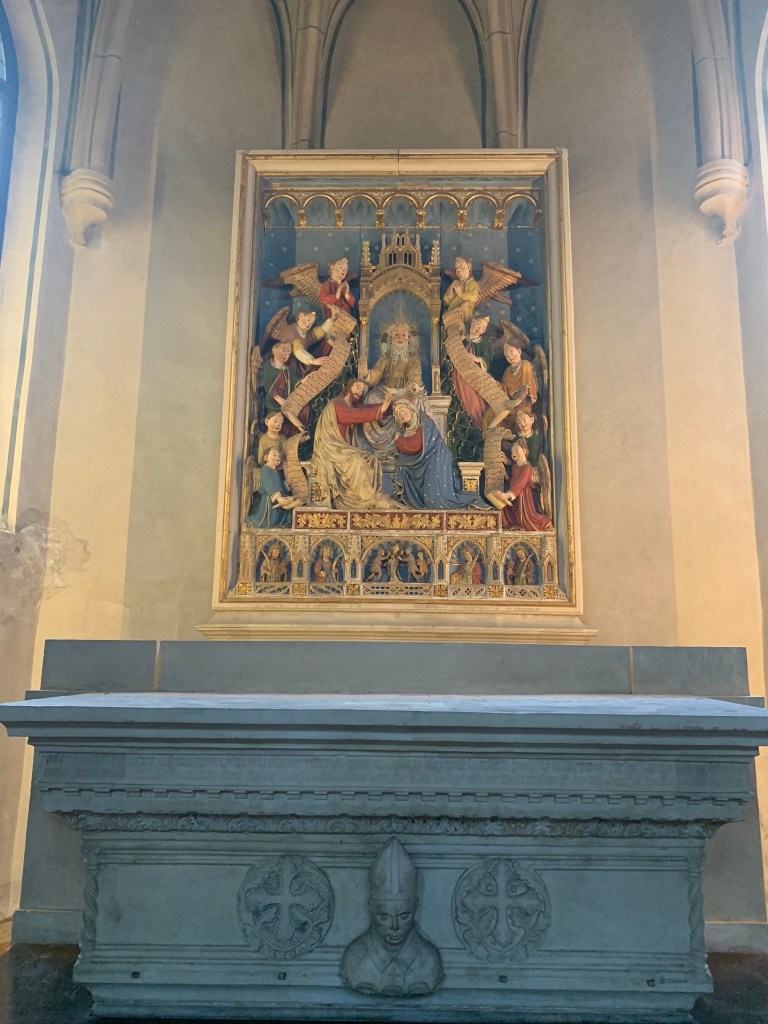
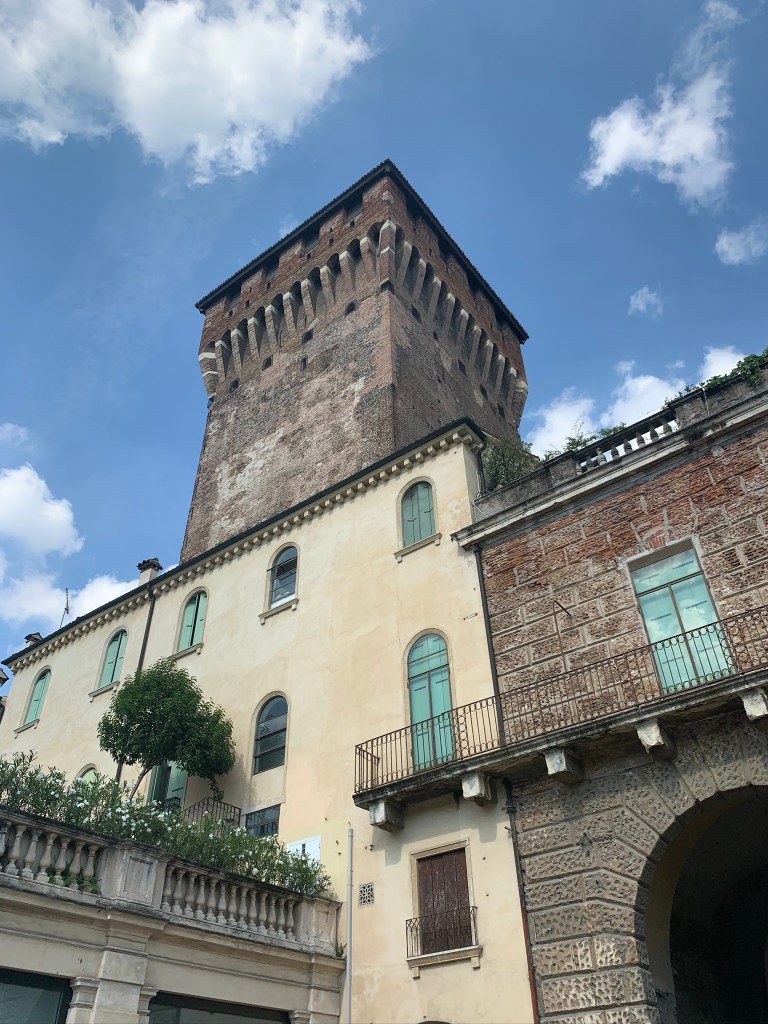
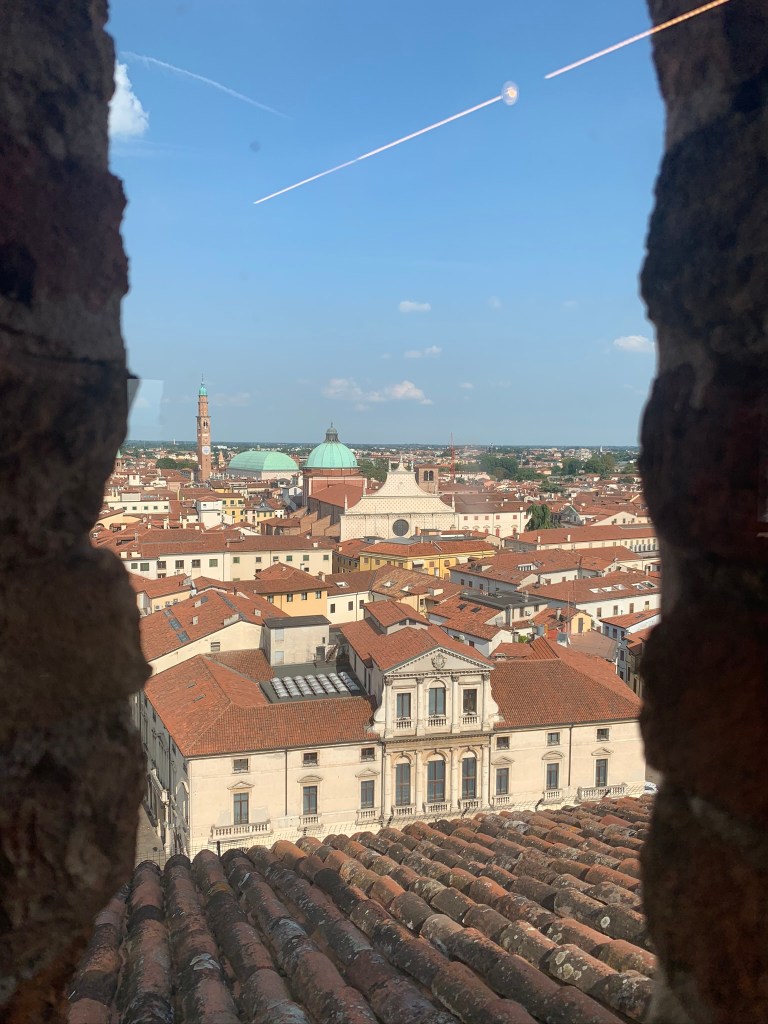
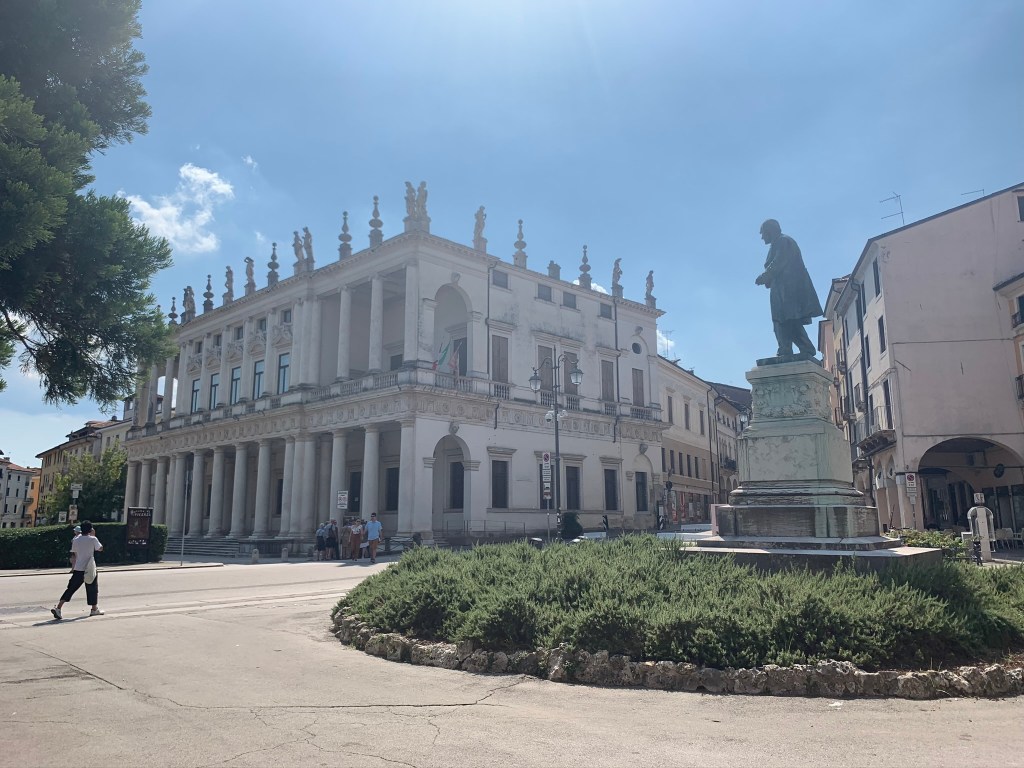
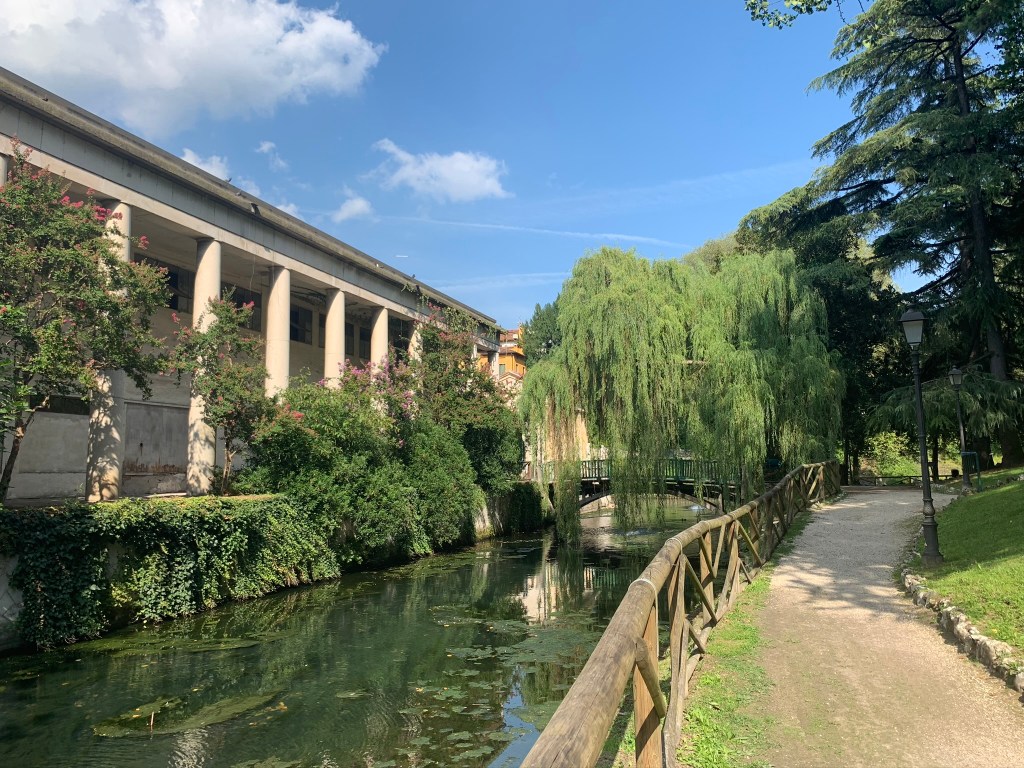
Close-by are the Piazza del Castello with its Garibaldi statue and an unfinished Palladian palazzo, truly exuding the charm of a sleepy small town. Same goes for the pretty park that borders the Porta Castello.
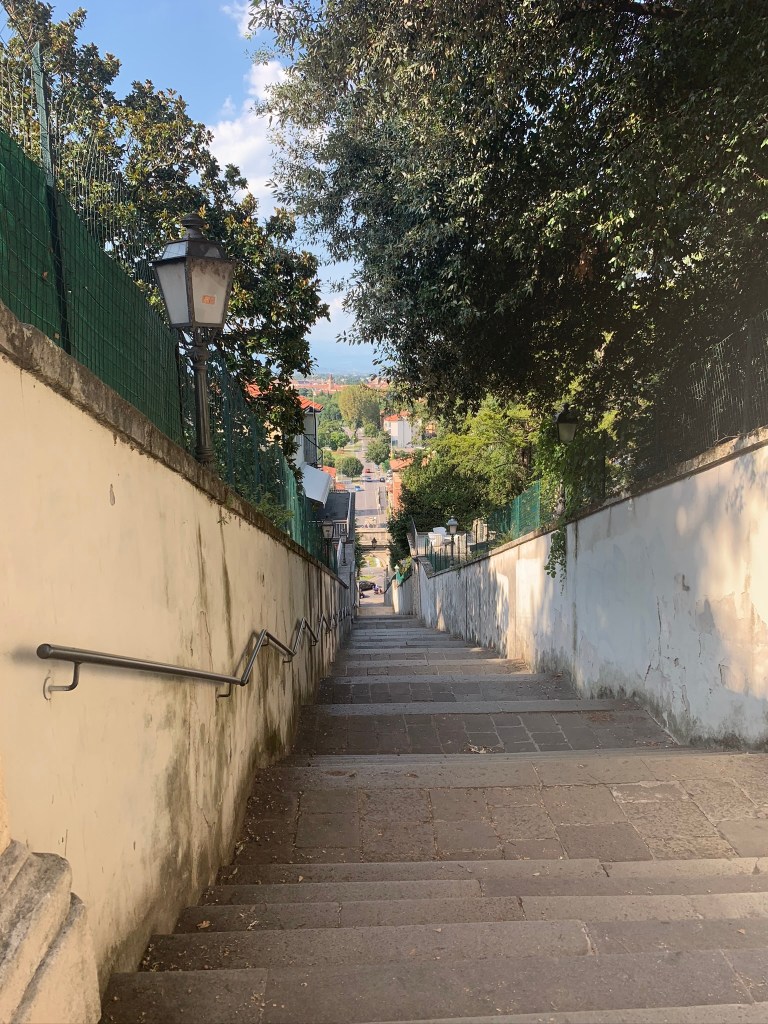
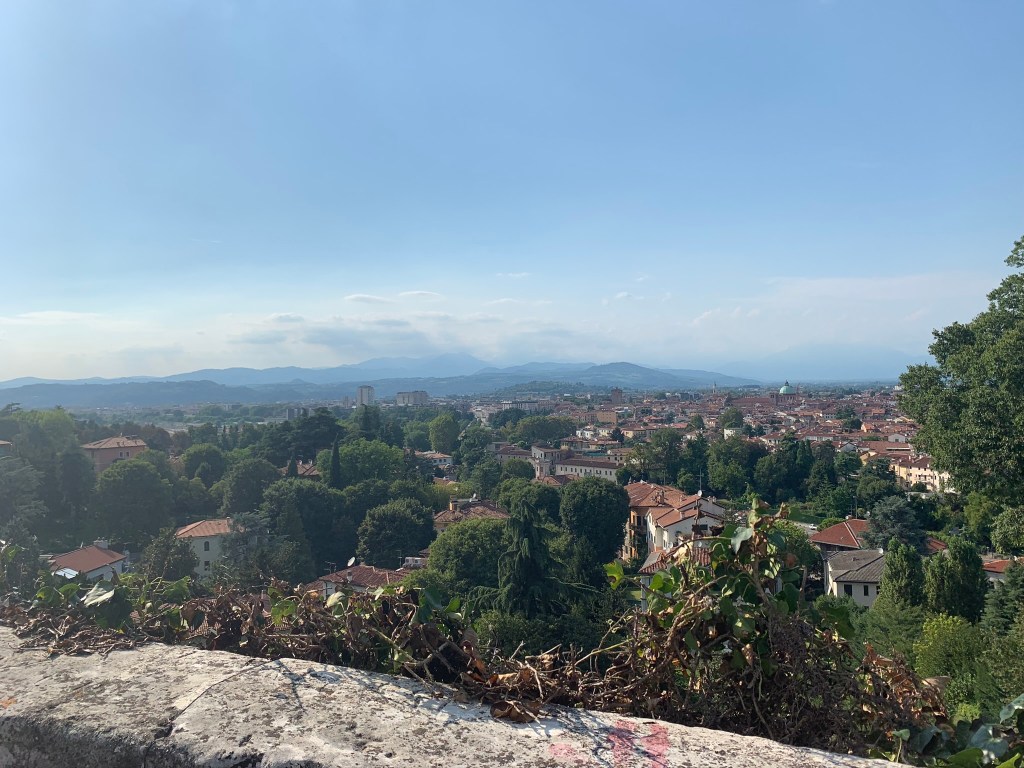
However, the best was yet to come. Making my way to the outskirts of the town, crossing Campo Marzo and a busy main road, I found the steps that would lead me up to Villa Valmarana ai Nani, the world-famous Villa Rotonda (Palladio’s masterpiece) and the monastery Monte Berico. It was already a bit late, but I was optimistic I’d make it to Villa Valmarana on time. The number of steps did not deter me, despite the heat…
Villa Valmarana ai Nani takes its name from the multitude of curious dwarf statues (gnome = il nano) sitting atop the walls surrounding this glorious estate, as well as the Valmarana family, who acquired the palace in the 1720s. It was built in the 1560s after a design by – you guessed it – Palladio. The reason there are seventeen dwarfes guarding the villa is, if legend is to be believed, a desperately sad one. The information sheet had this to say:
Legend has it that a castle once stood on the site of the Villa. Its master was a wealthy nobleman whose wife gave birth to a baby girl. The girl was a dwarf […]. The protective father created a made to measure miniature world for the tiny girl – furniture, decor, everything was scaled down to size; even her personal servants were dwarfes so that [she] could never notice that she was different.
And who ruined everything, of course? A knight, who spots her lovely face over the garden wall and falls in love with her, only to reject her immediately when he realises she is of diminished stature. Realising her difference she throws herself off the castle tower and her servants, out of grief, turn to stone. Granted, the story has a few potholes…but it’s no more bewildering than the undeniable truth that some people – and the Germans in particular – simply like to place gnomes in their gardens. Now there’s a mystery for you!
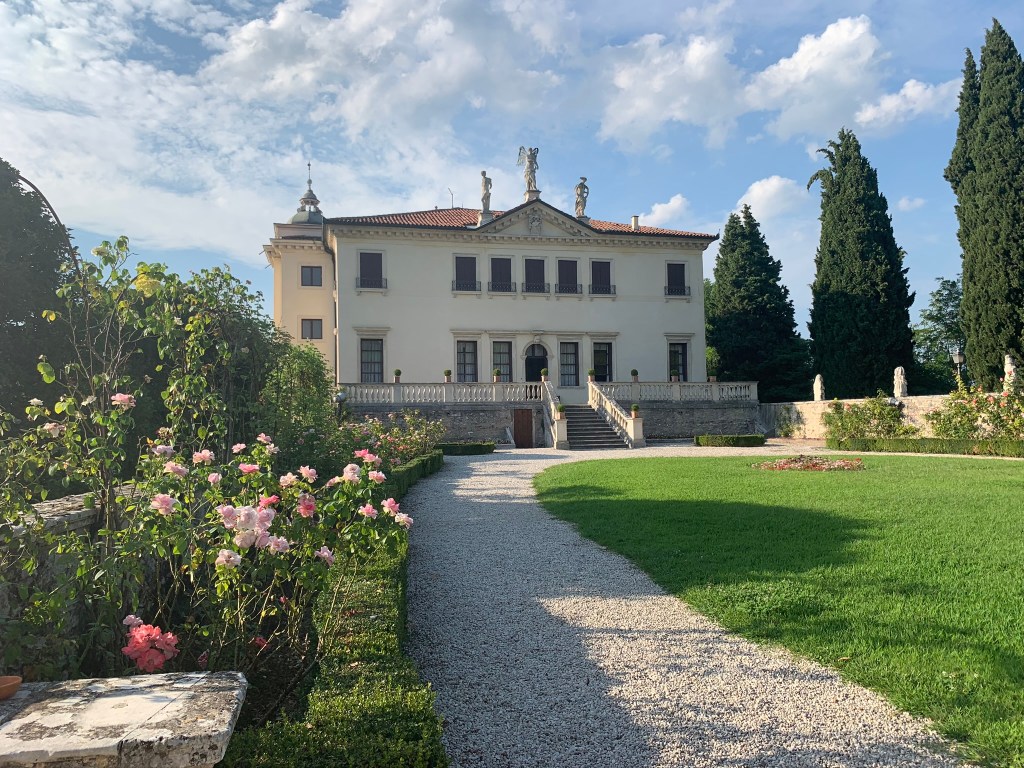
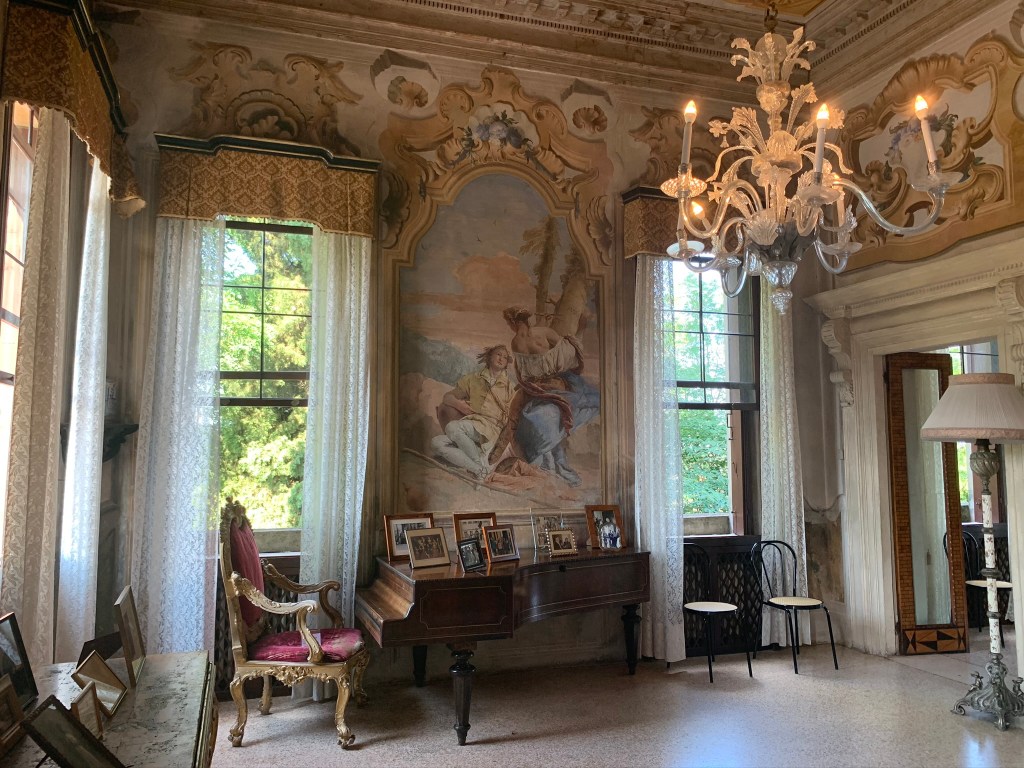
It being Ferragosto, there weren’t many people about, so I showed my Vicenza card and started exploring, undisturbed. I started with the Main House, which was badly damaged in WWII and painstakingly restored. The charm of the setting can’t be overstated: overlooking the Valley of Silence, the house is all breeziness and light, with the lushness of the surroundings framed by numerous windows. It’s enchanting. Every room has been decorated to a theme with frescoes, done by Giambattista Tiepolo. There’s five rooms in total, depicting the Sacrifice of Iphigenia, scenes from the Iliad, the Aeneid, from Torquato Tasso’s Liberated Jerusalem and Ariosto’s Orlando Furioso.
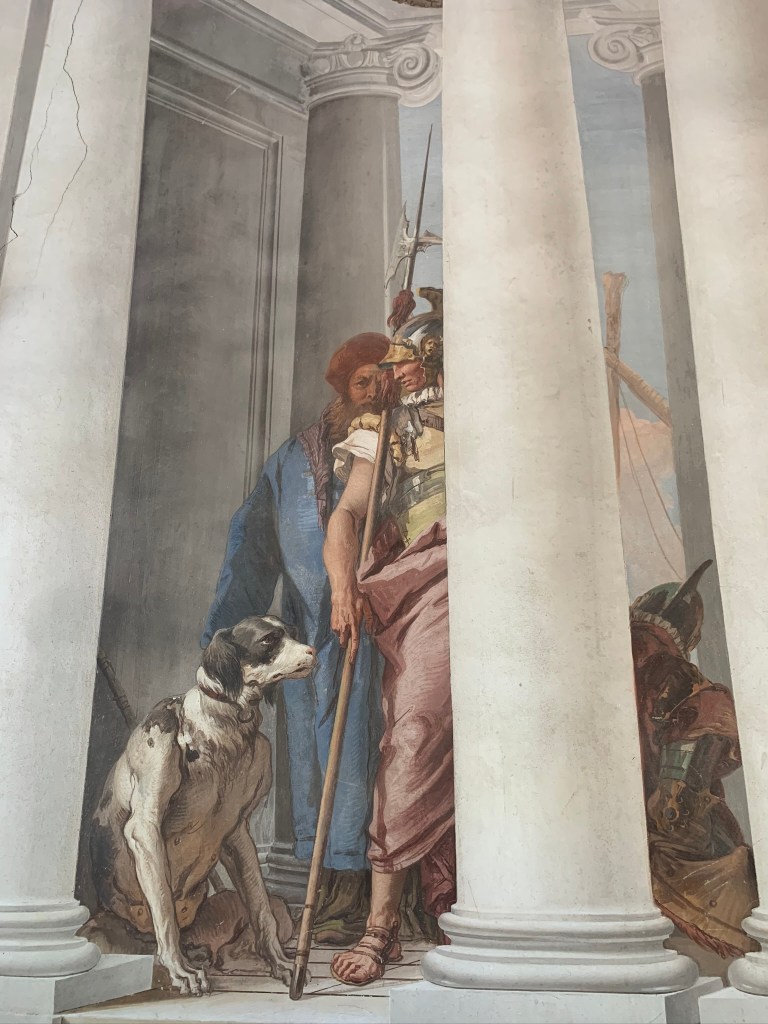
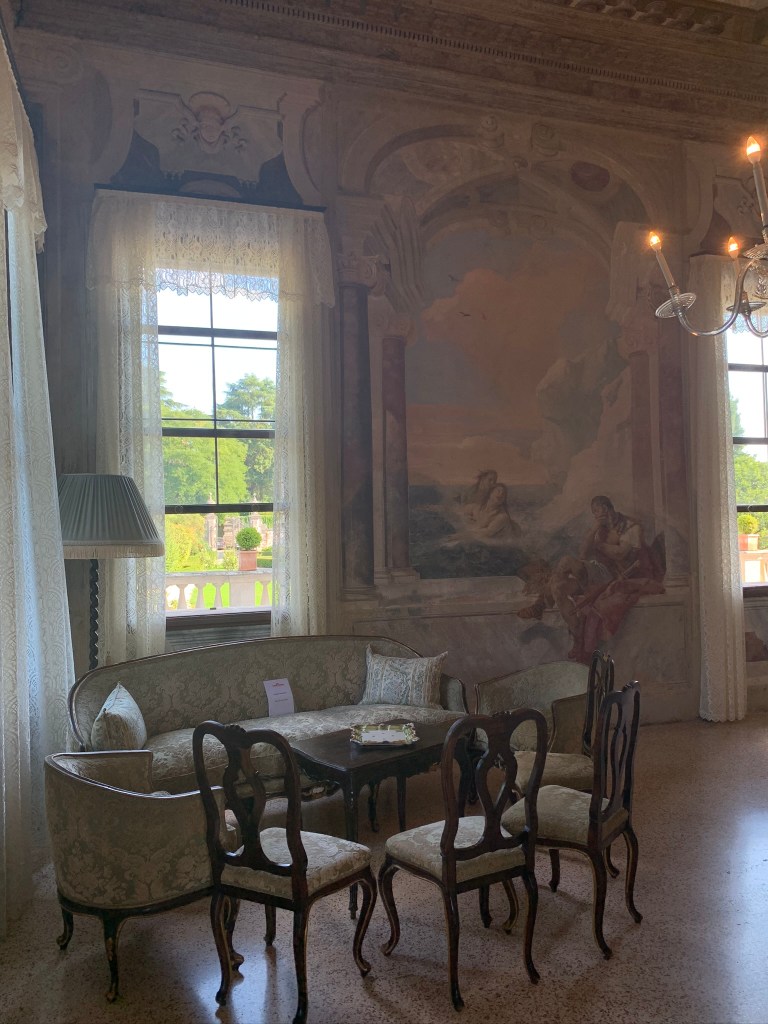
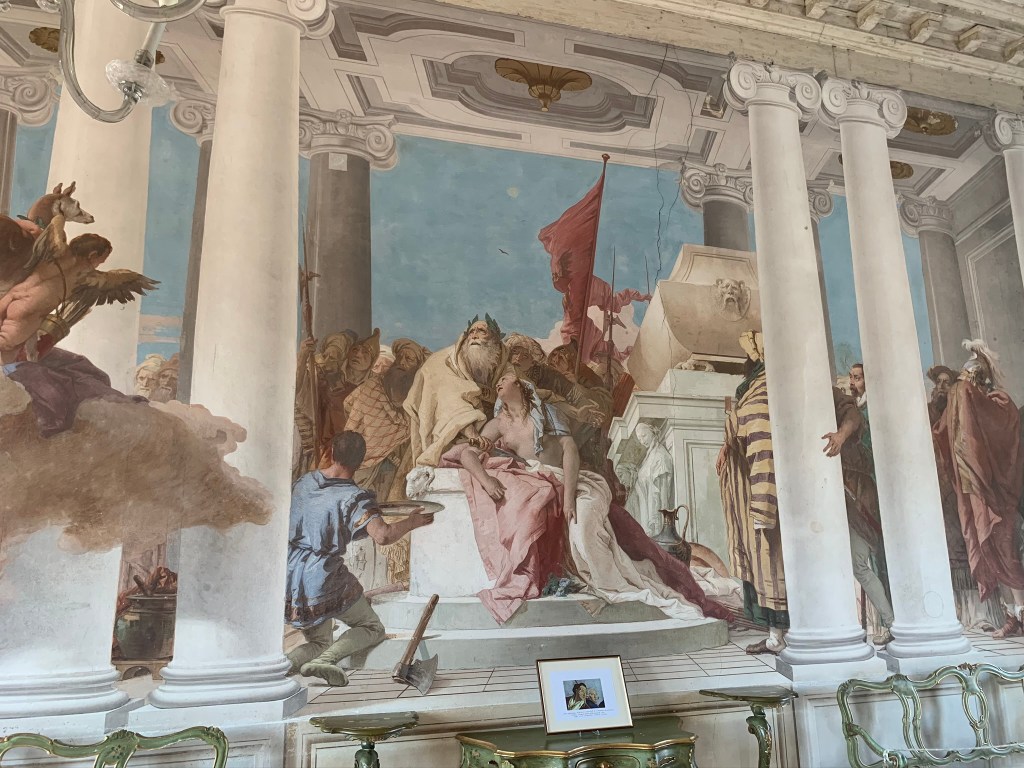
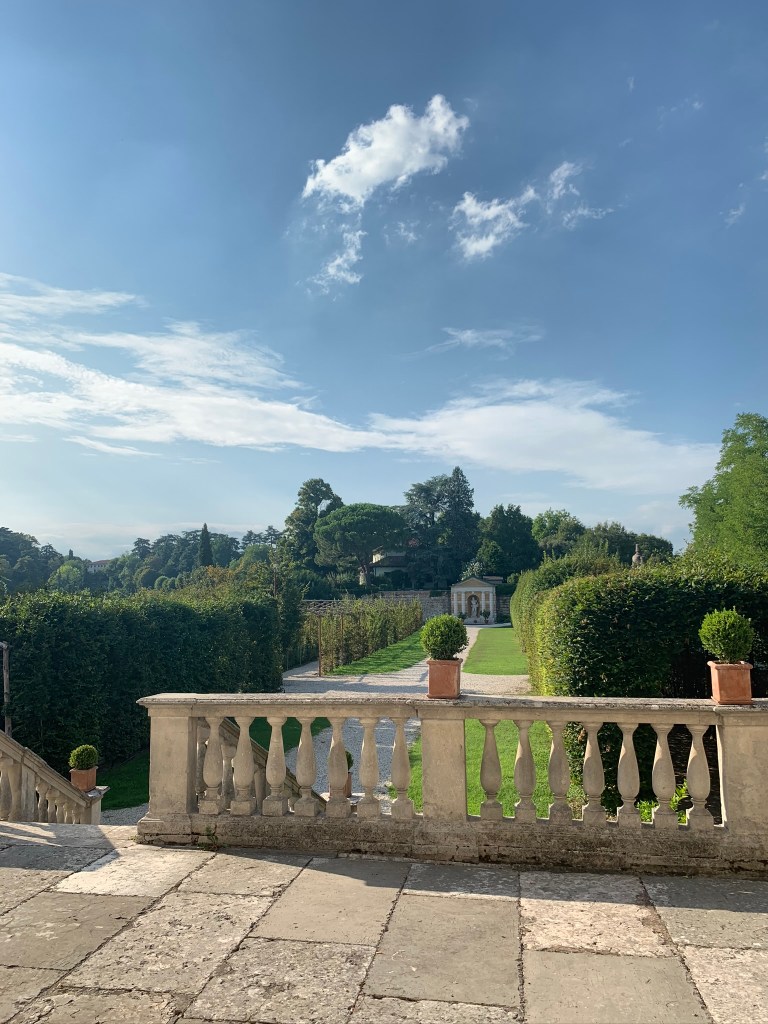
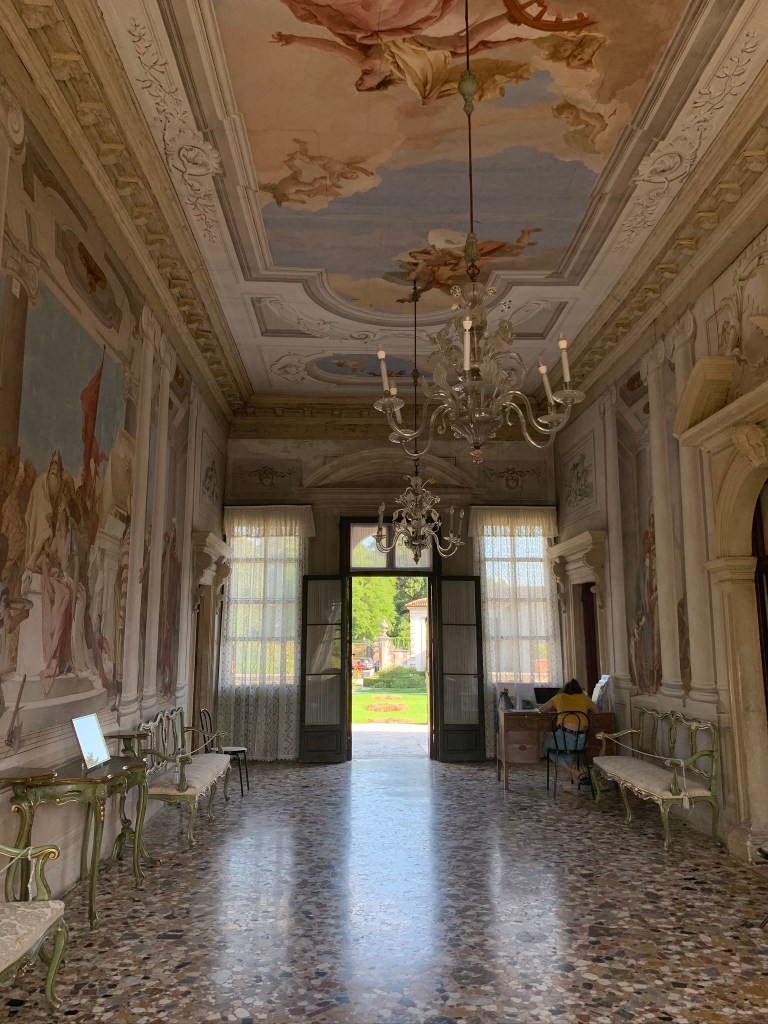
Via the impeccably kept gardens I strolled to the other building, the Foresteria (=guest house). It might be a guest house by name, but hardly by nature. Featuring frescoes by Tiepolo’s son Giandomenico, trompe l’œil staircases and chinoiserie, it felt even more airy and luxurious than the main house.
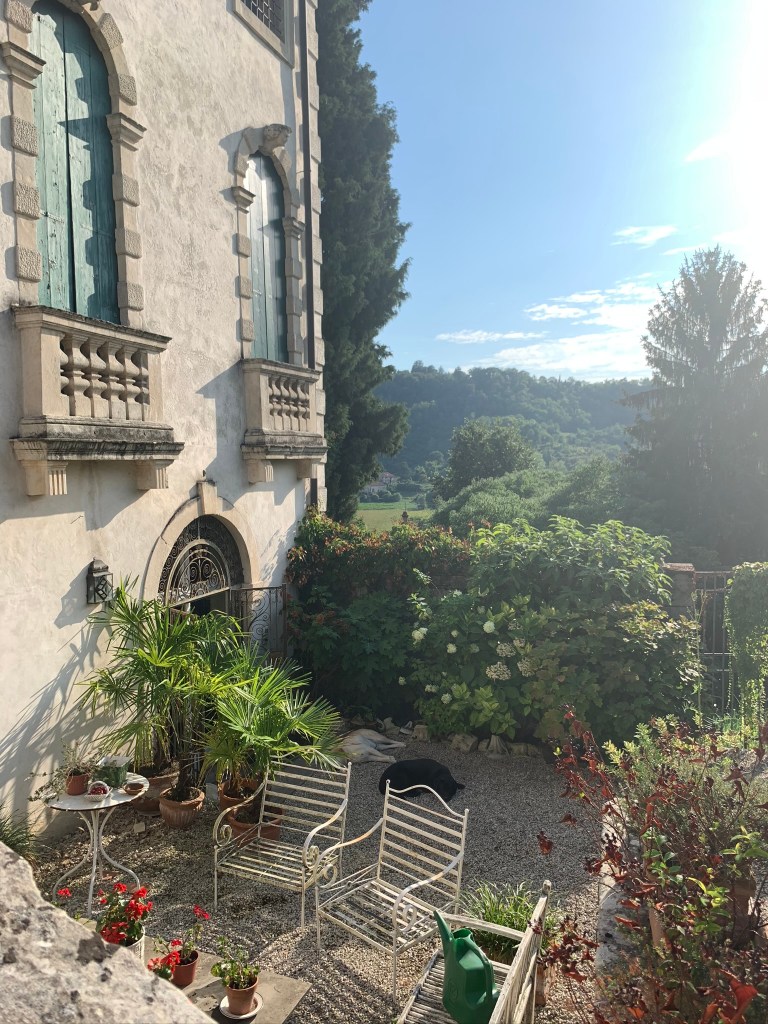
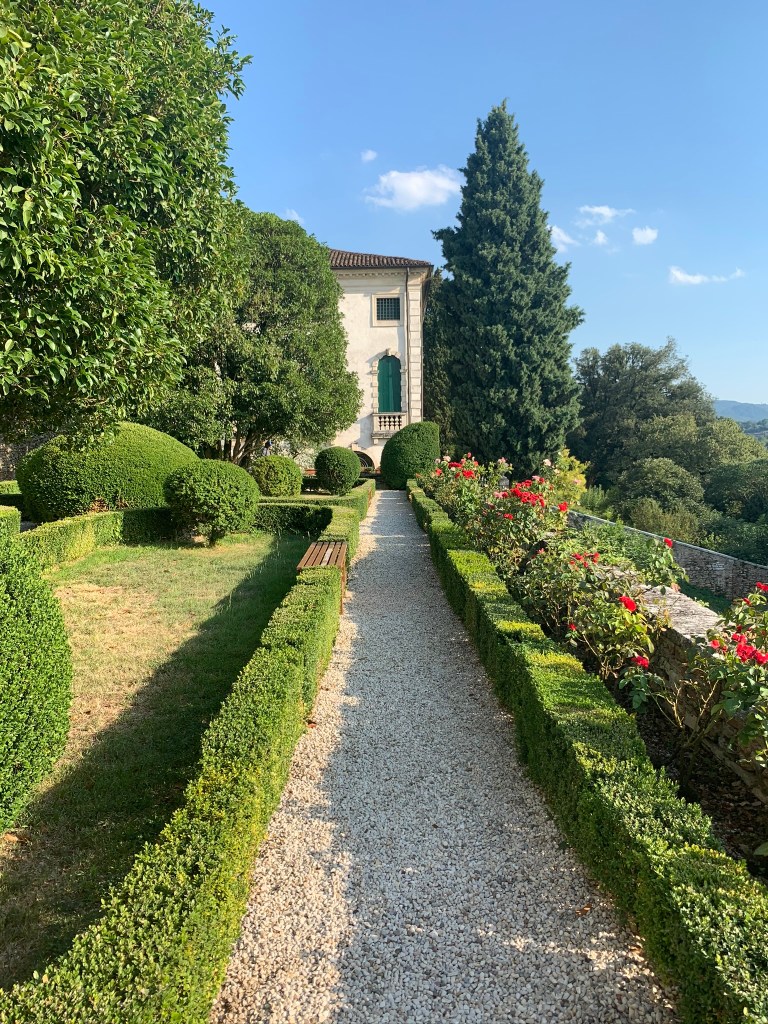
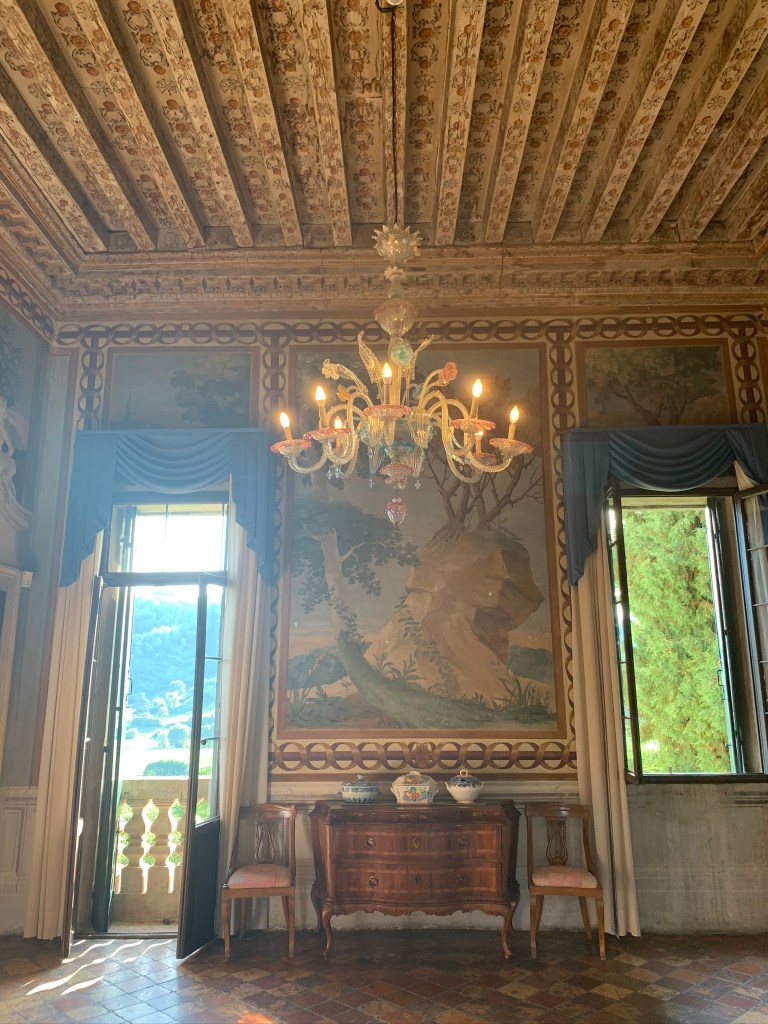
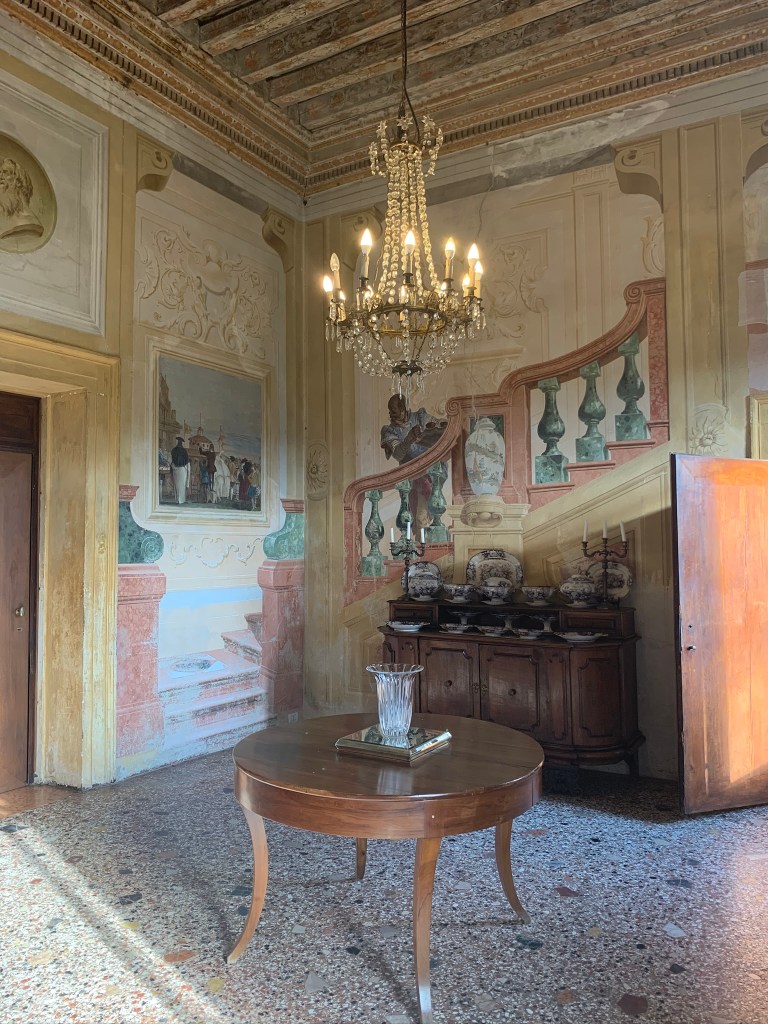
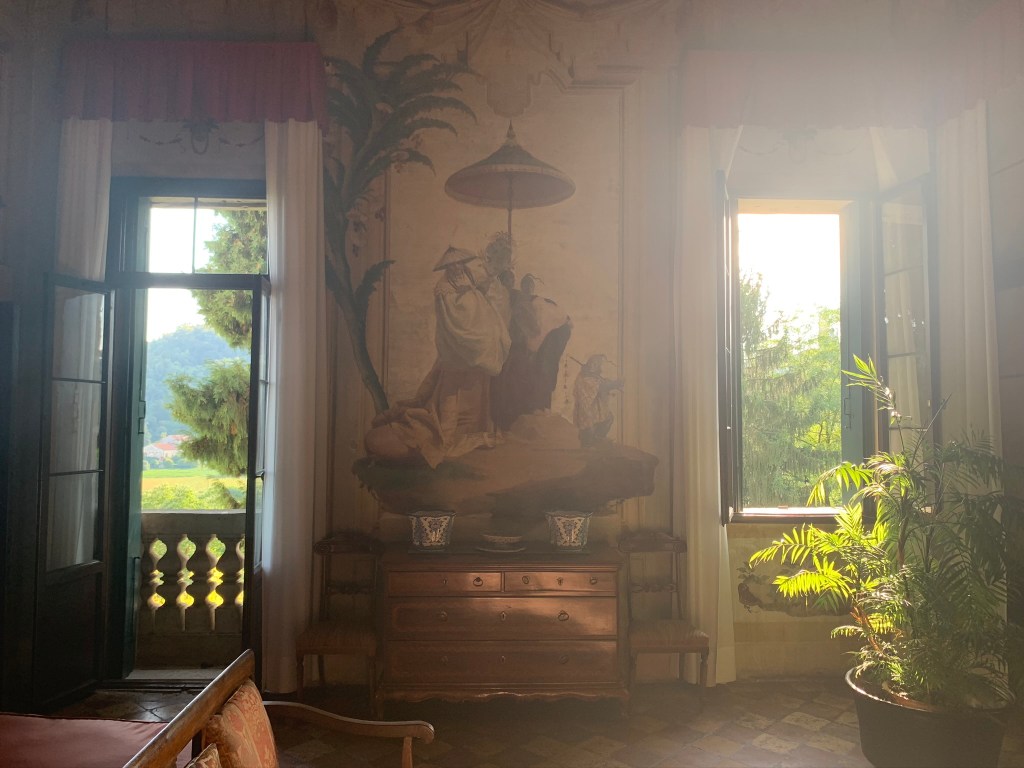
I would happily have moved in, but since that was not an option, I moved on – to the architectural marvel everybody knows from art lessons in school: Palladio’s Villa Rotonda. Accompanied by the buzzing of countless cicadas, I followed a rocky path till it joined a road and found myself at the gates of the villa – the closed gates, which I had expected, as it was now past 6pm. I did however get a good glimpse of the building, and since it looks the same from each side anyway, I didn’t feel too disappointed…
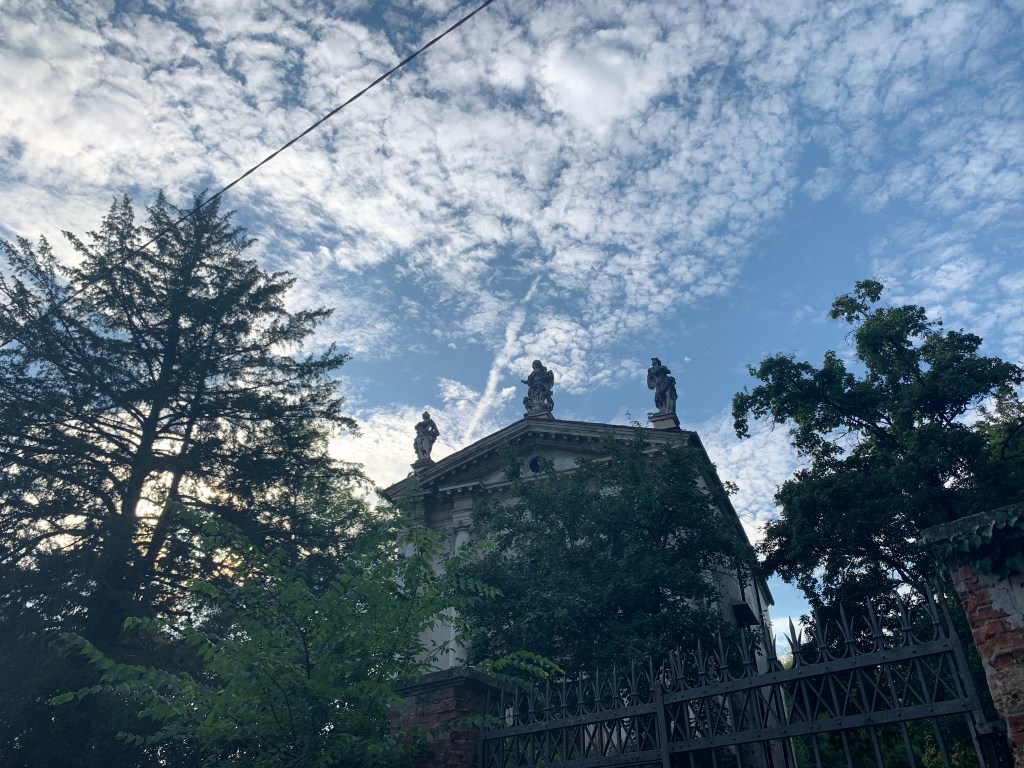
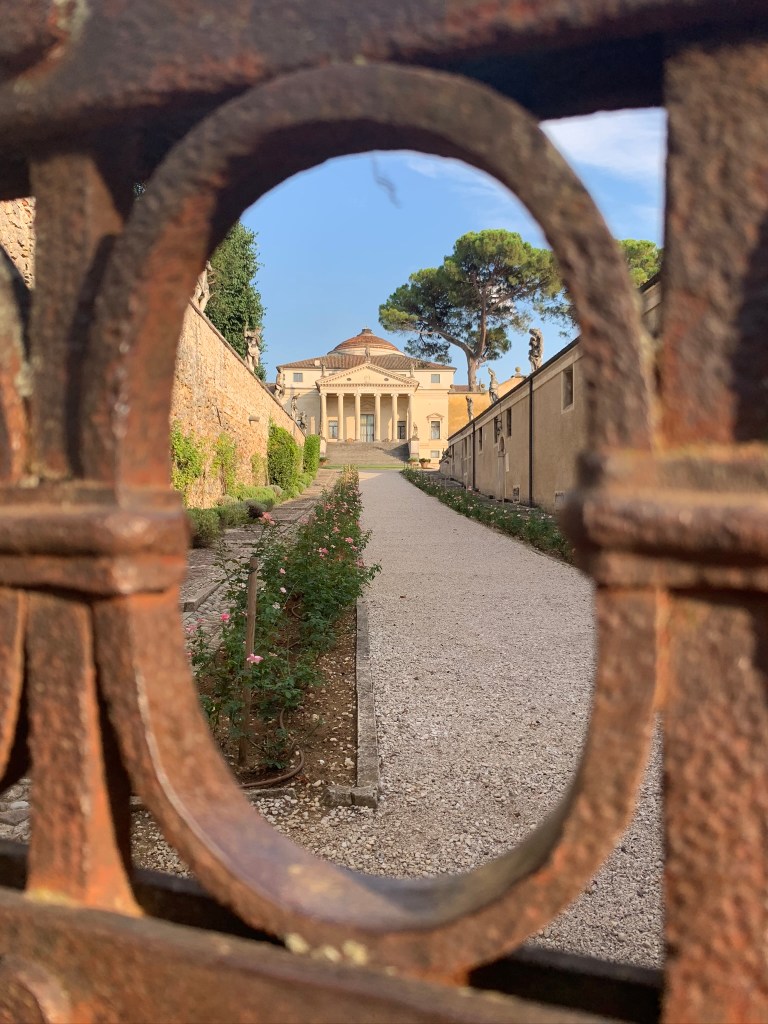
I continued on the road, past some houses and holiday homes, until I reached a path that went past fields and led me to a track going into some woods and up the hills I had seen from the terraces of Villa Valmarana. The ascent was steep and the views fine – it couldn’t have been any more bucolic. Half-way up, I came to a gate with a sign saying that it, and therefore this little wooded park, would be closed from 6pm on Mondays. It happened to be a Monday and after 6pm, but the gate was very much open. So on I went. The views only increased in beauty and before long I reached the Parco Storico di Villa Guiccioli (the park the sign had referred to). The villa houses the Museo del Risorgimento e della Resistenza, which was also closed, but the park was lovely and seemed to foreshadow autumn.
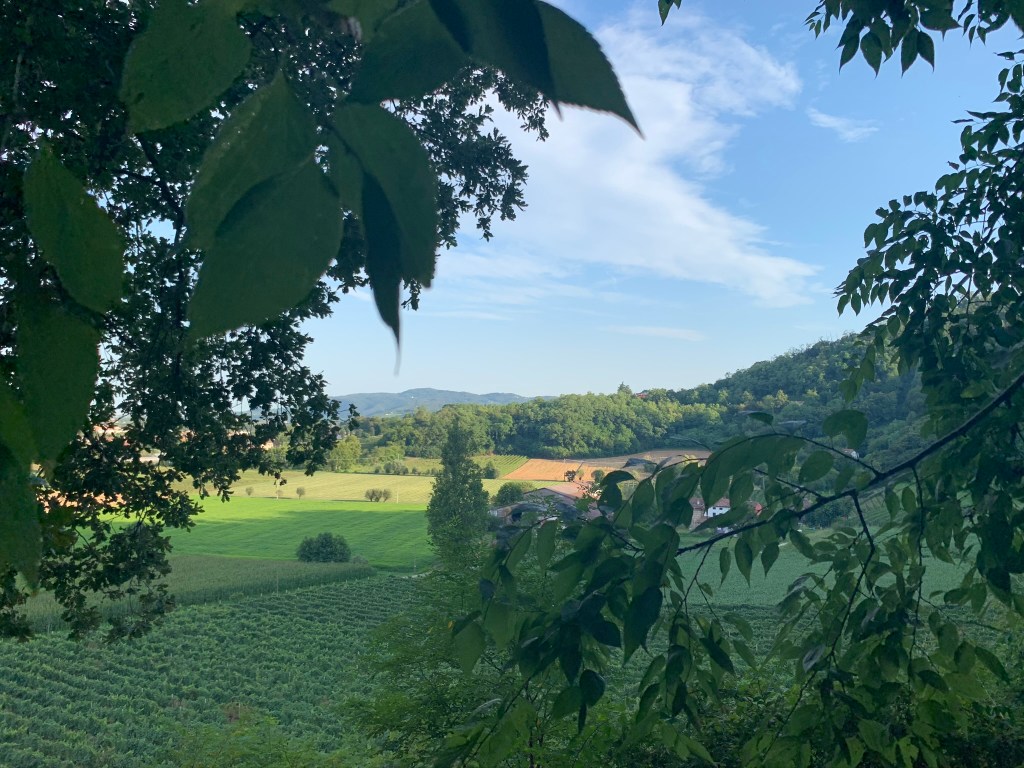
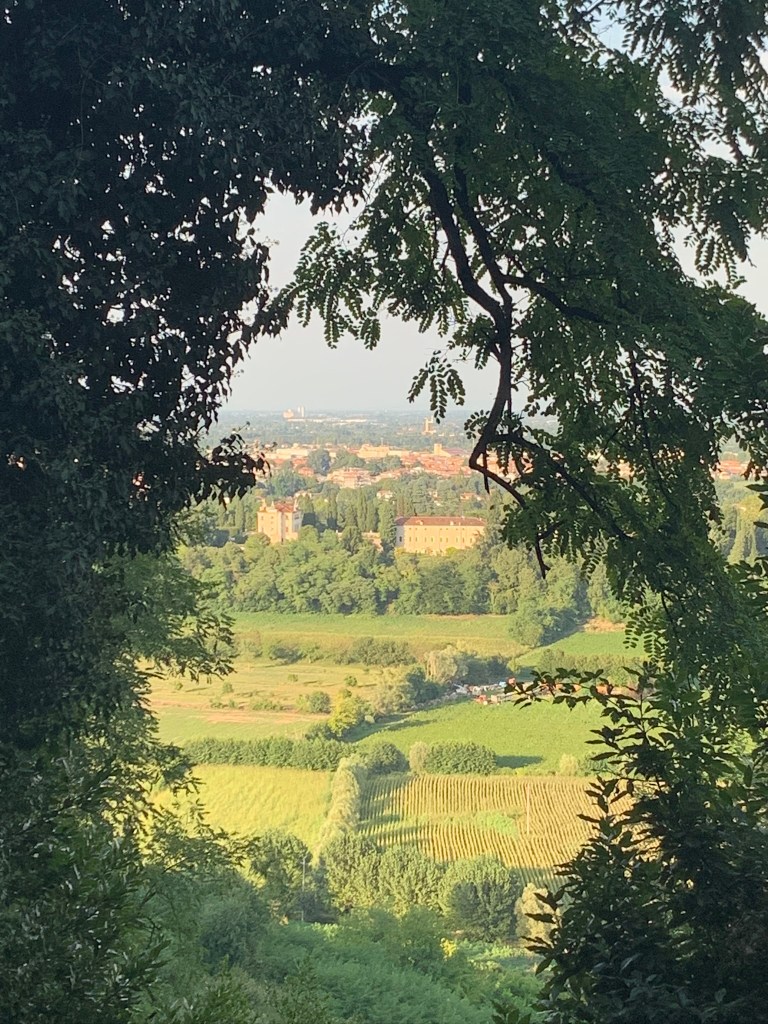
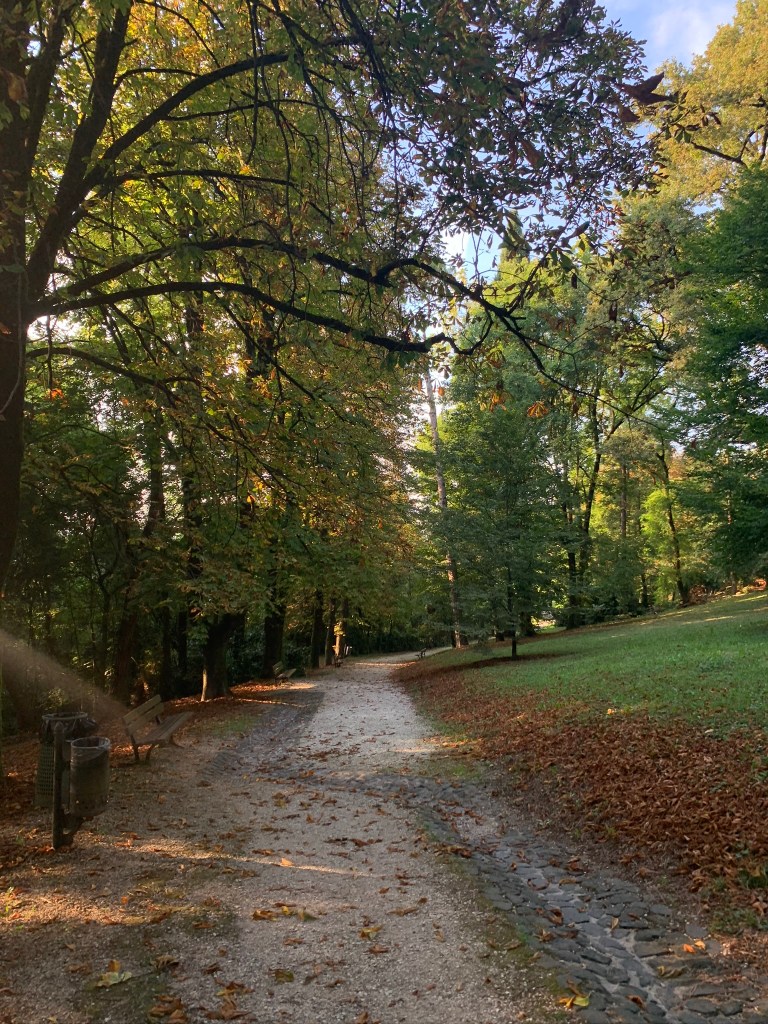
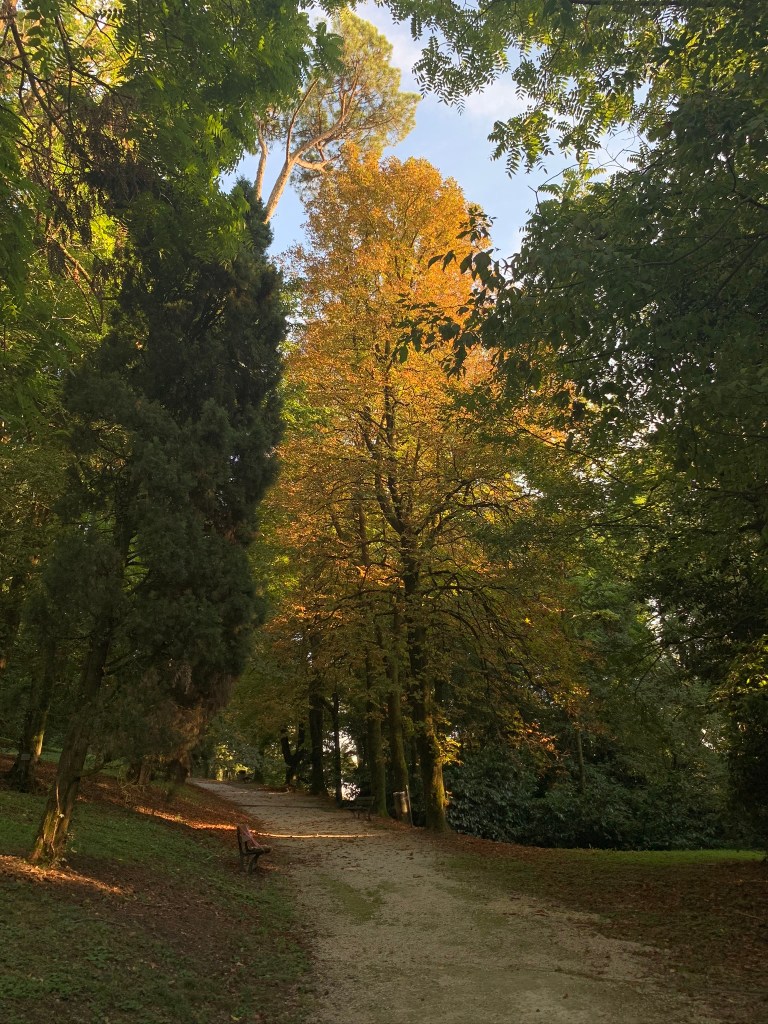
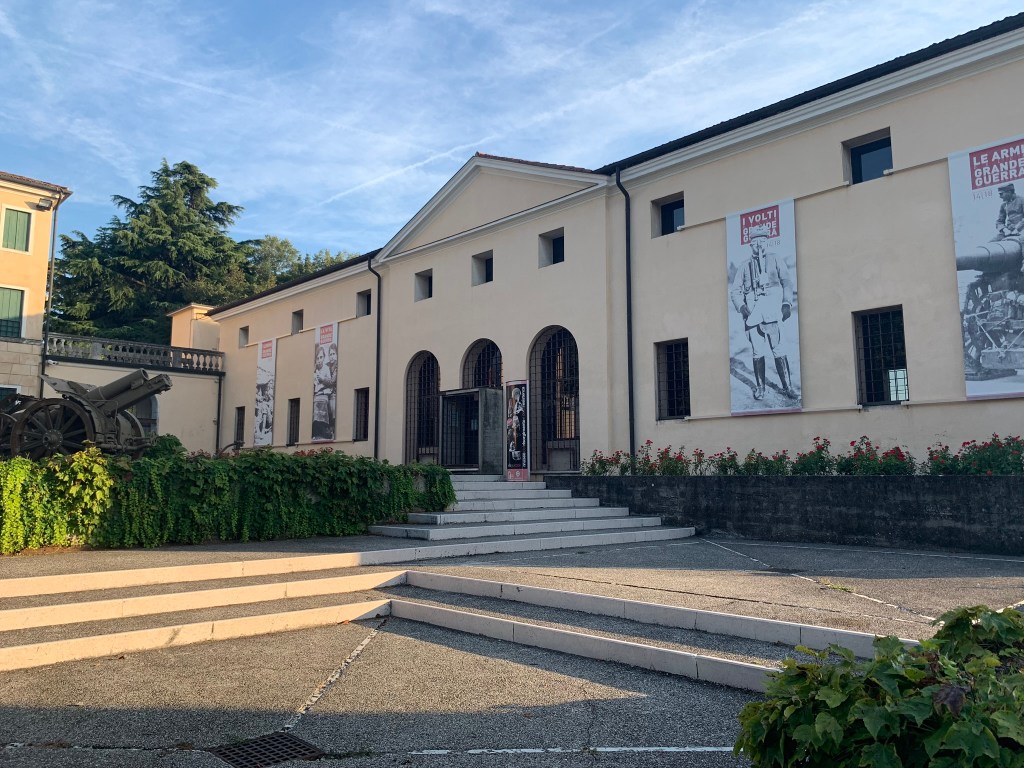
I took a leisurely stroll through the park, took photos of the fabulous view and the museum, and then – searched for a way out. There was a huge iron gate that was very much shut and now I discovered the sheer drop on the other side of the museum, where a road was meandering down the hill towards Vicenza. Having seen the distant Monte Berico church from several angles now, I was not going to give up easily and simply retreat to whence I came! No, no. I gracefully (…) manoeuvred myself over some wire fence and investigated the other side to see whether there was any way down. There – was not. Starting to feel ever so slightly defeated, I saw a woman jogging on the street below. She spotted me, which made me wave and ask her if she knew of any escape route. As it turned out, she and her elderly mother-in-law had found themselves in the same precarious situation once! She pointed to some electrical pillars nearby and said that they had managed to get down by climbing onto these. With her assistance, I made it down onto the pavement. Hurrah! My excursion was saved.
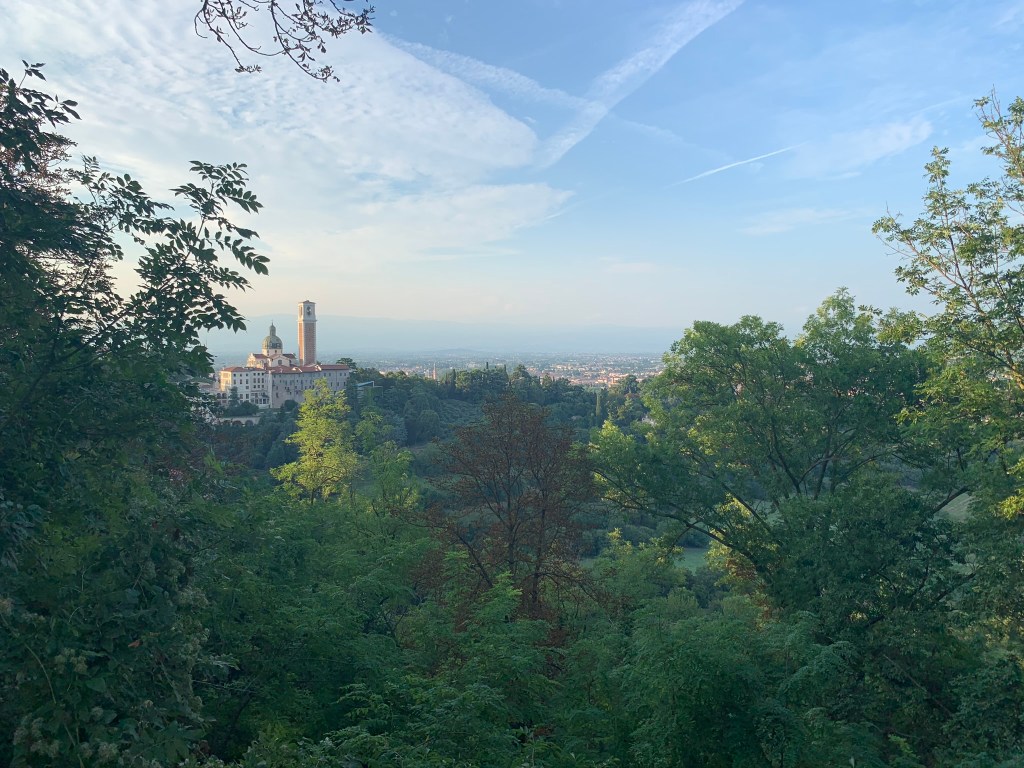
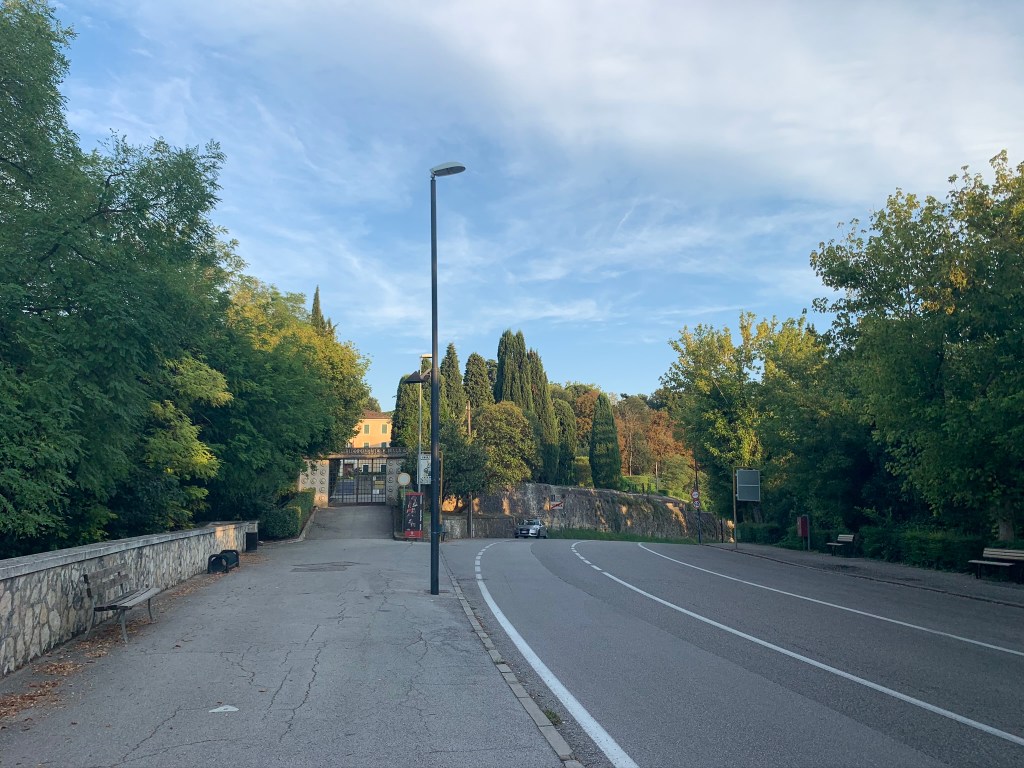
Walking past some amazing houses with spectacular views from sunlit terraces and verandas, Porsches and Jaguars waiting in the drive to whisk their owners away to the sea side or into the mountains, I soon arrived at the church, just when the bells were tolling. The Piazzale della Vittoria, which it faces, offered splendid views over Vicenza and further beyond. I was quite mesmerised.
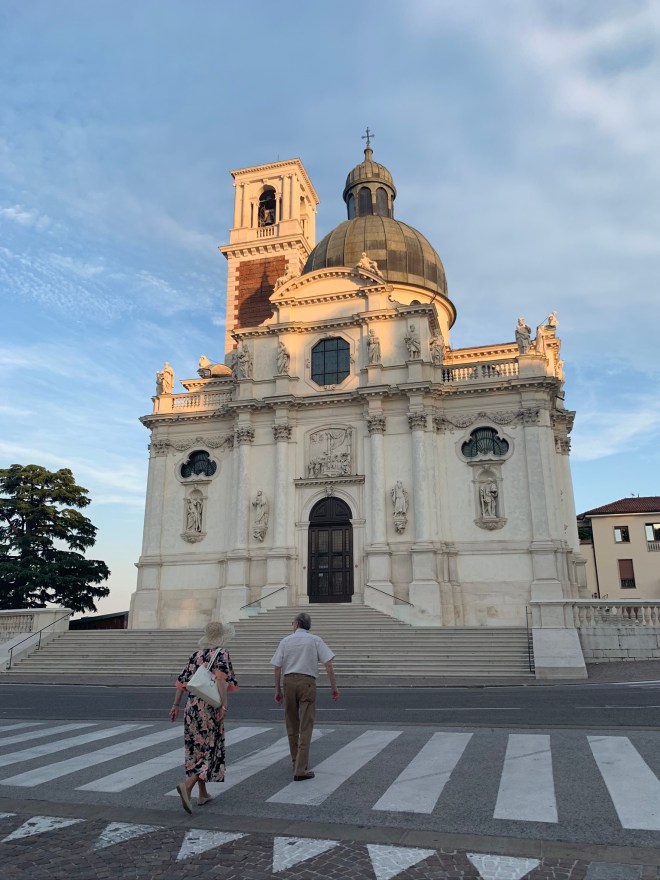
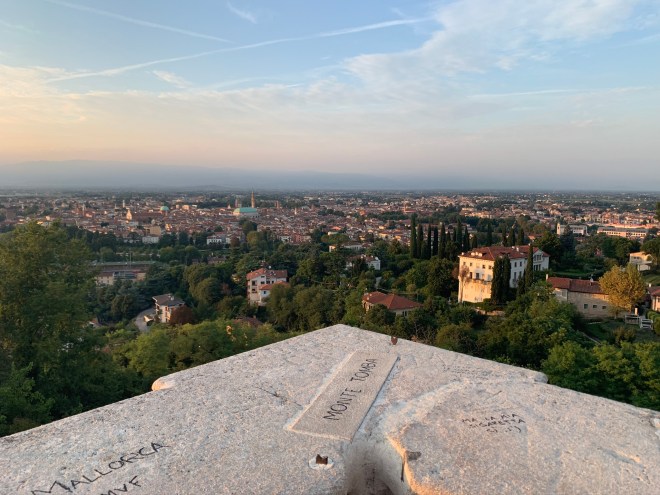
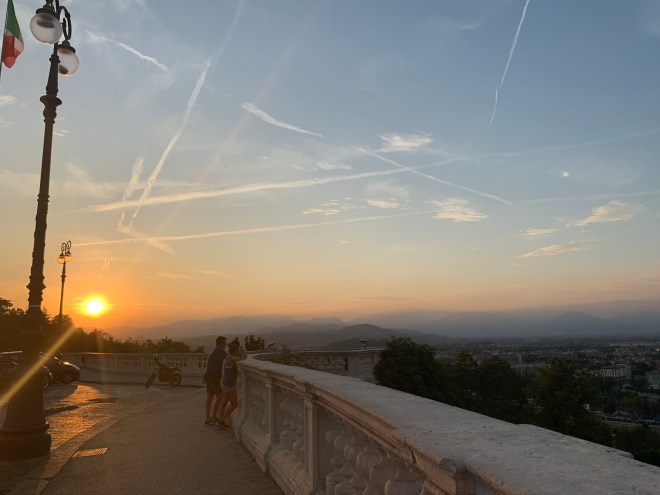
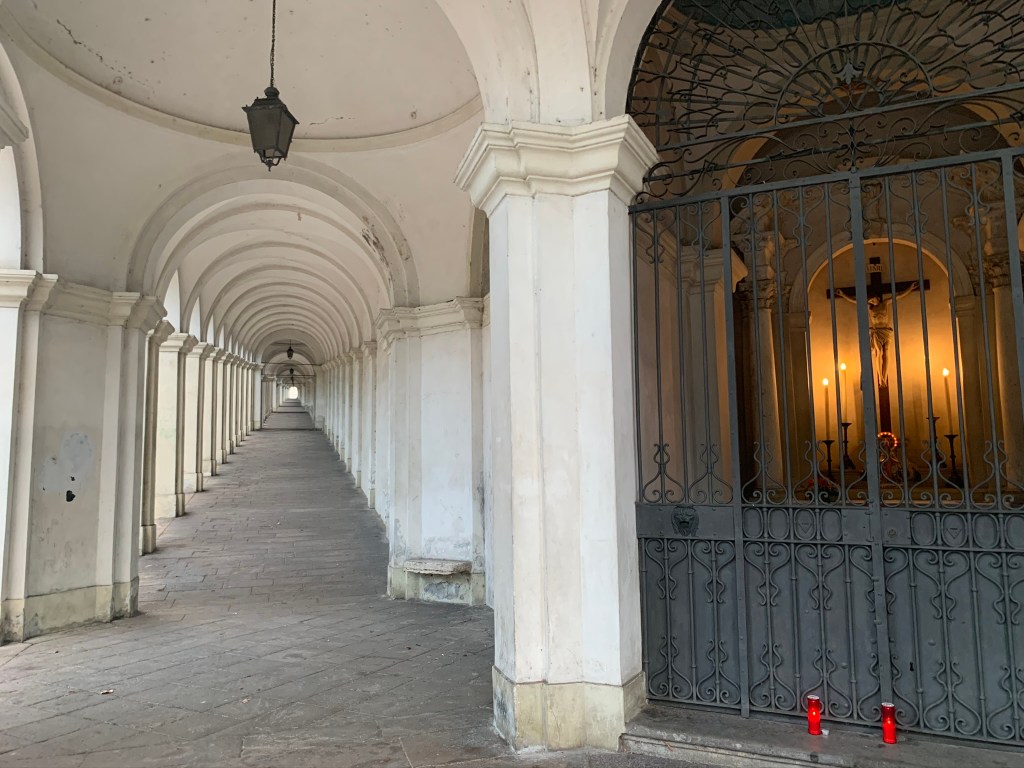
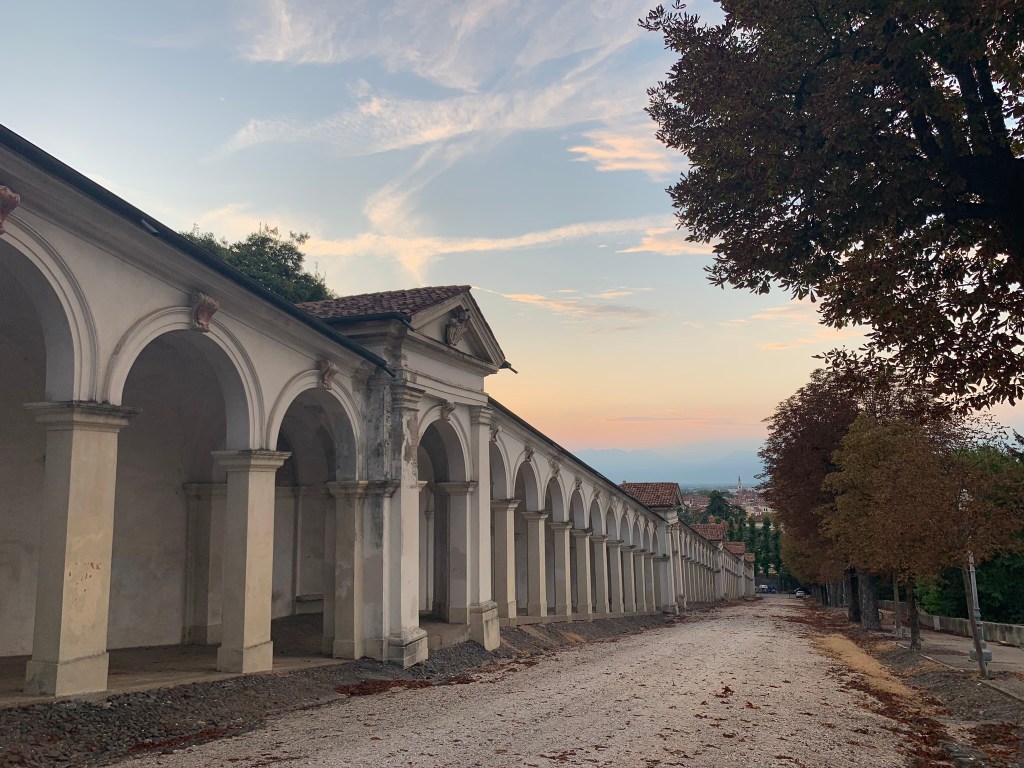
It didn’t end there, though. The way down was through the beautiful Portici di Monte Berico, which are in essence colonnaded pavements. With a now familiar reluctance to leave, I headed down towards the city centre to have dinner. Getting drunk on views makes me very hungry indeed.

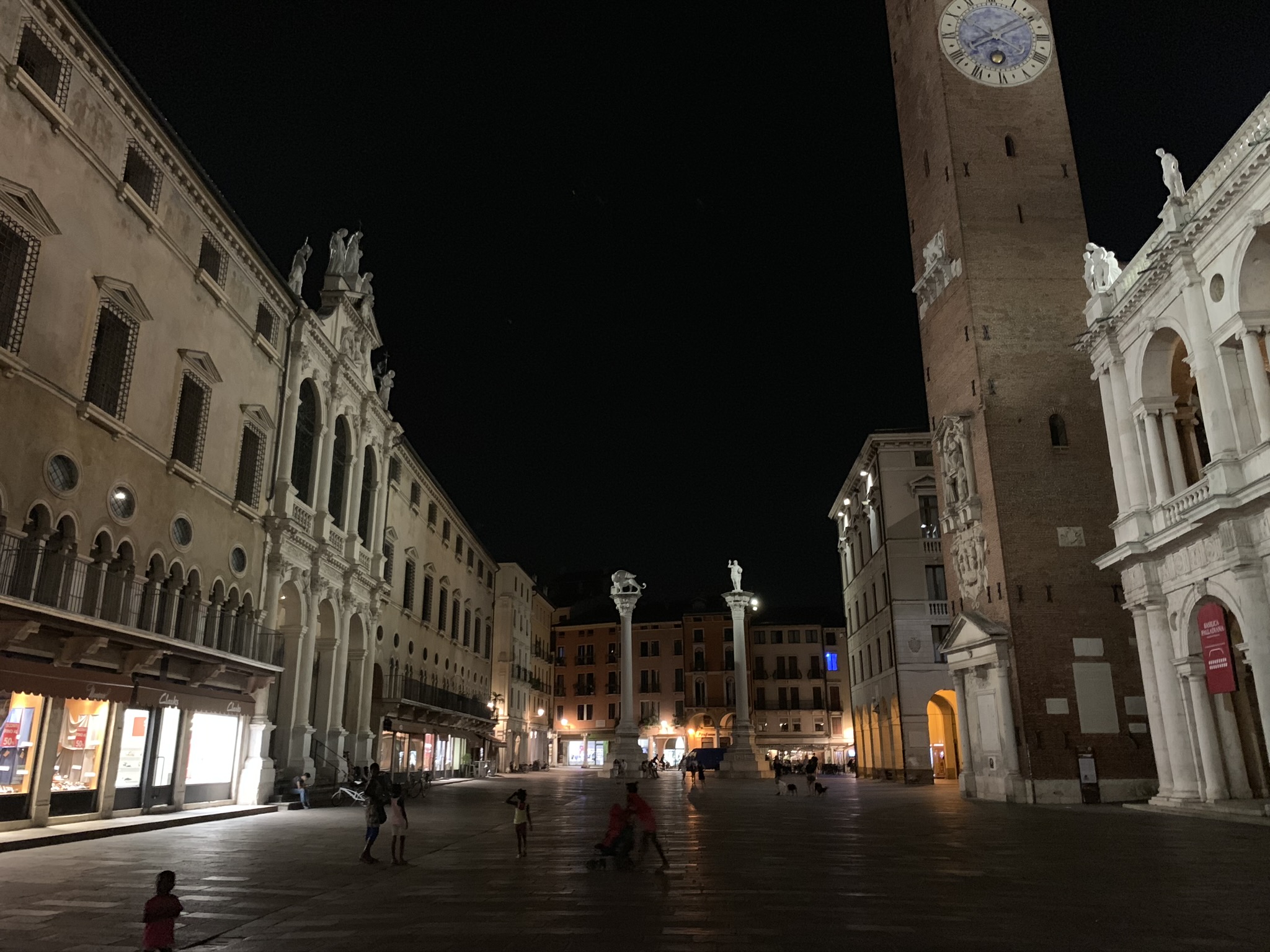
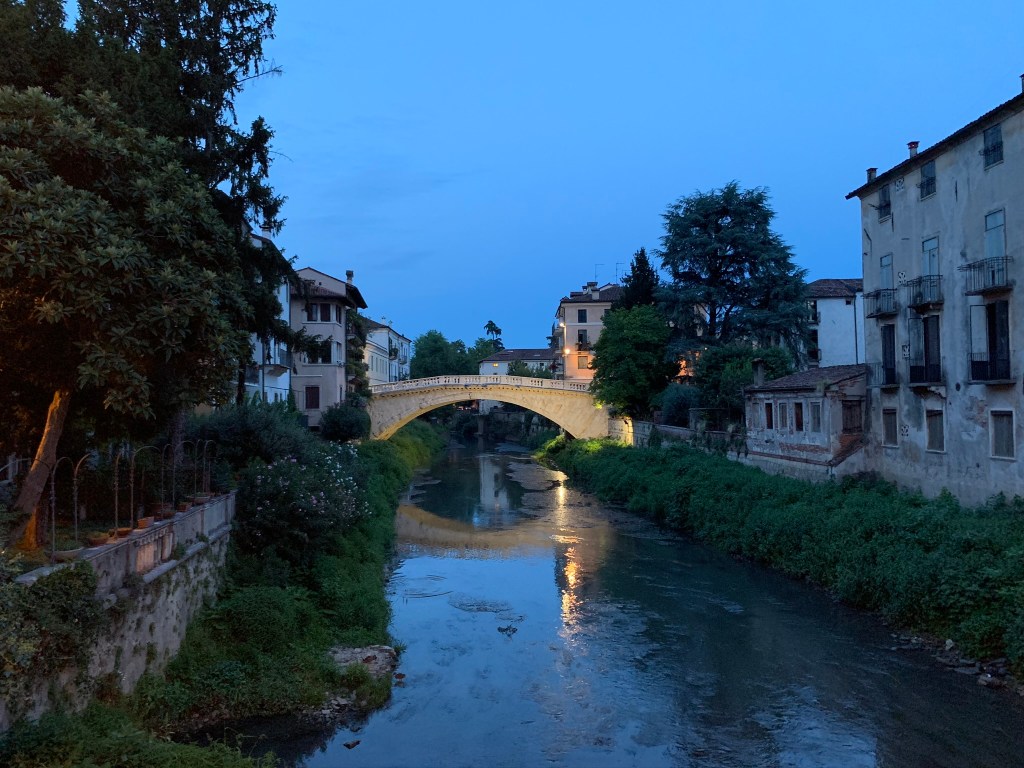
Naturally, the town was a delight at night as well. There was a lot more activity then than during the day, especially around the Basilica Palladiana, but the side streets were all deserted and quiet.
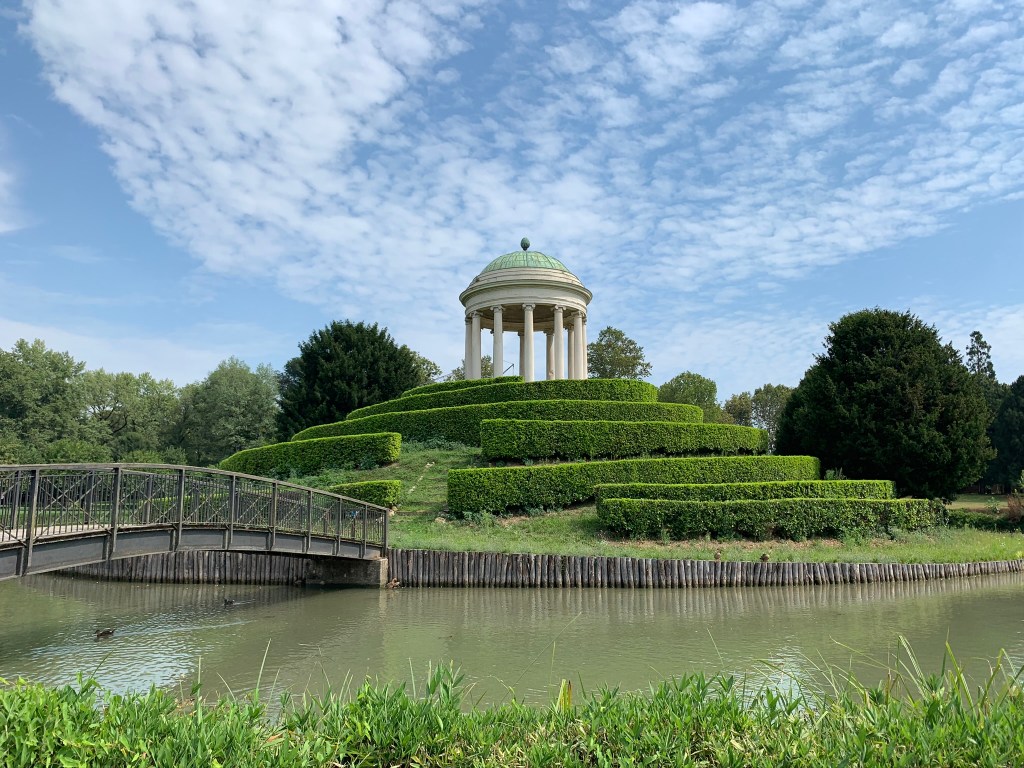
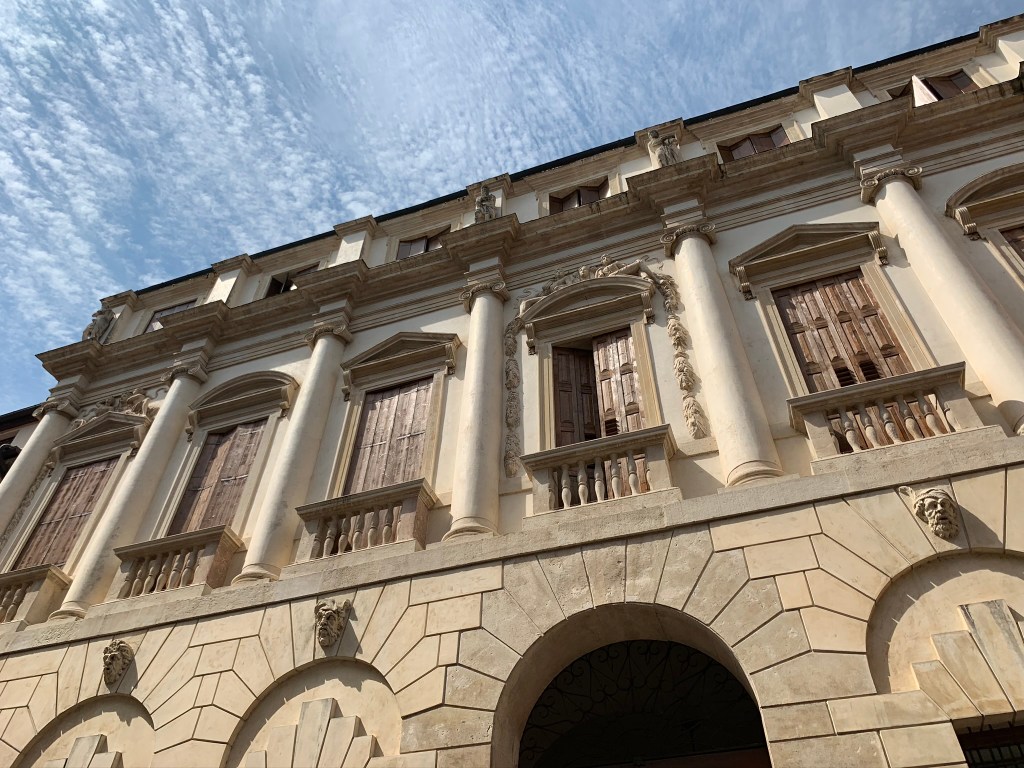
The next day, I found that Vicenza is a gift that keeps on giving. Looking back, I’m still amazed at how much there is on offer in this relatively small city. I started by exploring the oasis that is Parco Querini, followed by a visit to the art museum in Palazzo Leoni Montanari (which is worth seeing for the building alone). There happened to be an exhibition of work by French illustrator Malika Favre, whose name I’d never heard but whose covers for The New Yorker and Vogue are pretty iconic.
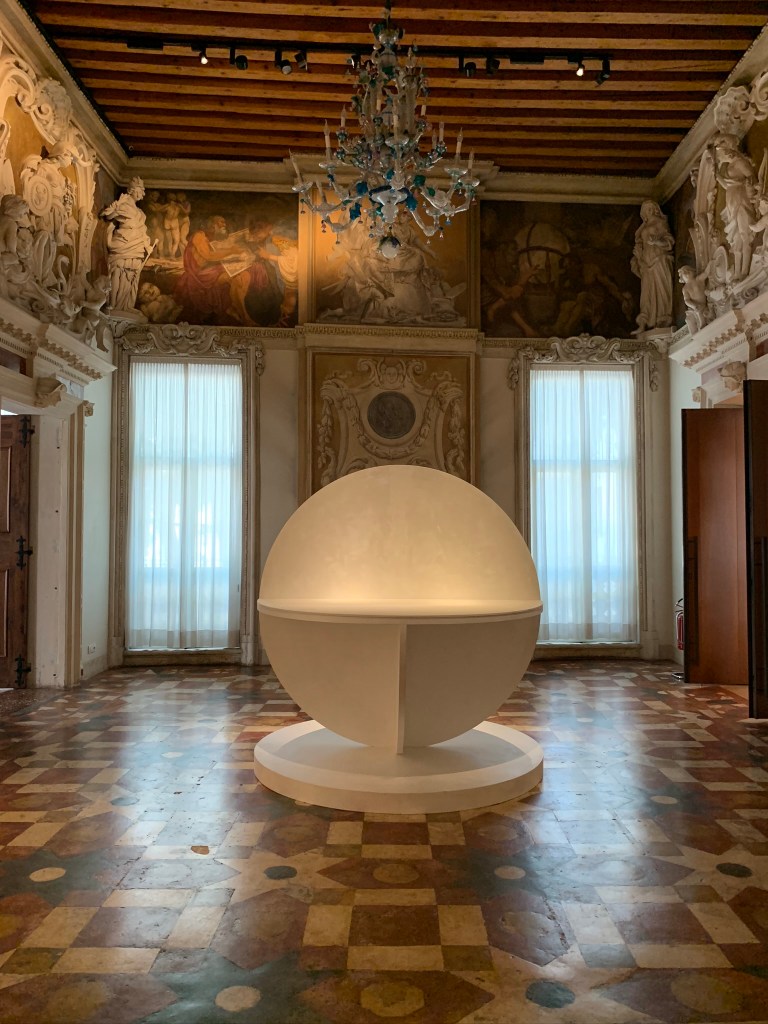
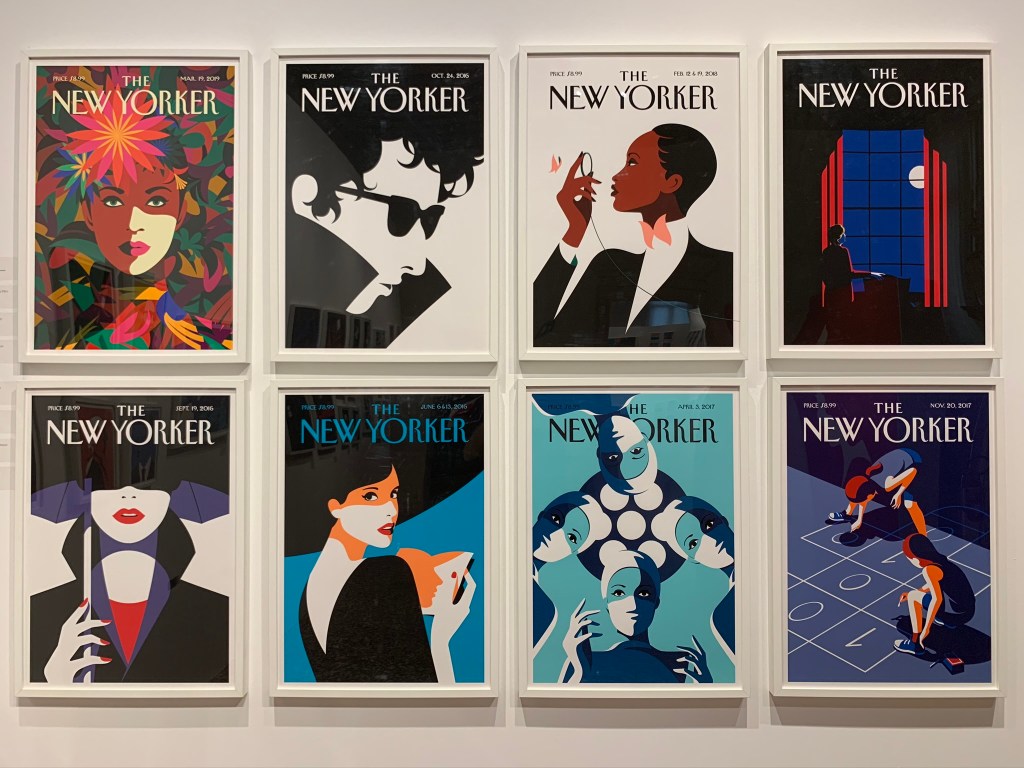
I would have been quite content already after seeing all this, but Vicenza held more surprises in store. Now I don’t know about you, but altars don’t thrill me much…churches, yes, occasionally. (“All the time, deluded woman! I’ve suffered through three church descriptions in the part about Verona!”, I hear you yell. Quite right.) I went into the church of Santa Corona without any expectations, but I have to say I never saw anything quite like this before:
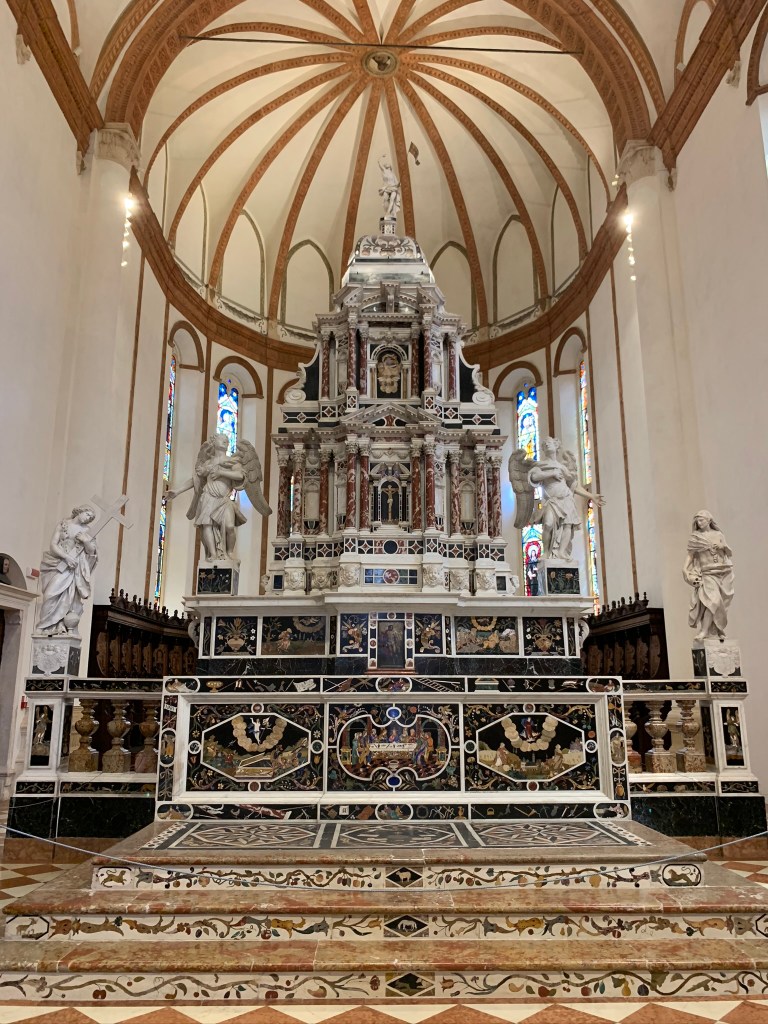
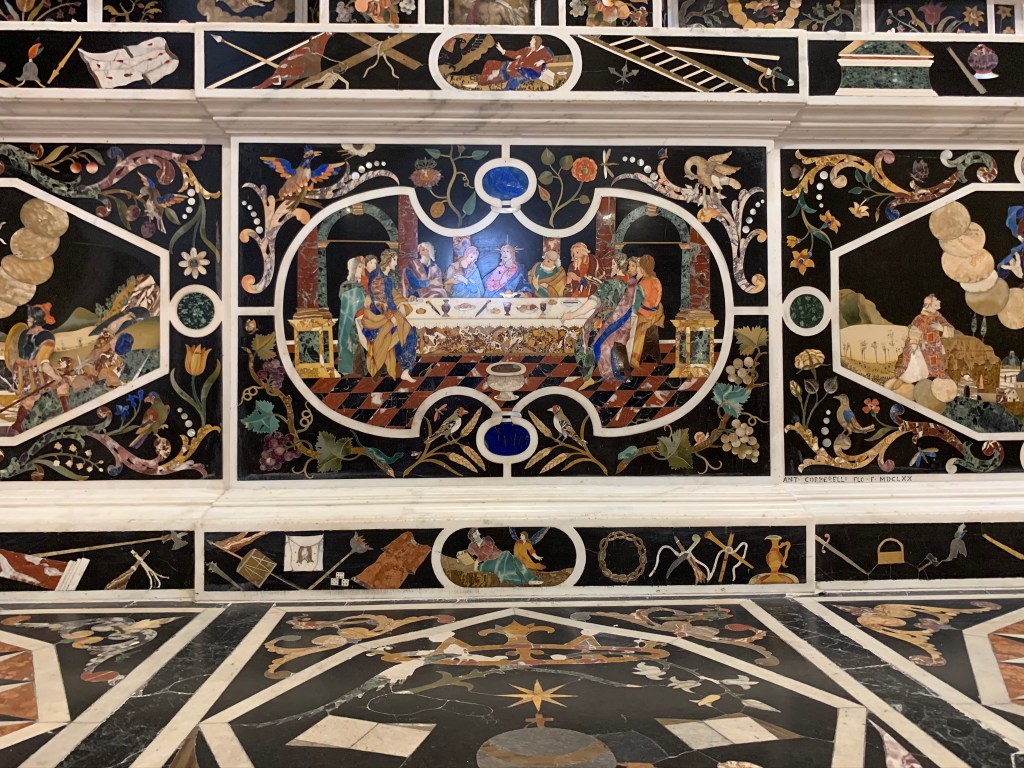
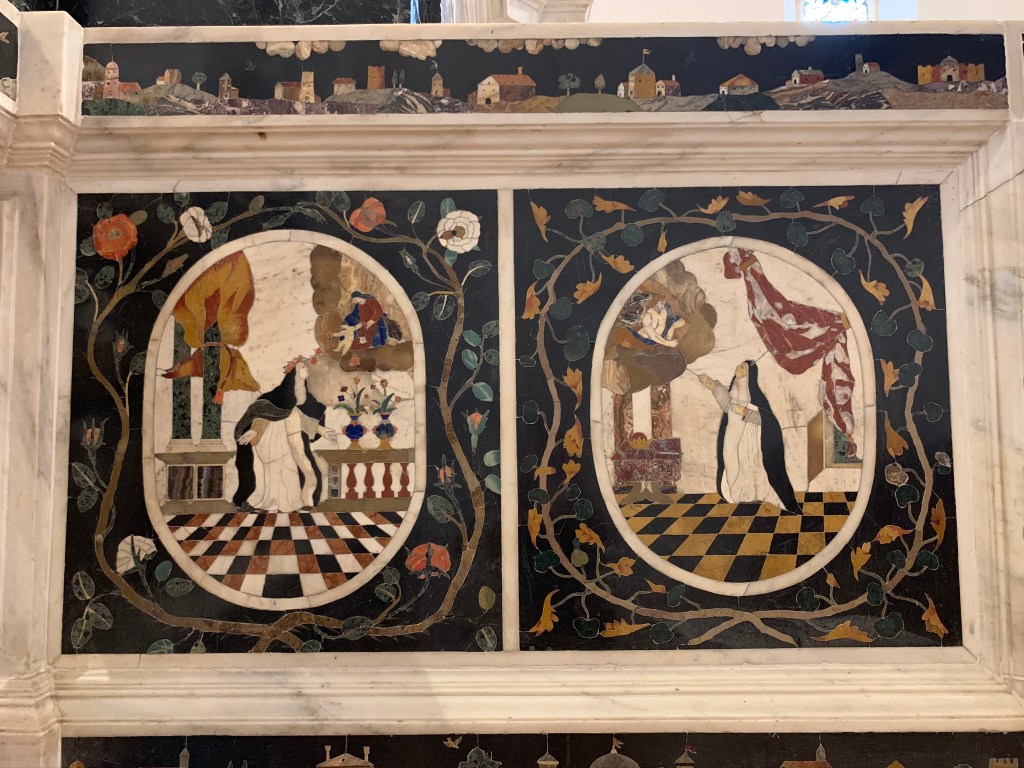
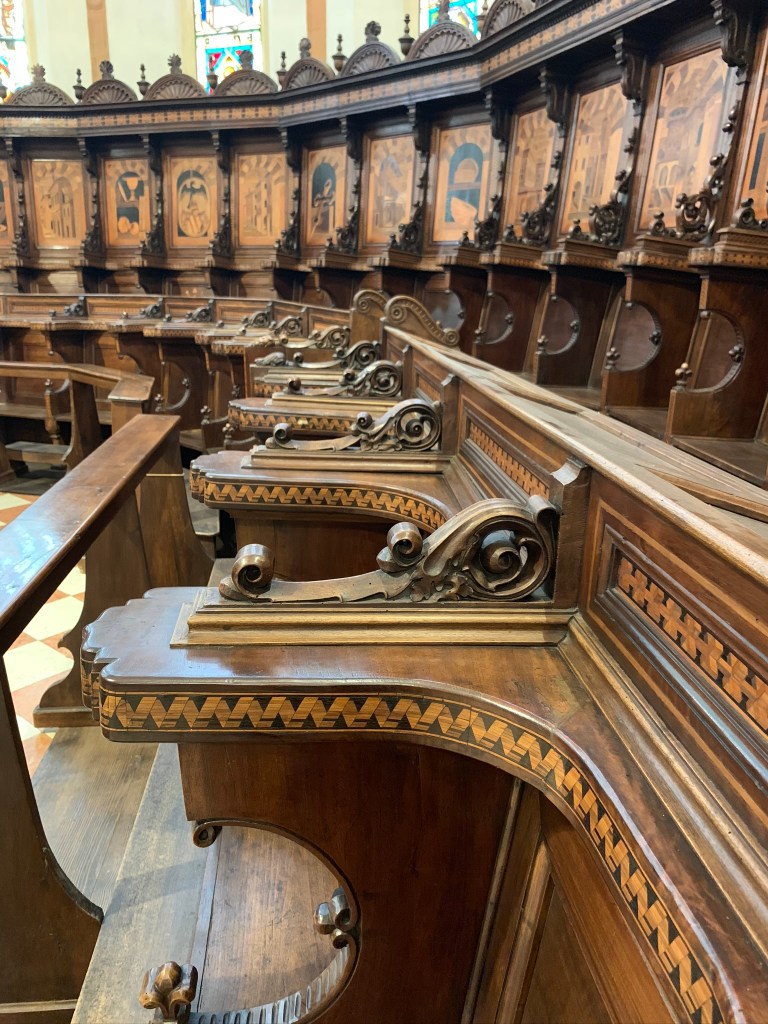
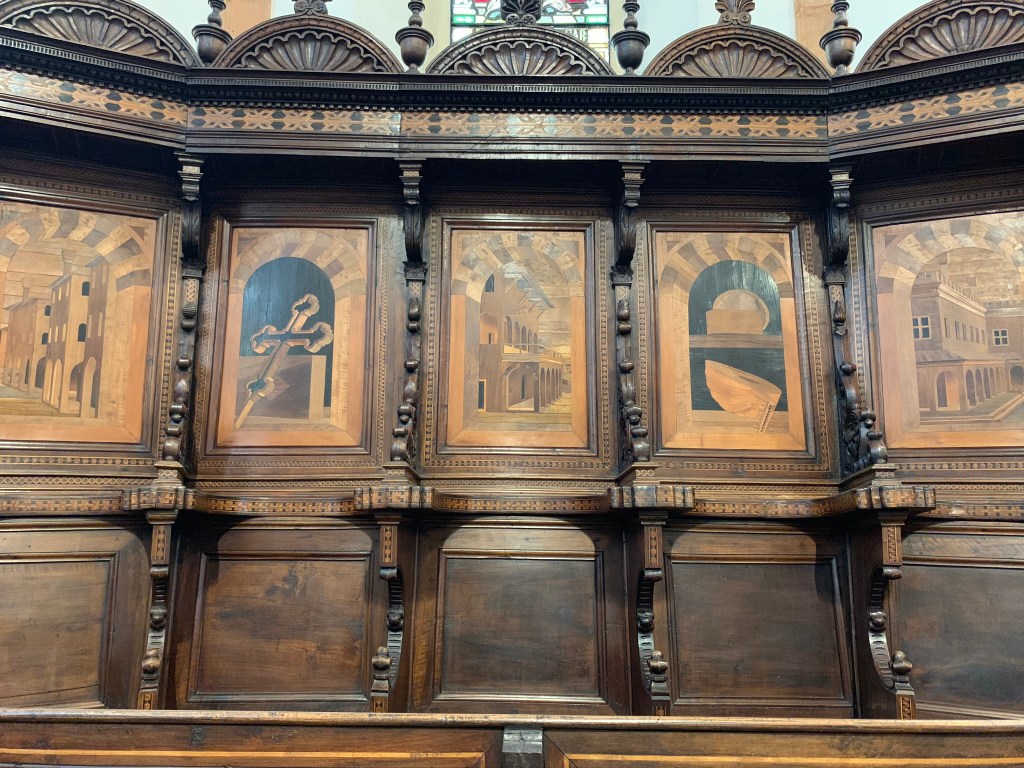
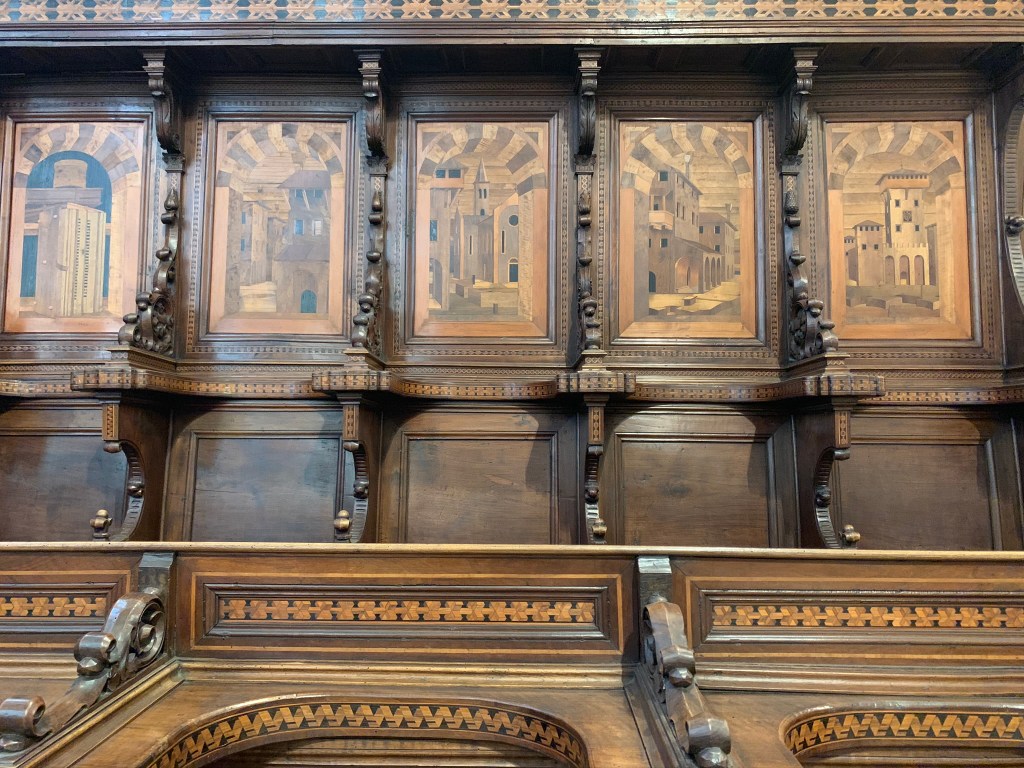
All the scenes are created by cutting up differently coloured marble into tiny pieces and neatly putting them together – you don’t have to find the result beautiful to be impressed. I certainly was, even more by the patience the artist must have had than the skill itself. So if you are an admirer of stone intarsia (go on, admit it), it’s your lucky day. There’s also wood intarsia!

I then ventured to the Basilica Palladiana, the impressive building in the middle of Vicenza. It was constructed in the 15th century after plans by Palladio, who else, who called it a ‘basilica’ in reference to civic structures in Rome of the same name. In short, it was never a religious building, but its dimensions are such that you could easily fit a church in there.
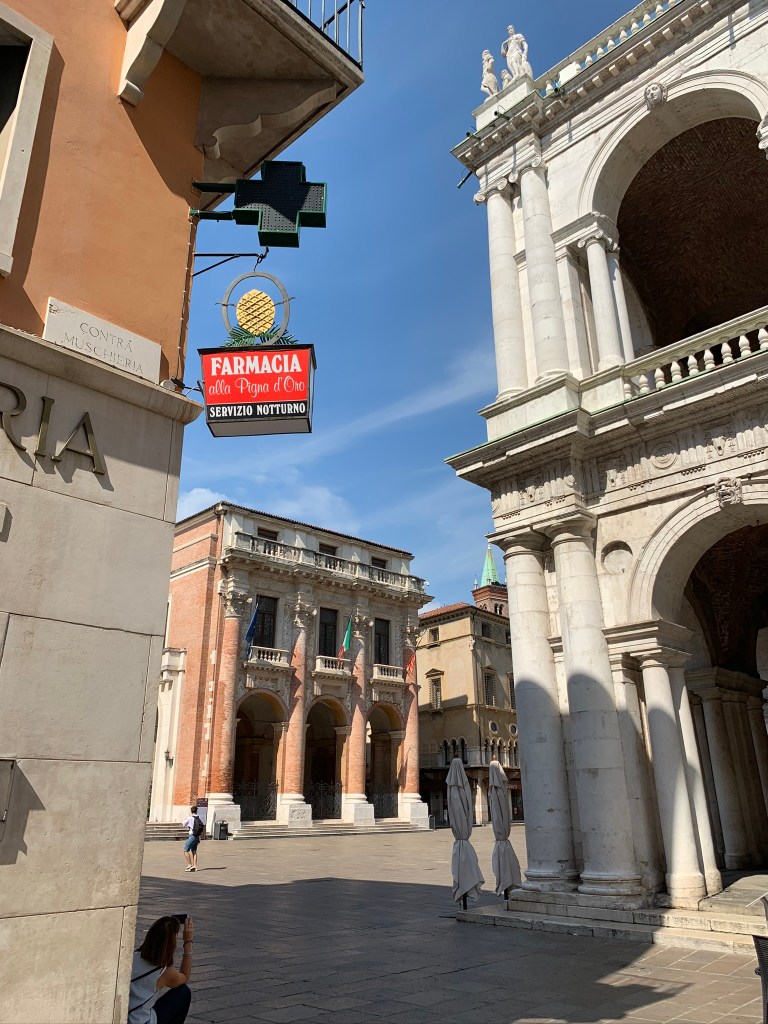
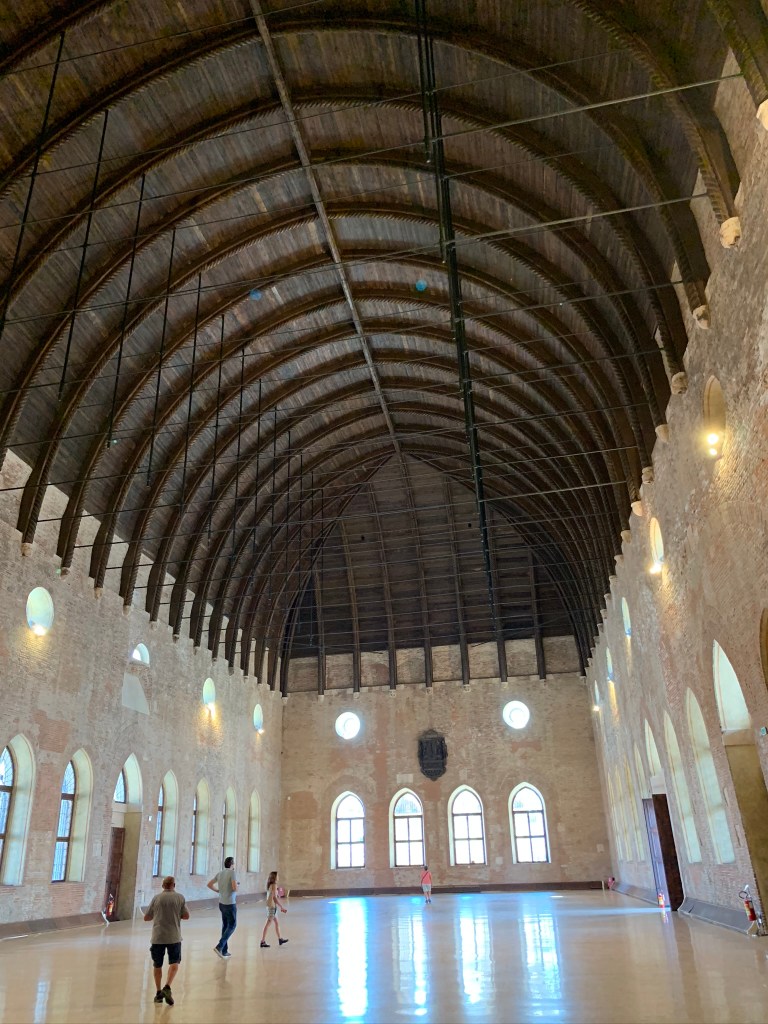
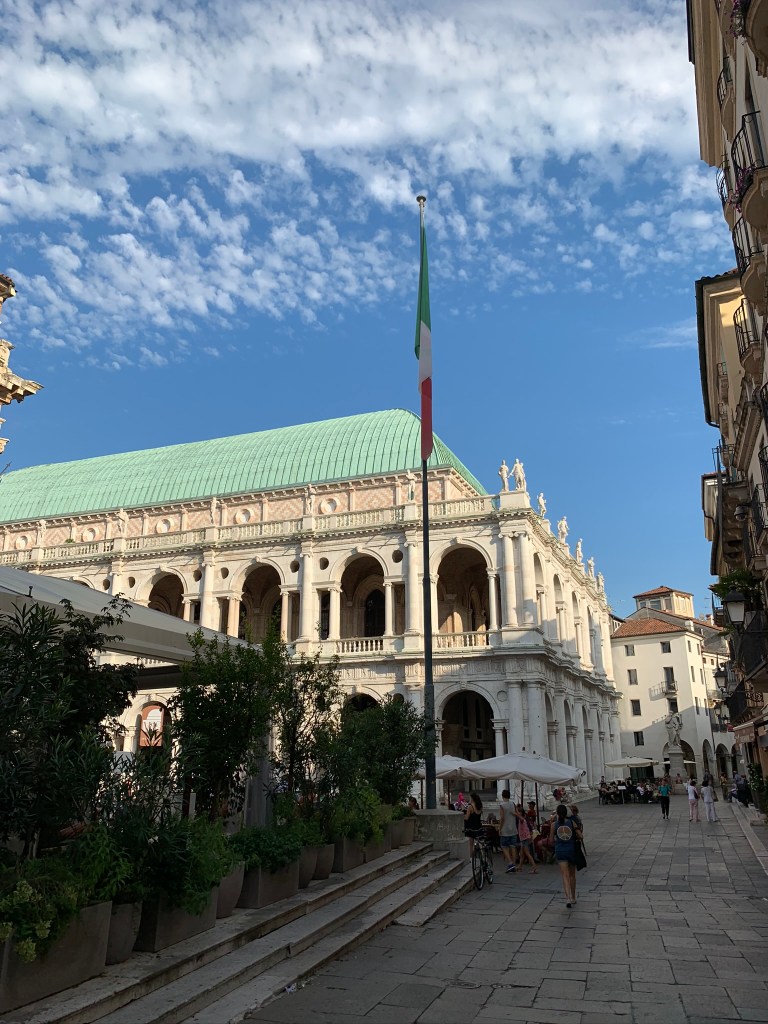
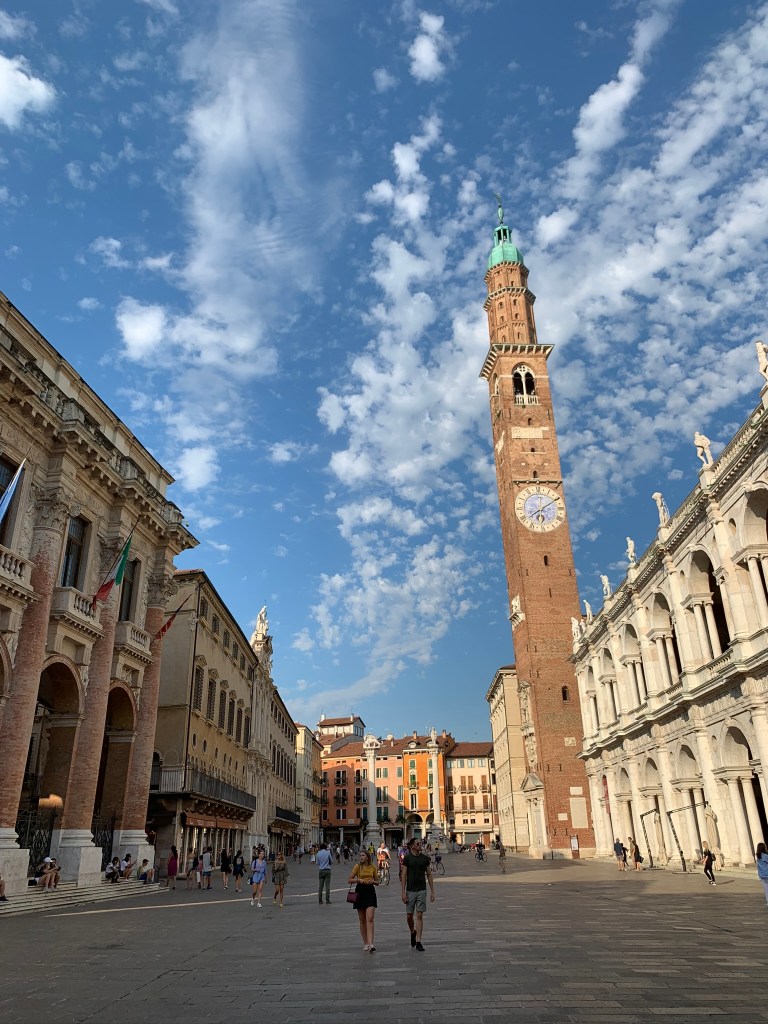
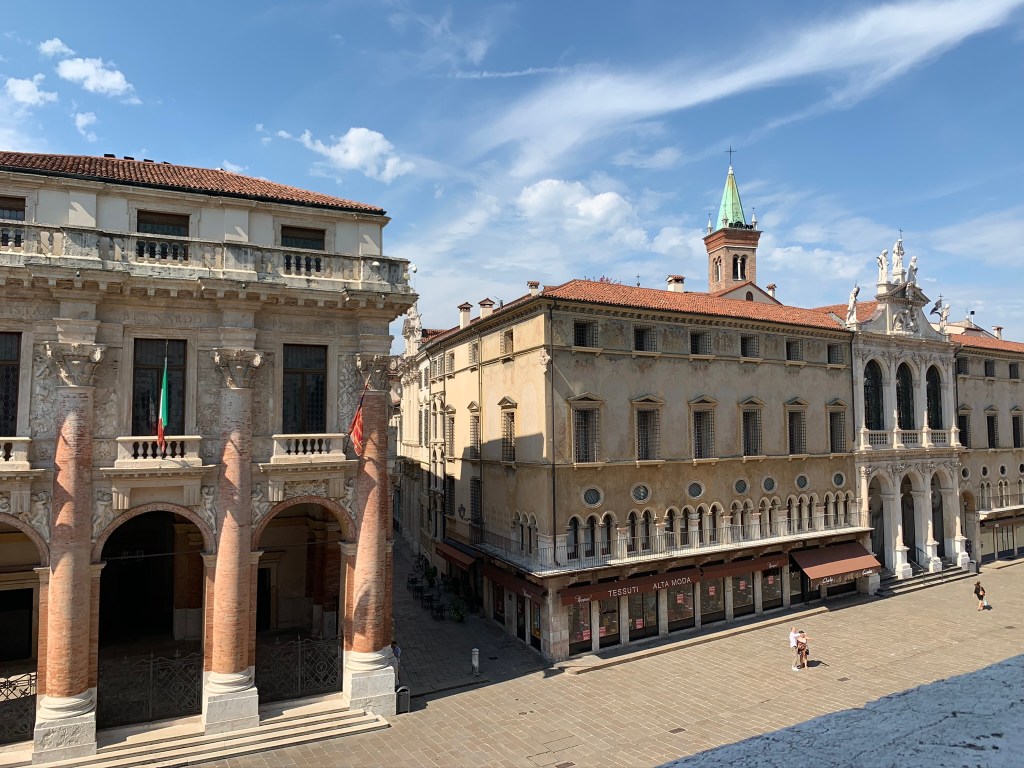
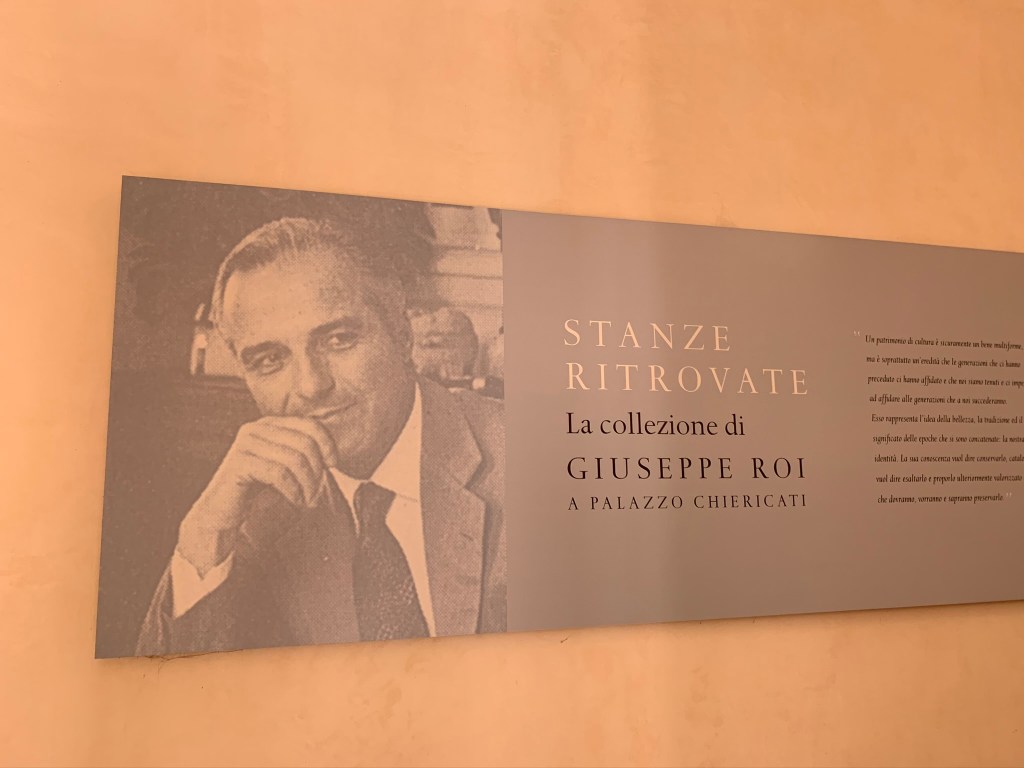
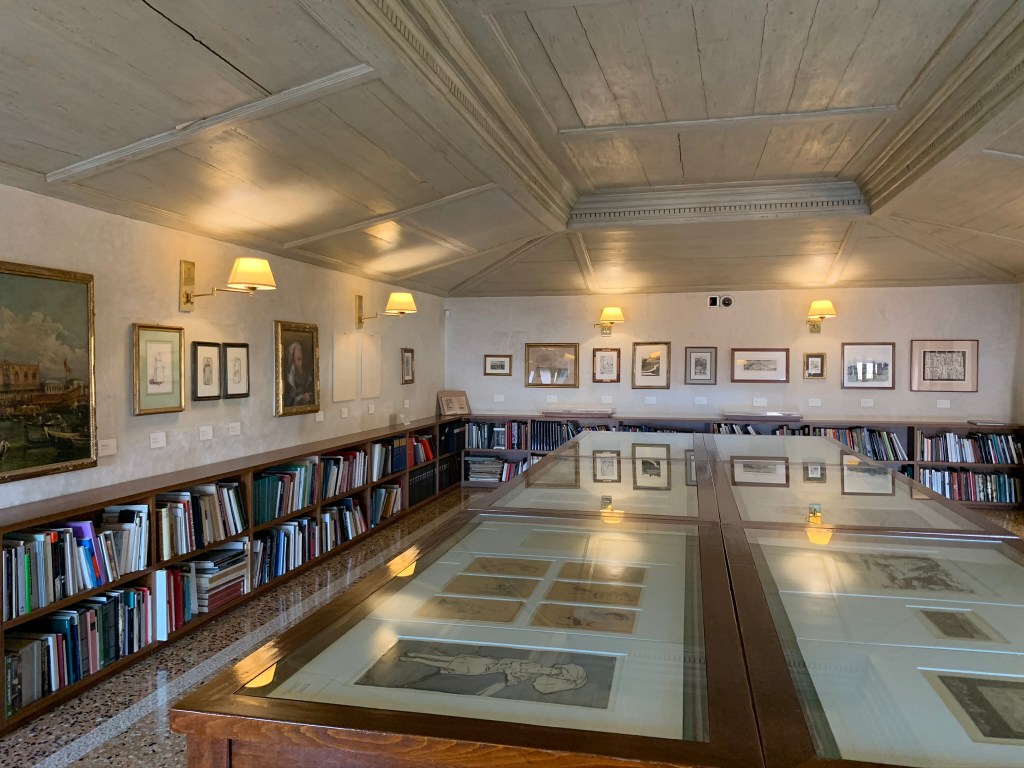
Next up was the Teatro Olimpico, but I had just missed a tour so I visited Palazzo Chiericati, which sits across the square from it and is rather imposing. It’s got an interesting and varied collection and the 45 minutes I could spend in there until the tour of the theatre started weren’t nearly enough. I especially loved the top floor, which is dedicated to the rather photogenic Giuseppe Roi and his art and book collection. Born in Vicenza in 1924, he “spent his teenage years in various family residences” – as you do, don’t you know. After studying law in Ferrara, he made it his life’s ambition to promote Vicenza’s rich cultural and architecural heritage as the Chairman of various associations and boards, and was instrumental in making Vicenza and the Palladian villas a UNESCO world heritage site. Not too shabby!
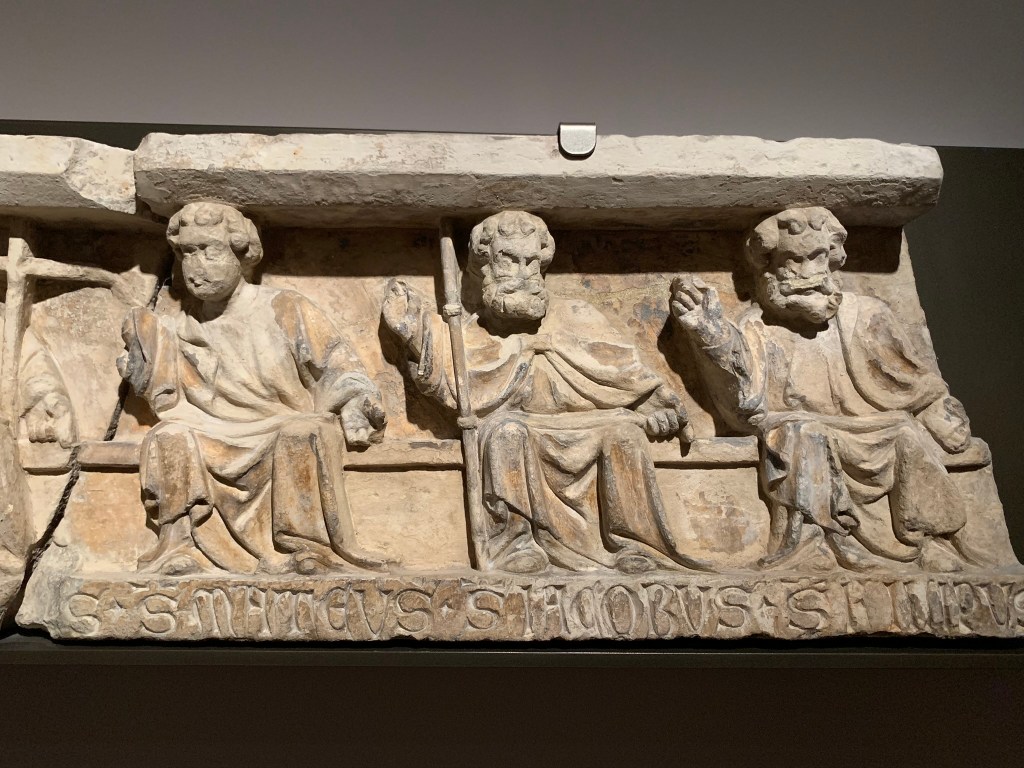
There were other pieces in the palazzo that intrigued me, including the earliest depiction of a well-known 70s pop band.
The Teatro Olimpico, which was the last thing I visited in Vicenza, was also very special. It was Palladio’s last design and the first purpose-built indoor theatre in masonry in the world, having been constructed between 1580 and ’85. But that’s not all – it features an extraordinary proscenium with incredible depth, showing off Palladio’s genius. See for yourself:
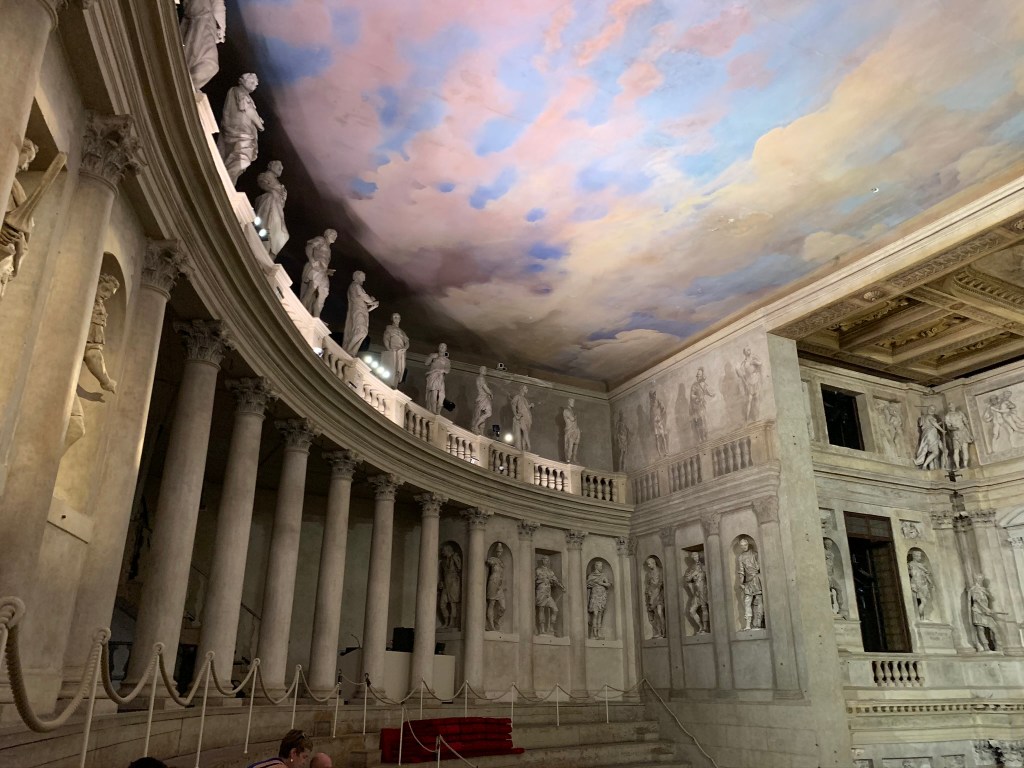
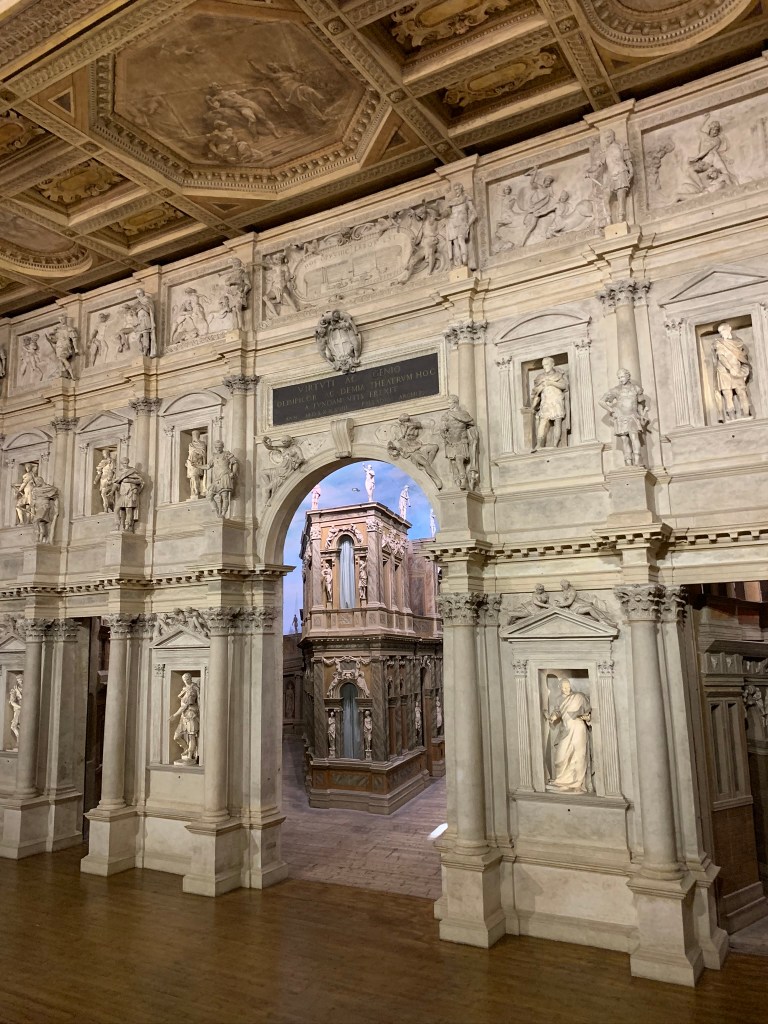
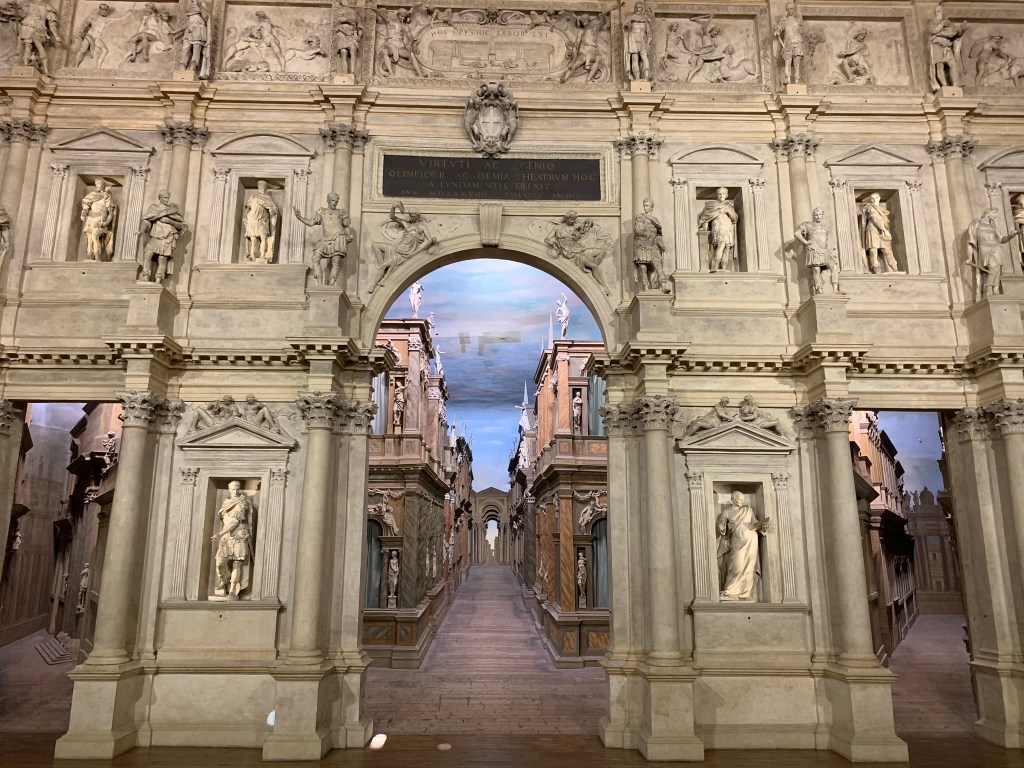
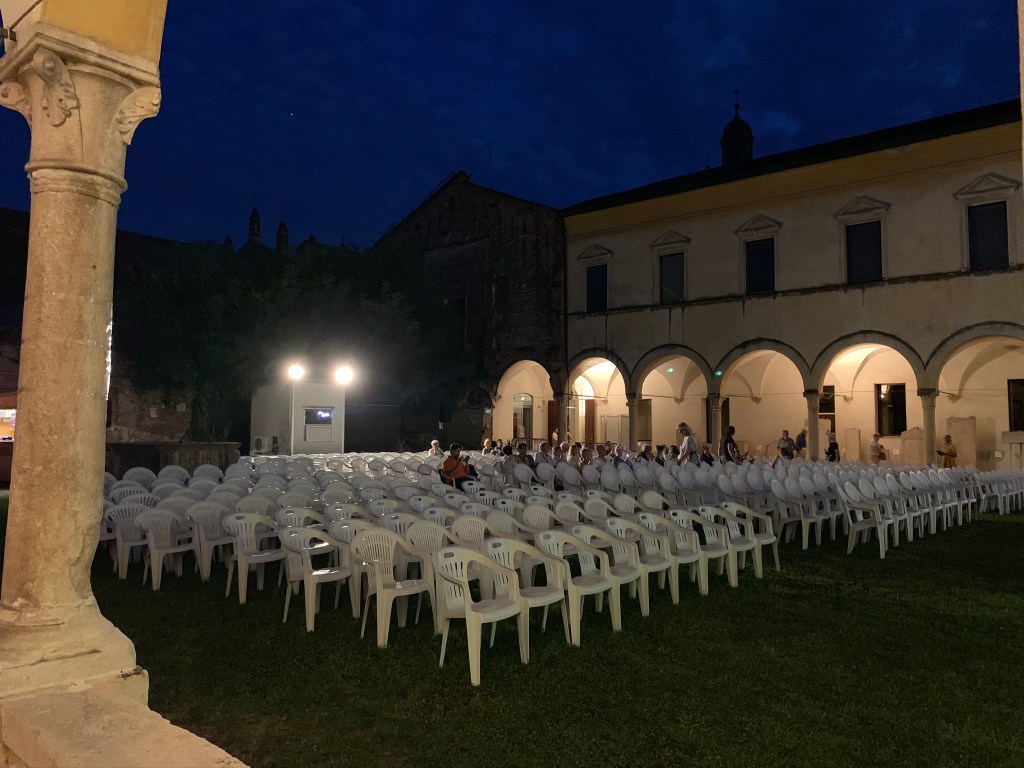
It’s a captivating place. I only wish I could have seen a performance! However, I had a nice plan for the evening: a substantial dinner (tiramisu was calling me) and open-air cinema. In fact, if you visit Vicenza in the summer, you can go and see a film under the stars every night! On this night, they happened to be screening the French dramedy Le Grand Bain. It follows the story of a group of middle-aged men who discover synchronised swimming as a way to get out of their midlife crisis. If that reminds you of the British dramedy Swimming with Men – then yes, that film is also about a group of middle-aged men who discover synchronised swimming as a way to get out of their midlife crisis. Both films, apparently by complete coincidence, were produced and came out at the same time. A bit too synchronised to be an accident, you could say… Malheureusement, the film had been dubbed in Italian, so I didn’t understand much, and I may have fallen asleep sitting amongst what seemed like the whole population of Vicenza. But it was an enjoyable experience for the atmosphere alone – and I woke up in time for the big finale, the winning synchronised swimming performance of that group of middle-aged men who had discovered synchronised swimming as a way of getting out of their midlife crisis. And, spoiler alert, they did get out of their midlife crisis! What a fitting conclusion to my time in Vicenza.
 Rambling On...